
Bundibugyo Virus Outbreak in DRC Surges to 782 Cases as Response Struggles
Bundibugyo virus outbreak in DRC reaches 782 cases and 178 deaths; conflict, low contact tracing and a $21.5m funding gap hamper WHO, Africa CDC and MSF.
The Bundibugyo virus outbreak in DRC has reached 782 confirmed cases and 178 deaths, health authorities reported on 15 June 2026, as a record single-day rise and declining surveillance deepen concerns. The Ministry of Public Health confirmed 72 new cases and 29 additional deaths in a 24-hour period, marking the largest daily increase since the outbreak began. The rare Bundibugyo strain, which lacks an approved vaccine or targeted therapy, has shown a 22.8 percent case fatality rate so far, with just 40 patients recorded as recovered.
Confirmed cases and recent daily spike
The national health ministry’s tally reflects widespread transmission concentrated in eastern provinces, with the recent 72-case jump signaling mounting pressure on treatment centres and laboratories. Officials say the daily increase was driven by new detections in Ituri province and spillover into neighbouring North Kivu and South Kivu. Authorities warned that the official totals may understate the true scale of the outbreak because of gaps in testing and surveillance.
Contact tracing performance has deteriorated markedly, with coverage reported at 56.5 percent compared with a target near 95 percent. Low tracing rates reduce the ability to identify and isolate close contacts quickly, increasing the risk of chains of transmission going undetected.
Epicentre in Ituri and cross-border spread
Ituri province remains the epicentre, accounting for roughly 95 percent of confirmed cases, according to ministry data. The outbreak is believed to have originated in the Mongbwalu Health Zone, a mining-intensive area where artisanal mining and informal population movements complicate public health follow-up. The disease has since spread across provincial lines into North Kivu and South Kivu and crossed into Uganda, prompting cross-border alerts and intensified screening at points of entry.
Health workers report that mobile and clandestine mining camps create frequent, unrecorded movements between communities and mining sites, producing transmission hotspots that are difficult to monitor. These dynamics complicate containment efforts and raise the likelihood of further geographic dissemination.
Security and humanitarian pressures
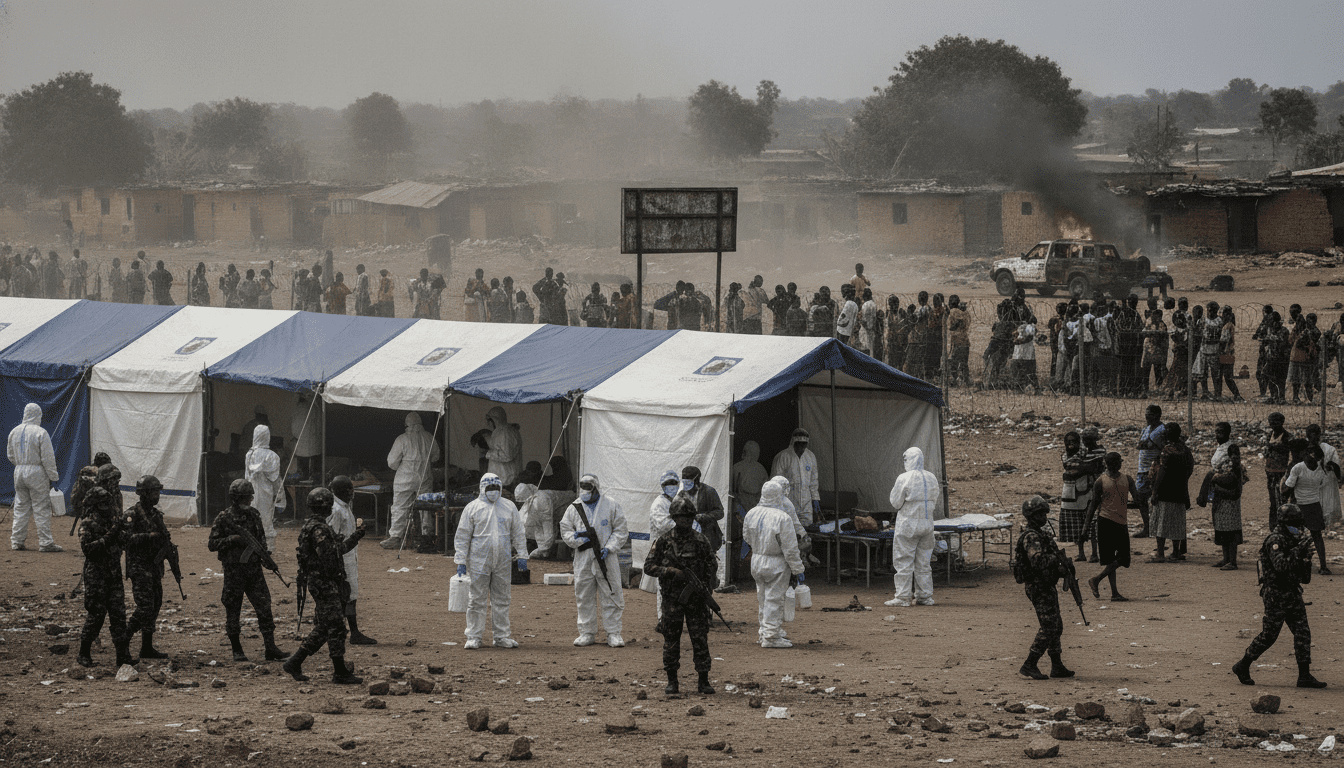
Decades of violence in eastern DRC have left a fragile security environment that hinders the public health response. Nearly one million people have been displaced in the region amid clashes involving multiple armed groups, including M23, which controls the strategic town of Goma in North Kivu. United Nations assessments have documented episodes of large-scale civilian attacks in Ituri tied to competition over mineral resources, further undermining safe access for medical teams.
The insecurity has led to patient escapes from isolation units, interruptions of outreach activities and reluctance among communities to engage with health responders. These factors, combined with mass displacement, amplify the risk that cases will go unreported and that chains of transmission will persist.
Surveillance, diagnostics and operational gaps
International health organizations, including the World Health Organization and the Africa Centres for Disease Control and Prevention, say they are scaling up diagnostic testing and contact surveillance, but persistent operational gaps limit progress. Doctors Without Borders (MSF) has warned that “no one knows the true scale” of the outbreak because dangerous surveillance blind spots and insufficient testing capacity remain.
Laboratory turnaround times have lengthened in some areas due to logistical constraints and limited field diagnostic platforms. Reduced contact-tracing coverage and delayed case finding mean many contacts are not followed for the full 21-day period, increasing the possibility of undetected secondary cases.
Funding shortfalls and appeals for support
Response agencies report a critical funding gap that is undermining containment operations. MSF has identified a $21.5 million shortfall needed to sustain emergency medical activities, while regional health authorities and the Africa CDC have called on donors to mobilize resources urgently. Jean Kaseya, director general of the Africa CDC, urged partners and donors to step up support so that transmission can be interrupted.
The lack of dedicated resources affects the availability of personal protective equipment, mobile treatment units, community engagement teams and the expansion of testing and isolation capacity. Without rapid resource mobilisation, responders say the outbreak risks persisting and worsening in the coming weeks.
Public health implications and regional risk
The Bundibugyo strain differs from the Zaire strain responsible for many prior DRC outbreaks and has no approved vaccine, limiting preventive options available to health authorities. That leaves traditional public health measures — rapid case detection, contact tracing, safe patient care and community engagement — as the primary tools to break transmission. The international community’s ability to support those measures will shape the trajectory of the outbreak.
Cross-border movement and porous frontiers in the Great Lakes region increase the risk of cases appearing in neighbouring countries, heightening the need for coordinated surveillance and information sharing across national health services.
The accelerating case count in eastern DRC underlines how conflict, displacement and under-resourced responses can compound the public health threat posed by a pathogen with no licensed vaccine. Immediate scale-up of testing, contact tracing, secure access for response teams and targeted funding will be crucial to prevent further spread and reduce mortality as the situation evolves.
