
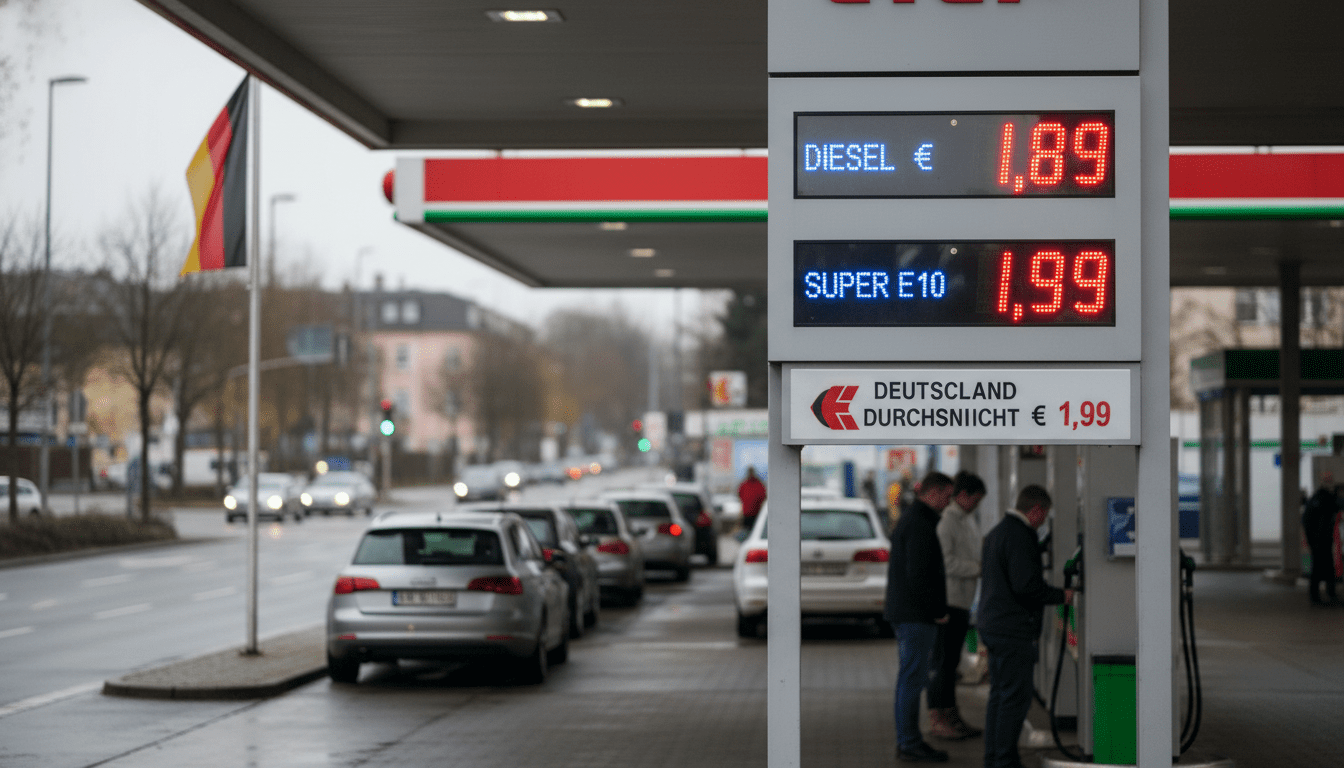
Diesel cheaper than petrol in Germany for first time since March, ADAC says
Diesel cheaper than petrol in Germany for the first time since March — ADAC reports €1.99/litre average; regional gaps, drivers and government measures explained.
Germany’s national average price for diesel fell to €1.99 per litre on Saturday, making diesel cheaper than petrol for the first time since early March, the ADAC said. The motoring association noted the margin over the cheapest common petrol grade, E10, was just 0.4 cents, and diesel eased by 0.9 cents from the previous day. This shift follows a broader decline in diesel prices over recent weeks after a period in which diesel traded well above petrol despite lower taxation.
ADAC figures show a tiny margin at €1.99 per litre
The ADAC’s weekend snapshot put diesel at €1.99 on average across Germany, narrowly undercutting E10 on the same day. The small differential contrasts with earlier in April when diesel cost more than 25 cents extra per litre compared with E10. Daily volatility has returned to the fore as traders and retailers respond to global supply signals and local market measures.
Regional picture remains uneven across federal states
The national average masks significant state-level variation: diesel was cheaper than E10 in 12 of Germany’s 16 federal states on Saturday. In four states — Hamburg, Bremen, Baden-Württemberg and Bavaria — the cheapest E10 price still undercut diesel. Analysts say local competition, distribution costs and retailer pricing strategies account for much of the subnational spread in pump prices.
Recent decline: diesel has fallen faster than petrol since April
Since early April, diesel has fallen by roughly 45 cents per litre while E10 has declined by about 20 cents, according to the compiled figures. That faster descent has erased much of diesel’s prior premium, reflecting both swings in wholesale markets and how quickly retailers passed on cost changes. The ADAC’s day-to-day reporting shows diesel’s price can move by a few tenths of a cent as sellers adjust to shorter-term supply signals.
Supply dynamics and demand patterns deepen diesel’s crisis sensitivity
Economists and market observers point out that diesel tends to be more sensitive to geopolitical shocks than petrol because Germany still relies in part on imports for the fuel and diesel is used heavily in freight transport. The country’s truck fleet consumes considerably more diesel than passenger cars, so shifts in global refinery output or shipping routes can influence diesel supplies and pricing more sharply than for petrol. That structural demand difference helps explain why diesel sometimes spikes or falls more rapidly than E10.
Strait of Hormuz tensions prompted policy reaction at home
Recent disruptions in the Strait of Hormuz have added upward pressure to energy markets, and the effects have fed into pump prices in Germany. Reports say attacks linked to the conflict involving US and Israeli strikes on Iran and a subsequent Iranian naval blockade of the Hormuz route pushed energy costs higher. In response, the German government introduced a temporary tank rebate and imposed rules limiting how often individual stations may raise prices — measures intended to temper the impact on consumers and curb intra-day price swings.
What drivers and transport operators can expect at the pumps
For private motorists, the immediate impact is modest: the typical price gap between diesel and E10 has narrowed to near zero in many places, but regional exceptions mean drivers may still find fuel mixes that favour one grade over the other. For freight operators, who account for the bulk of diesel consumption, continued volatility matters more because even small per-litre changes multiply across large fuel volumes. Industry groups have warned that sustained instability in shipping lanes or refinery output would quickly reintroduce larger diesel premiums.
The return to a situation where diesel is, on average, cheaper than petrol marks a notable reversal from earlier this spring and underlines how quickly retail fuel markets can reroute in response to global events and domestic policy. Consumers are likely to see further day-to-day fluctuations as wholesale markets, retailer pricing practices and government measures continue to interact.
