
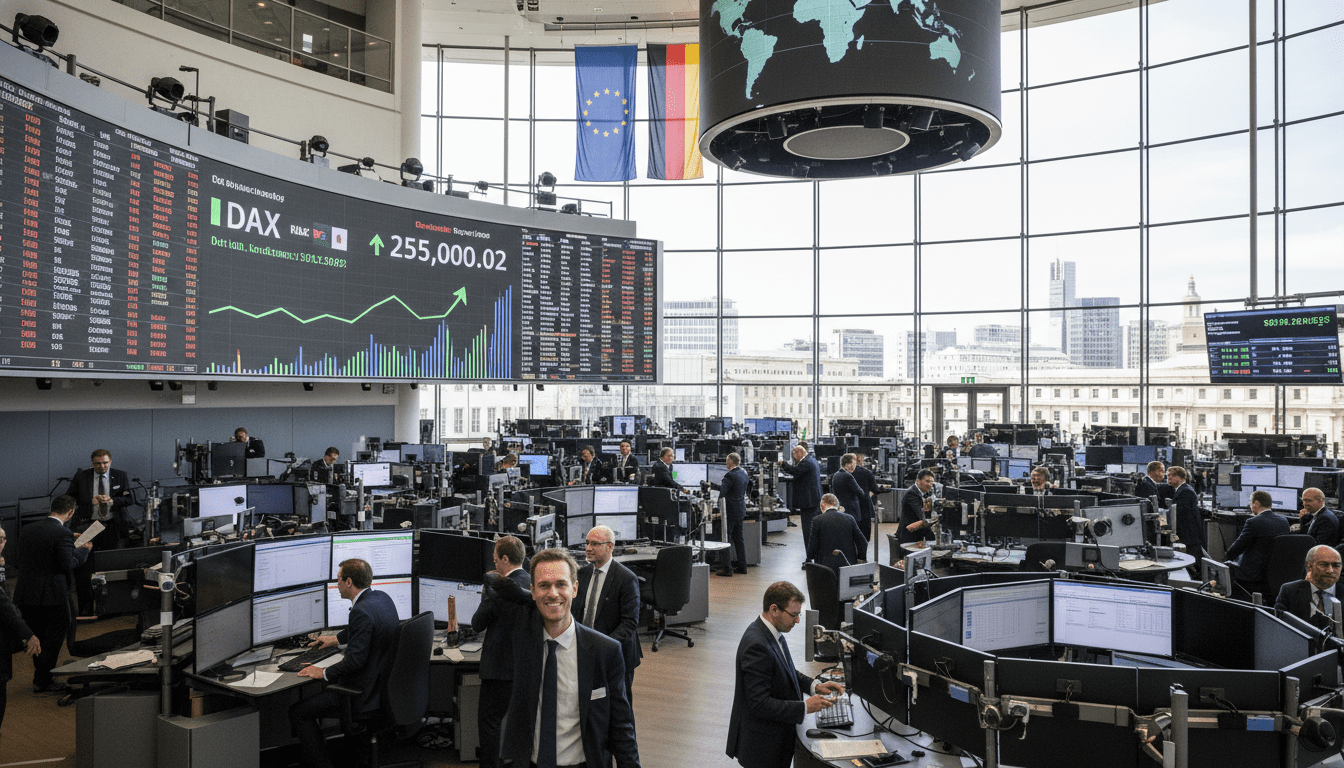
DAX Surges Past 25,000 as European Stocks Rally on Signs of Iran De‑escalation
European markets rose sharply on May 25, 2026, as the DAX closed above 25,000 amid optimism over a potential easing of the Iran conflict. The German benchmark gained about 2.0% to finish near 25,389 points, while broader European indices also recorded notable advances on the day.
DAX Breaks Through 25,000 Threshold
The DAX’s close at roughly 25,389.10 points marked its strongest level since the day before hostilities escalated in late February, a move investors credited to hopes of reduced geopolitical risk. The 2.01% advance pushed the index past a psychological barrier that investors had been monitoring for weeks, lifting sentiment across blue‑chip German stocks. Market participants said the move was driven largely by shifting perceptions of supply‑chain and travel risks linked to developments in the Middle East.
Wider European Benchmarks Also Strengthen
Gains were not limited to Frankfurt: the MDAX rose about 2.18% to near 32,808 points, while the SDAX reached another record high with a rise of roughly 0.7%. The EuroStoxx50 climbed approximately 2.0%, finishing around 6,136 points. Traders noted a broad‑based rally with mid‑ and small‑cap stocks participating, reflecting a market rotation toward economically sensitive sectors.
Oil Prices Fall, Lifting Travel and Leisure Stocks
Speculation that the Strait of Hormuz could be reopened underpinned a pullback in oil prices, a development that helped airline and leisure shares outperform. Stocks such as Lufthansa, Ryanair, TUI, Air France and airport operator Fraport saw renewed investor interest on expectations of lower jet‑fuel costs and a revived tourism outlook. Analysts said the potential for reduced energy premiums would boost margins for carriers and travel companies, supporting multiple sectors simultaneously.
Analysts Advise Caution Over Durability of Rally
Despite the Thursday rally, several analysts cautioned that the market reaction may be premature. Capital.com chief analyst Kyle Rodda warned that any agreement announced could amount to a limited cessation of hostilities rather than a durable political settlement, potentially offering only temporary relief for markets. Timo Emden of Emden Research emphasized that investors have been disappointed by earlier signals in similar geopolitical episodes, and that durable market gains will depend on concrete, verifiable steps rather than preliminary statements.
Political Announcements Drive Sentiment, Not Certainty
Traders pointed to public statements this week reporting that U.S. officials and Iranian representatives had moved toward a broadly framed deal intended to reopen maritime traffic through the Hormuz corridor. U.S. political commentary, including posts from senior officials, was cited as a catalyst for the risk‑on swing, but experts stressed a gap between political rhetoric and binding accords. Market participants said the distinction between a framework agreement and a finalized, enforceable treaty will be a central determinant of how persistent the equity rally becomes.
Low Volumes and U.S. Holiday Weighed on Activity
Liquidity conditions amplified price moves, with trading volumes in many European markets subdued because the U.S. trading day was closed for Memorial Day. Market strategists noted that thinner holiday trading meant that relatively small flows could produce outsized index shifts, complicating interpretation of the strength and breadth of the rally. Several investors said they would await higher‑volume sessions and follow‑through in U.S. markets before committing to larger portfolio reallocations.
The day’s market action also reflected a sectoral re‑rating: energy stocks lagged as crude prices eased, while travel, airlines and leisure companies outperformed on the prospect of cheaper fuel and renewed cross‑regional travel demand. Industrials and exporters gained on the possibility of a calmer shipping environment in key waterways.
Looking ahead, traders will monitor diplomatic developments and concrete signals on tanker traffic and maritime security, as well as earnings and macroeconomic data due in the coming days. Analysts reiterated that a sustained normalization in risk premia would likely require verifiable operational changes at sea, durable de‑escalation on the ground, or binding international commitments that reduce the chance of future closures.
Sentiment is fragile: short‑term moves reflect shifting narratives but longer‑term positioning will rely on confirmable policy steps and improved liquidity. Market participants said they remain ready to adjust exposure rapidly if political announcements fail to translate into tangible outcomes.
