
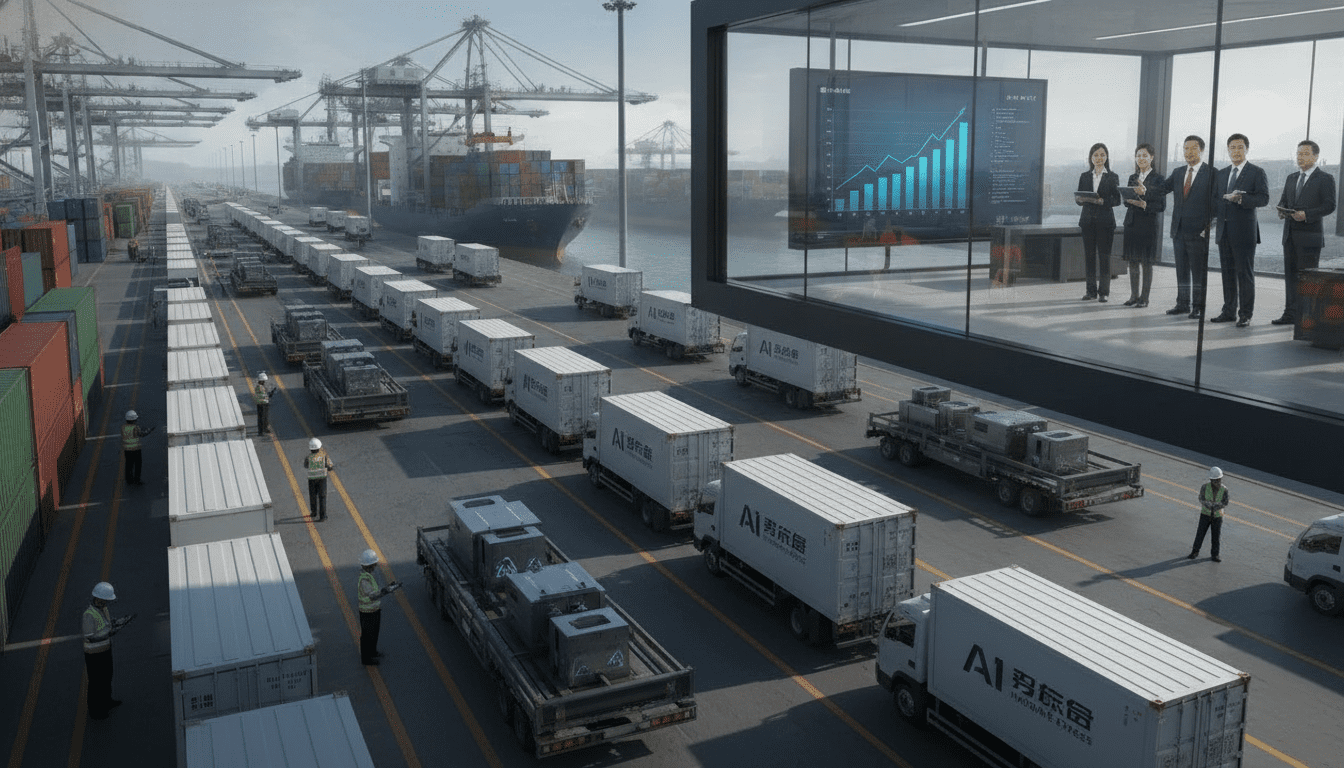
China exports surge 19.4% in May as AI hardware and chips drive record trade surplus
China exports rose 19.4% in May, widening the trade surplus past $105 billion as global demand for semiconductors, AI hardware, EVs and solar equipment surged.
China exports posted a sharp acceleration in May, outpacing economists’ expectations and pushing the country’s trade surplus to more than $105 billion. Official figures showed a year-on-year increase of 19.4 percent in shipments, compared with forecasts centered around a 15 percent gain. The jump reflects a concentrated rise in shipments of semiconductors, hardware for artificial intelligence, electric vehicles and renewable-energy components.
May exports climb 19.4% far above forecasts
The headline export growth surprised markets and policymakers alike, reflecting stronger-than-anticipated external demand. Economists had broadly expected a healthy rebound but not the magnitude recorded in the latest data. The scale of the surprise has prompted fresh scrutiny of sectoral performance and inventory dynamics across key manufacturing hubs.
The export surge was accompanied by a sizeable increase in the trade surplus, signaling that outbound shipments grew faster than imports. That pattern has implications for China’s external accounts and for trading partners reliant on Chinese-manufactured inputs.
Trade surplus expands above $105 billion in May
China’s trade surplus widened sharply from April, when it stood at roughly $85 billion, to exceed $105 billion in May. The expansion exceeded market estimates by about $13 billion and reflects both elevated export volumes and a relative moderation of import growth. Analysts note that a persistent surplus can affect currency and monetary considerations as well as diplomatic trade conversations.
Higher energy prices and precautionary stockpiling by international buyers also contributed to an uneven import profile. While imports of some commodities have risen, the import side did not match the surging pace of exports in the month under review.
AI hardware and semiconductors drive outbound shipments
Manufacturers of chips and components for artificial intelligence systems were among the largest contributors to the export gain. Global investment in AI projects has translated into heavier orders for compute hardware, memory devices and supporting electronics from Chinese suppliers. These exports included both finished modules and intermediate components destined for global assembly lines.
Shipments of electric vehicles and solar equipment also recorded strong momentum, reflecting sustained demand for clean-energy technologies and the global transition to electrified transport. Exporters of batteries, photovoltaic panels and EV components benefited from advance orders as companies sought to secure capacity ahead of potential supply shocks.
Geopolitical uncertainty fuels advance buying and stockpiling
Officials and trade analysts pointed to heightened geopolitical tensions — notably the conflict in the Middle East — as a factor prompting foreign buyers to accelerate purchases. Firms seeking to hedge against rising energy costs and the risk of disrupted shipping routes placed larger, earlier orders, boosting short-term export flows from China. That behavior amplified demand for products with long supply chains, including semiconductors and electric-vehicle parts.
The precautionary buying has uneven effects: while it supports manufacturers and ports in the near term, it may lead to inventory adjustments if global conditions stabilise. Observers caution that some of the May strength could reflect front-loaded demand rather than a sustained structural increase.
Exporters and ports report increased activity
Major coastal hubs reported heavier throughput and fuller production schedules as exporters rushed to meet international orders. Container volumes and port handling data showed a pick-up consistent with the trade figures, and logistics providers noted tight capacity on certain routes. Firms in electronics and green-technology clusters said they were operating at elevated utilization rates to fulfil backlog orders.
Companies with exposure to semiconductor and AI supply chains have signaled plans to prioritize capacity for high-margin hardware in the near term. Smaller suppliers, however, remain sensitive to price pressure and input-cost volatility, and some have limited ability to expand quickly without new investment.
Analysts weigh sustainability of the export boom
Market analysts are divided on whether the May surge signals a durable recovery or a transient spike driven by precautionary buying and inventory replenishment. Supporters of the sustainable-growth view point to structural demand for AI infrastructure and electrification that will persist over multiple years. Skeptics warn that geopolitical-driven front-loading and potential policy responses overseas could temper future orders.
Monetary and trade policy responses, as well as developments in energy markets, will be critical variables to watch in the coming months. Investors and corporate planners will monitor incoming trade data and sectoral indicators to judge whether the current momentum can be maintained.
The May figures underscore China’s continued centrality in global manufacturing, particularly for semiconductors, AI hardware, electric vehicles and solar technologies. How exporters and policymakers respond to evolving demand patterns and geopolitical risks will shape trade flows later this year.
