
German Appellate Court Rules Part of Bundeswehr Procurement Acceleration Law Unconstitutional
Düsseldorf court finds a provision of the Bundeswehr procurement acceleration law unconstitutional, sending the dispute to Germany’s Federal Constitutional Court in Karlsruhe.
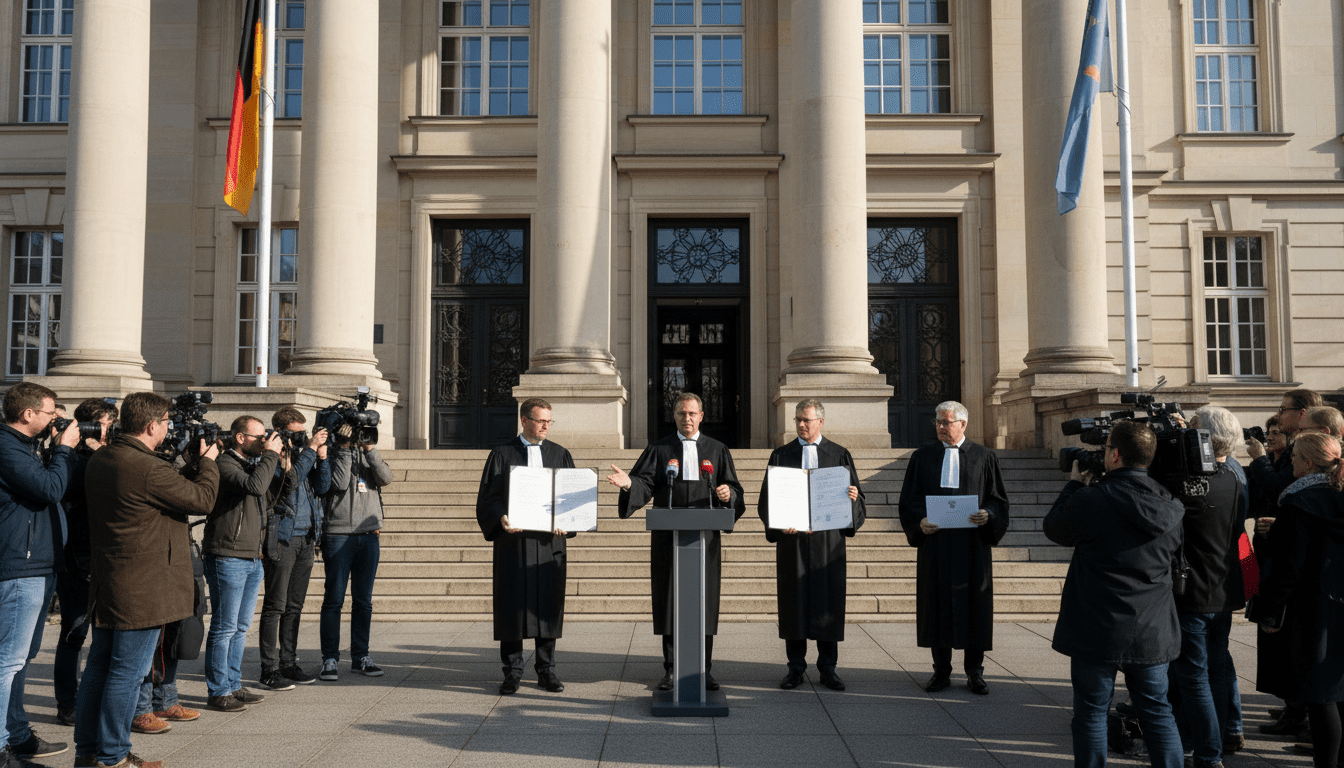
The Higher Regional Court in Düsseldorf has determined that a section of the Bundeswehr procurement acceleration law, introduced to speed up material purchases for the armed forces, is incompatible with constitutional requirements. The ruling, delivered in a written order, designates the contested measure as legally defective and signals that the issue will be decided by the Federal Constitutional Court in Karlsruhe. Defence Minister Boris Pistorius had championed the law to shorten acquisition timelines for the Bundeswehr, but the judgment places that political goal into a period of legal uncertainty.
Details of the Düsseldorf ruling
The Düsseldorf court issued a formal decision concluding that at least one provision of the procurement acceleration statute fails to meet constitutional standards. The judgment identified procedural or substantive defects that, in the court’s view, undermine the law’s legal foundation. By declaring the measure at odds with the constitution, the court has effectively blocked that part of the law from operating without a constitutional review.
The decision follows litigation brought by parties challenging the law’s legality, prompting the appellate panel to scrutinize whether the Parliament had preserved essential legislative safeguards. While the court did not annul the entire statute, its finding makes clear that specific mechanisms intended to streamline defence procurement require reassessment. The written order states the matter should be referred upward for a final ruling.
Which provision the court flagged
The court flagged a provision that delegated heightened procurement powers or altered oversight mechanisms in ways the judges found constitutionally problematic. Although the judgment did not strike down the whole reform package, it singled out the clause it deemed incompatible with basic legal safeguards. That selectivity means the wider aims of the law remain active in part, but the flagged element cannot be relied upon until the Federal Constitutional Court issues its ruling.
Legal experts note that identifying a specific unconstitutional clause often centers on whether the law unduly restricts parliamentary control, bypasses required legislative detail, or dilutes judicial review. The Düsseldorf panel’s approach suggests its concern was not with defence policy objectives but with how those objectives were embedded into statutory form. The exact legal reasoning will shape the constitutional court’s docket and frame the questions Karlsruhe will answer.
Implications for Bundeswehr procurement and readiness
The ruling complicates efforts to accelerate deliveries of material and equipment to the Bundeswehr by introducing new legal obstacles. Defence planners who anticipated faster contracting and streamlined approvals must now prepare for procedural pauses while the constitutional court considers the matter. Suppliers and procurement agencies face uncertainty about which contracting modalities remain valid and which may be held in abeyance pending Karlsruhe’s decision.
Operational timelines for acquisition projects could be delayed if the Federal Constitutional Court imposes restrictions or requires legislative amendments. That will have practical consequences for projects already underway and for short-term procurement aimed at immediate capability gaps. However, observers caution that core procurement work may continue where the law was not affected, leaving room for selective progress even as contested parts are examined.
Reaction from the Defence Ministry and political actors
Defence Minister Boris Pistorius emphasized that the law’s intent was to reduce bureaucratic delay and strengthen the Bundeswehr, arguing that speed is essential for national security. Government officials are now tasked with explaining the impact of the Düsseldorf decision and outlining contingency plans for procurement. Opposition lawmakers have seized on the ruling to question the government’s legislative process and the law’s constitutional soundness.
Parliamentary committees and the ministry are expected to review the court’s reasoning closely and coordinate possible corrective legislation or amendments. SPD leaders who backed the bill will face pressure to demonstrate that any changes preserve the law’s original aims while addressing the court’s constitutional concerns. Meanwhile, defence industry representatives are seeking clarity about contracting processes and completion dates for pending orders.
Next steps: Referral to the Federal Constitutional Court
Under the German judicial process, the Düsseldorf ruling elevates the issue to the Federal Constitutional Court in Karlsruhe, which holds ultimate authority on constitutional disputes. Karlsruhe will decide whether to accept the referral and, if so, set a timetable for oral hearings and a full judgment. The constitutional court’s review could take months, and its decision will determine the legal fate of the contested provision.
If the Federal Constitutional Court upholds the Düsseldorf finding, the Bundestag may need to revise the law to bring it into line with constitutional requirements. Conversely, a Karlsruhe ruling that overturns the appellate panel could restore the contested instrument and permit the government to proceed. Legal analysts predict careful scrutiny from the constitutional bench, given the potential implications for separation of powers and oversight in defence procurement.
Context of ongoing procurement reform
The procurement acceleration law was one element of broader efforts to modernize and expedite defence acquisitions in response to evolving security pressures. German officials have repeatedly prioritized shortening contract timelines and streamlining approvals to equip the Bundeswehr more effectively. The Düsseldorf decision highlights the tension between speed and adherence to constitutional safeguards in the legislative design of such reforms.
Policy makers now face the challenge of balancing urgent defence needs with procedural protections that guard parliamentary oversight and legal accountability. The controversy underscores the importance of meticulous legislative drafting when fast-track measures intersect with constitutional principles. How quickly the government and Parliament respond will determine whether procurement reform regains momentum or becomes mired in protracted legal and political negotiations.
The Düsseldorf ruling transfers a high-stakes legal question to Karlsruhe, and its outcome will shape Germany’s procurement law and defence planning for years to come.
