
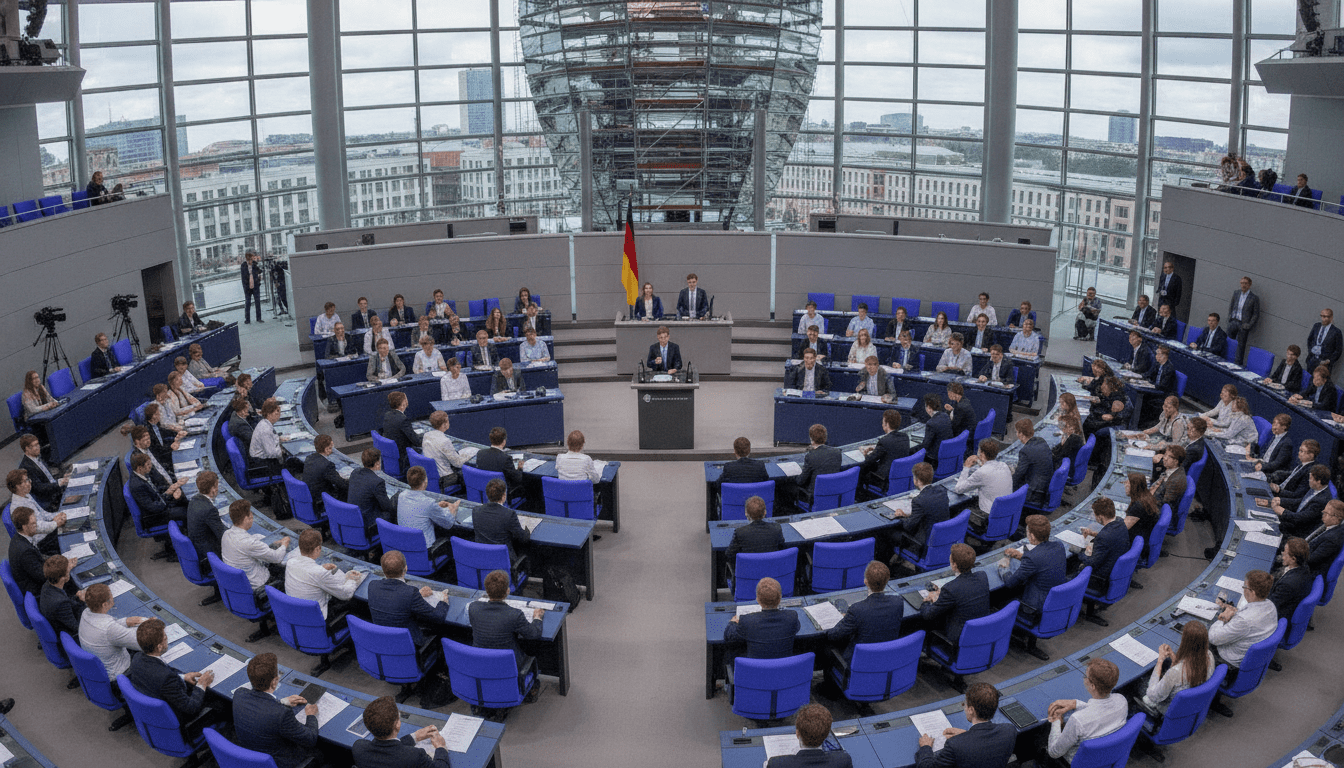
Youth and Parliament: 270 Young Germans Rehearse Democracy in Bundestag Simulation
270 youths aged 17–20 took part in the Bundestag event Youth and Parliament, practising debates, votes and parliamentary roles across four intensive days in June.
The Bundestag’s Youth and Parliament simulation brought 270 participants aged 17 to 20 into a four-day reconstruction of legislative life, where they debated, voted and occupied committee roles to experience how Germany’s parliament functions. The exercise paired young people with mock portfolios and party groupings, and included formal speeches, committee deliberations and secret ballots. Organizers said the goal was to deepen civic knowledge and give participants hands-on exposure to parliamentary procedure. For many attendees the simulation offered a practical complement to civic education in schools.
Simulation Recreates Bundestag Procedures
The four-day program replicated core features of the Bundestag, including plenary debates, committee hearings and voting procedures that mirror real parliamentary rules. Participants received role assignments and speaking times, and were expected to prepare bills, motions and amendments as part of their workload. The format required adherence to formal order and allowed students to experience the pace and pressure of public decision-making. Observers and parliamentary staff monitored sessions and provided feedback on procedure and rhetoric.
Selection by Members of Parliament
Most slots in the Youth and Parliament program are allocated by sitting members of the Bundestag, who nominate young people from their constituencies or party networks. That practice means many participants already have some affinity with a political party, though a subset of places is filled through open applications and outreach campaigns. Critics argue the nomination system risks excluding politically unaffiliated voices, while supporters say MP selection helps ensure motivated and prepared participants. Parliamentary organizers report a mix of nominations and public calls designed to broaden participation.
Role-Playing Sparks Perspective Shifts
Participants were required to inhabit fictional identities that often differed sharply from their real backgrounds, a feature intended to foster empathy and broaden perspective. One 19-year-old student and Green Party member took on the role of a 44-year-old former military officer and committee chair, confronting policy positions he had not personally held. The exercise pushed participants to defend viewpoints they might oppose, sharpening their argumentative skills and encouraging consideration of opposing priorities. Many attendees said the immersion taught them more about practical politics than classroom study alone.
Debates, Votes and Committee Work in Practice
Simulated committees tested participants’ ability to negotiate and build coalitions on complex topics, while plenary sessions required public speaking and time management under scrutiny. Secret ballots and procedural votes introduced the strategic aspects of legislative life, including whipping, floor management and amendment strategy. Mentors and parliamentary staff provided short trainings on roles such as committee chair and rapporteur before sessions began. Participants left the sessions with a clearer grasp of the procedural mechanics that shape policy outcomes.
Political Engagement and Public Scrutiny
The program produced both praise for its educational value and debate about inclusivity and transparency in participant selection. Some educators and civic groups have called for clearer outreach to underrepresented communities and for a larger share of places to be distributed through open applications. Parliamentarians who nominate participants defend the system as a way to involve interested constituents and support youth engagement. Organizers say they are reviewing selection processes to strike a balance between targeted invitations and wider recruitment.
Education Goals and Long-Term Impact
Parliamentary organizers frame Youth and Parliament as a long-term investment in democratic literacy and civic participation that complements formal schooling. The simulation aims to build skills in public argumentation, procedural knowledge and political confidence that can translate into volunteerism, local activism or future candidacy. Alumni of past sessions report sustained interest in politics and clearer understanding of how institutional procedures affect policy. Officials say continued evaluation will guide changes to make the program more accessible and educationally effective.
The Youth and Parliament simulation in the Bundestag gave hundreds of young Germans an intensive, hands-on glimpse into legislative life, combining procedural training with role-play that challenged assumptions and expanded political literacy. Participants left better acquainted with the mechanics of lawmaking and more aware of the responsibilities borne by elected representatives. As organizers consider adjustments to selection and outreach, the event will likely remain a central tool for engaging the next generation in parliamentary democracy.
