
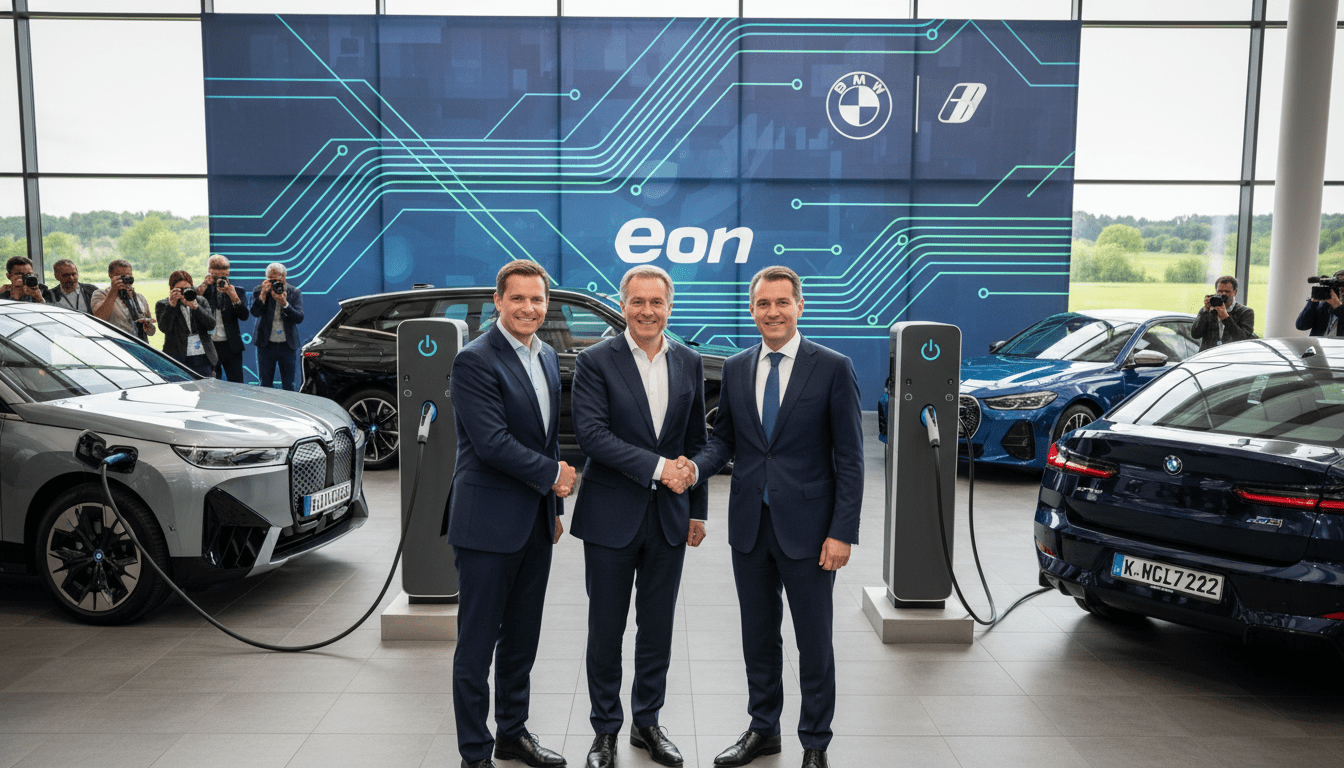
Eon launches pilot to test bidirectional charging with BMW and research partners
Eon launches a pilot to test bidirectional charging (V2G) with 20 households, BMW vehicles and research partners to evaluate grid services, tariffs and system impacts.
The energy company Eon has begun a six‑month pilot to test bidirectional charging, turning private electric cars into controllable household batteries and potential grid suppliers. The pilot, part of the BDL Next research programme, will evaluate whether vehicle-to-grid services can relieve distribution networks while offering owners new tariff opportunities. The initiative brings together automakers, network operators and research institutes to assess technology, measurement and market rules at scale.
Pilot setup and participant requirements
Twenty test households received BMW electric vehicles and compatible wallboxes to participate in the pilot, which requires participants to be customers of Eon’s regional grid subsidiaries and to have rooftop solar installations. The pilot phase follows the project’s launch in November 2023 and will run within the three‑year BDL Next timeline funded by the federal ministry. Project managers say participants were selected to study real‑world interactions between household solar generation, vehicle battery use and local network conditions.
Consortium and project governance
BDL Next is coordinated by the German Aerospace Center (DLR) through its energy economics research unit and has received €11 million in federal funding to date. Academic partners include the Karlsruhe Institute of Technology, the University of Passau and the EBZ Business School in Bochum, while industry partners supply vehicles, network expertise, charging hardware and software. BMW provided vehicles for the trial, TenneT and Eon represent transmission and distribution system interests, and technology vendors handle charging stations and interface development.
Technical aims and open interfaces
A central aim of the project is to develop open software interfaces that let customers and operators use bidirectional charging independently of a single carmaker, grid operator or wallbox vendor. The trial will test both alternating‑current (AC) and direct‑current (DC) charging approaches and examine where metering and power conversion should take place — in the vehicle or the charging station. Researchers say interoperable standards are essential to scale up V2G services without locking customers into proprietary ecosystems.
Grid impacts and coordination challenges
Project leaders emphasize that the main objective is to coordinate thousands of small, distributed batteries to support distribution networks as renewable generation and electric loads rise. The pilot will gather data on when cars can supply power, whether delivered energy originates from PV panels and how aggregated flows affect local grid stability. Organizers note the need to align multiple market layers — consumers, network operators, traders and tariff structures — to make aggregated vehicle flexibility useful and measurable for system operators.
Commercial models and customer incentives
Eon says commercially viable tariffs are already being discussed and some supplier‑manufacturer offers exist that pay EV owners for exported energy. The company projects that customers could earn roughly €60 per month by using their vehicle as a home battery and exporting to the grid, a sum it says could justify additional wallbox costs over time. Eon expects to draw lessons from the pilot and aims to bring initial market products to customers as early as 2027, contingent on technical outcomes and regulatory clarity.
Early industry figures underline the limited current footprint of bidirectional‑capable vehicles, but adoption is growing as manufacturers introduce “Bidi‑ready” models. The trial will therefore also test consumer acceptance, battery usage patterns and potential impacts on vehicle warranties and taxation, while collecting operational data needed to design practical tariffs and compensation schemes.
The BDL Next pilot seeks to move bidirectional charging from niche experiments into actionable services by combining laboratory expertise with household trials. Results from the six‑month field phase are intended to inform standards, commercial offers and regulatory requirements so that private EV batteries can safely and profitably contribute to grid flexibility at scale.
