
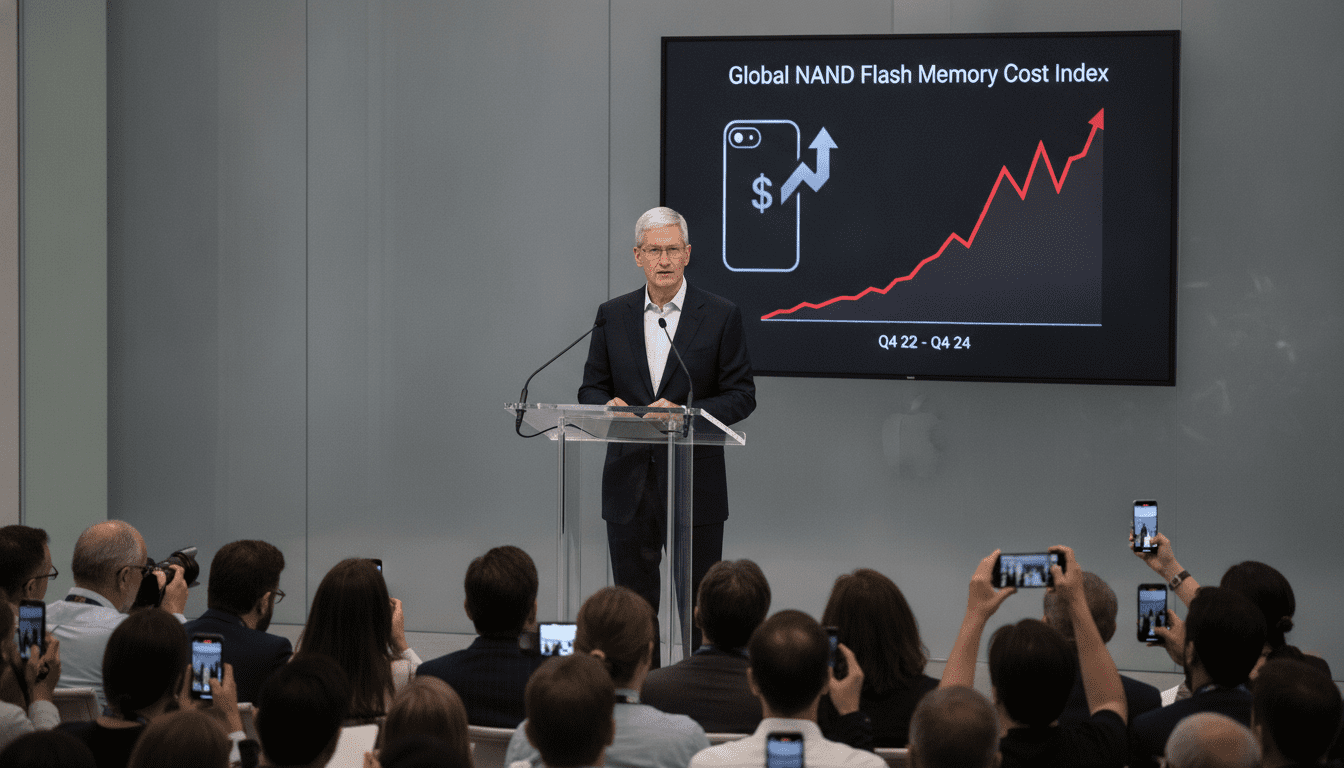
Apple Signals Possible iPhone Price Increase as Storage Costs Surge
Apple warns rising storage costs may force an iPhone price increase, ending years of stable pricing secured by long-term supplier deals ahead of iPhone 17.
Apple has signaled that rising component costs — particularly for flash storage — could force an iPhone price increase after years of largely stable device pricing. The company said it has absorbed significant cost inflation through long-term supply contracts but can no longer guarantee that those protections will prevent higher retail prices. The disclosure opens the door to cost adjustments ahead of the next major iPhone release and has prompted fresh scrutiny of margins and product configurations.
Company statement on cost pressures
Apple told suppliers and investors it is doing its best to shield customers from “huge” cost increases but that absorbing those costs indefinitely is not sustainable. The company specifically pointed to surging memory and storage expenses as a principal driver of its decision to consider countermeasures. Management framed the move as a last resort after using contractual hedges and internal efficiencies to limit price pass-through.
Role of long-term supply contracts
For several years Apple relied on multi-year agreements with semiconductor manufacturers to stabilize component prices and secure supply, which helped keep iPhone prices relatively flat. Those contracts provided Apple with priority allocation and predictable pricing during earlier waves of volatility. As suppliers face their own cost inflation and tighter capacity, the protective value of those agreements has diminished, industry insiders say.
Storage costs and the NAND market
Analysts and industry sources have pointed to the NAND flash market as the immediate pressure point, where memory chip costs have risen due to constrained output and stronger demand for higher-capacity devices. Higher per-gigabyte prices for storage chips disproportionately affect phone models that offer larger built-in storage tiers. That dynamic increases the marginal cost of premium configurations and complicates Apple’s historical approach of expanding capacity options without raising base prices.
Potential impact on iPhone 17 and model mix
The announcement arrives as Apple prepares its next iPhone family, a launch period when pricing decisions are most consequential. An iPhone price increase could be implemented across the lineup or targeted at higher-capacity models, subscription bundles, or accessories. Apple may also alter storage standardization — for example, changing default capacities or adjusting upgrade pricing — to limit visible list-price changes while protecting margins.
Implications for consumers and carriers
Consumers could see either higher upfront prices for certain iPhone models or reduced value in storage options, affecting buyers who need larger capacity for apps, photos, and media. Mobile carriers and retailers, which often subsidize or bundle devices, may also adjust promotions and trade-in values in response. Any notable retail price movement would be closely watched in markets where Apple competes on a combination of brand strength, ecosystem services, and perceived value.
Supply-chain and competitive considerations
Rising memory costs affect not only Apple but the broader smartphone ecosystem, potentially giving rivals room to reposition pricing or feature trade-offs. Suppliers that manufacture memory chips and other components may see increased negotiating leverage, while contract dynamics could shift as manufacturers weigh short-term gains against long-term customer relationships. Apple’s purchasing scale remains a significant advantage, but that leverage has limits when upstream costs rise across the industry.
Apple’s statement frames the situation as a balancing act between customer expectations and business sustainability. The company emphasized its continued efforts to manage costs internally and through supplier agreements, while signaling that some level of price adjustment may be unavoidable if market conditions persist. How Apple executes — whether through list-price increases, configuration changes, or alternative offers — will determine the immediate impact on consumers and the broader market.
