
Anthropic Pulls Mythos 5 After U.S. Export-Control Order as Business Adoption Surges
Anthropic pulls Mythos 5 and Fable 5 after a U.S. export-control order; business adoption rises as Ramp data shows Anthropic leading AI subscription spending.
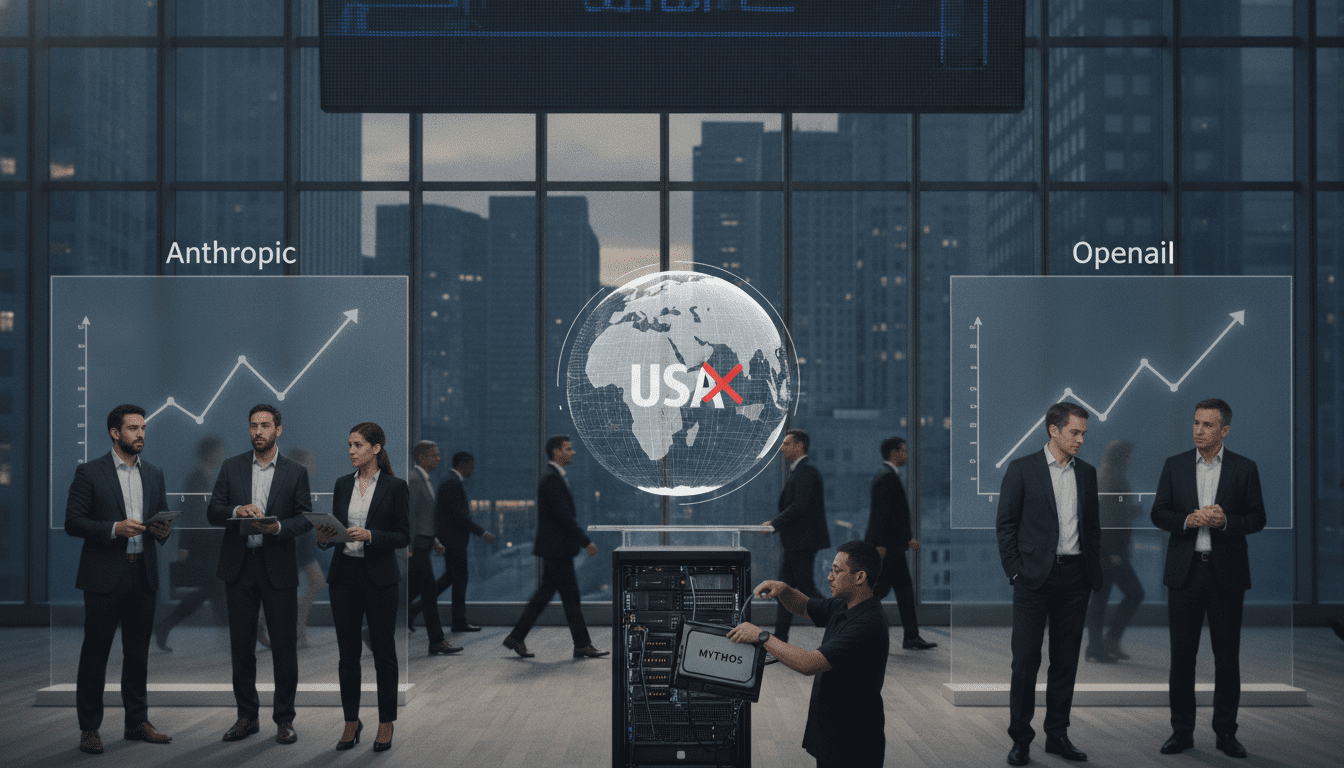
Anthropic has removed its most advanced models from public access after the U.S. government demanded restrictions on who may use them, even as business spending on the company’s AI technology reached new highs. The model maker pulled its limited-release Mythos 5 and the publicly available Fable 5 following a White House letter that invoked export-control authority and ordered the company to bar non-U.S. users from accessing those systems. Meanwhile, independent spending data collected by finance platform Ramp shows Anthropic gaining market share among businesses purchasing AI subscriptions and API usage.
Government order and model access restrictions
The White House letter instructed Anthropic to ban non-Americans, including its own non-U.S. employees, from using Mythos 5 and Fable 5, effectively prompting a removal of those models from the market. Officials cited an export-control directive as the legal basis for the order, but public statements have not fully explained the specific technical or threat assessment that led to the ban. Anthropic complied by restricting access to the affected models while it evaluates the government’s demands and the underlying concerns.
Security concerns tied to Mythos capabilities
The U.S. move followed concerns that Fable 5’s guardrails could be bypassed and that Mythos’ capabilities pose a distinct security risk. Anthropic had itself characterized Mythos as powerful enough to uncover software vulnerabilities and therefore deserving of restricted distribution. Industry observers say the combination of exceptional capability and demonstrated bypasses of mitigations drove regulators’ alarm about potential misuse.
Business adoption climbs despite controversy
Despite the regulatory clash, business adoption of Anthropic’s available models has continued to rise. Ramp’s dataset, based on spending by more than 70,000 businesses, shows Anthropic’s share of AI subscriptions purchased by companies rose to about 41% in May, compared with roughly 39.5% for OpenAI. The bulk of enterprise spending remains concentrated on API calls used for tasks such as coding and automation, and Anthropic’s Claude Code and Opus family of models are frequently cited by customers as the workhorses for those use cases.
Model lineup and product updates
Anthropic’s commercial offering remains anchored by Opus, the model family that preceded Mythos, and the company released Opus 4.8 late in May to feature new workflow tools and performance improvements. Ramp’s visibility into model-level usage is partial — the firm can see model details for roughly one-third of transactions — but where identifiable, later versions of Claude Opus account for the majority of business spend. Mythos had been available only to a limited set of users since April, and the public-facing Fable 5 was taken offline within days of its release.
Regulatory history and supply-chain designation
The latest escalation builds on a broader regulatory dispute between Anthropic and the U.S. government earlier this year. Anthropic resisted government requests to deploy its models for mass domestic surveillance and fully autonomous weapons, and in March the Department of Defense labeled the company a supply-chain risk. That designation, and the company’s subsequent legal challenge to it, set the stage for sustained scrutiny and a fraught relationship with federal authorities ahead of the export-control action.
Implications for an IPO and market positioning
Anthropic’s commercial momentum has coincided with major financing milestones: the company announced a $65 billion raise at a reported $965 billion valuation at the end of May and filed confidential paperwork for an initial public offering in early June after reporting its first profitable quarter. Those financial developments underscore investor appetite for large-scale AI providers even as regulatory friction intensifies. Market analysts note, however, that public-market investors often factor in regulatory risk and government disputes when evaluating IPOs, so the timing and terms of any public listing could be affected.
Outlook notwithstanding, some economists and industry observers suggest the controversy may paradoxically boost Anthropic’s commercial profile. Visibility around the alleged dangers of Mythos has increased public awareness and may have enhanced the company’s reputation among businesses seeking advanced AI capabilities under controlled conditions. How long Anthropic can sustain growth while navigating government restrictions, legal challenges, and the operational task of securing model access will be central to its near-term trajectory.
