
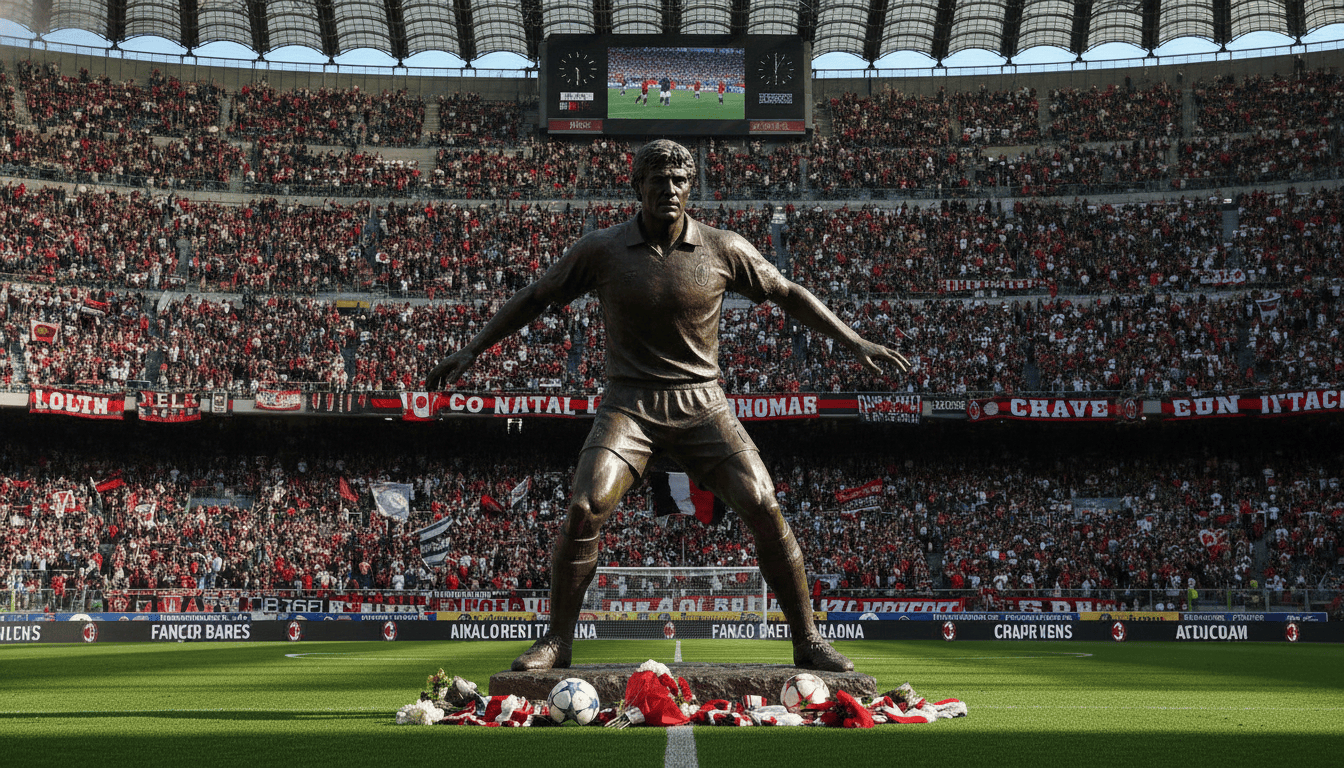
Franco Baresi: How “Il Piscinin” Turned Modest Stature into Legendary Defensive Authority
Franco Baresi’s nickname “Il Piscinin” captured the paradox at the heart of his career: a 1.76m defender whose physical height belied an imposing presence on the pitch. Baresi’s stature and nickname are central to understanding how he redefined the role of a central defender through anticipation, positioning, and leadership. This profile examines the qualities that made Franco Baresi a model of defensive excellence and an enduring figure in football.
Nickname and early perception
The Lombard moniker “Il Piscinin,” meaning “the little one,” followed Baresi from youth football into the professional arena. It reflected how teammates and fans perceived his physical dimensions more than his influence on matches. That contrast between nickname and impact helped shape a narrative: a player who proved that stature is only one measure of presence.
As early impressions solidified, Baresi’s game began to shift public assumptions about center-backs. Observers noted a player who relied less on brute force and more on timing, spatial control, and psychological composure. Those traits soon defined his reputation as a defender whose command extended far beyond his height.
Defensive craft and technique
Baresi’s defensive approach prioritized anticipation and balance, allowing him to intercept danger before it fully developed. He read the play with an almost clinical calm, moving to cut passing lanes and shepherd opponents away from scoring positions. That economy of motion made his challenges appear inevitable rather than desperate.
Close marking and measured tackling were complemented by composed recoveries when situations opened up. Rather than launching reckless interventions, he used precision and timing to neutralize threats while minimizing risk to his team. The result was a style both efficient and aesthetically disciplined.
Leadership and on-field authority
Beyond technical skills, Baresi’s influence bloomed through leadership and communication. He marshaled defensive lines with succinct directions, organizing teammates and setting the collective rhythm of the backline. His presence conveyed confidence, and that steadiness often calmed matches during high-pressure moments.
Teammates often responded to that voice with trust, which amplified defensive cohesion. That trust translated into fewer breakdowns and a resilience that opponents found difficult to penetrate. In many matches his leadership mattered as much as his individual actions.
Tactical intelligence and adaptability
Tactical intelligence was a hallmark of Baresi’s game, enabling him to adapt to different opponents and formations. He displayed an ability to step out of the defensive line to intercept through balls and then recover into position when necessary. That blend of aggressiveness and restraint made him adaptable to evolving tactical demands.
Coaches valued his cerebral reading of the game because it provided a reliable base from which teams could build. Whether facing direct attackers or more intricate possession play, his decisions often simplified complex situations for teammates. That reliability frequently allowed managers greater tactical freedom elsewhere on the pitch.
Club legacy and recognition
At club level, Baresi became synonymous with consistency and devotion, qualities that won admiration from supporters and peers alike. He emerged as a central figure who embodied the standards of professionalism and competitive excellence expected at the highest tier. His performances in domestic and continental competitions reinforced his status as a defensive reference point.
Recognition came in many forms, from the respect shown by rivals to post-career reflections that positioned him among the game’s influential defenders. While trophies and awards are part of the record, his longer-term legacy has been the imprint left on how successive generations view the center-back role.
Enduring influence on modern defenders
Baresi’s career offers a template for modern defenders who prioritize reading and positioning over sheer physicality. Young players studying contemporary defending can draw lessons from his emphasis on timing, spatial control, and leadership. Coaches often cite such attributes when shaping defenders to cope with faster, more technical attacking play.
His example also challenged scouting orthodoxy that equated height with defensive suitability, encouraging a more nuanced evaluation of attributes like intelligence, technique, and temperament. In that way, Baresi’s influence persists not only in memories but in how the sport develops talent today.
Franco Baresi’s story remains a reminder that presence on the football field is produced by a combination of skill, mind and leadership, and that a nickname like “Il Piscinin” can be a starting point for a legacy that towers over statistics.
