
FIFA investor plans ignite global backlash as Infantino defends $20bn FFE proposal
FIFA investor plans draw fierce criticism after president Gianni Infantino on July 29, 2026 defended a proposal to sell stakes in a newly formed $20bn FFE vehicle to outside investors, saying it would boost funding for smaller federations.
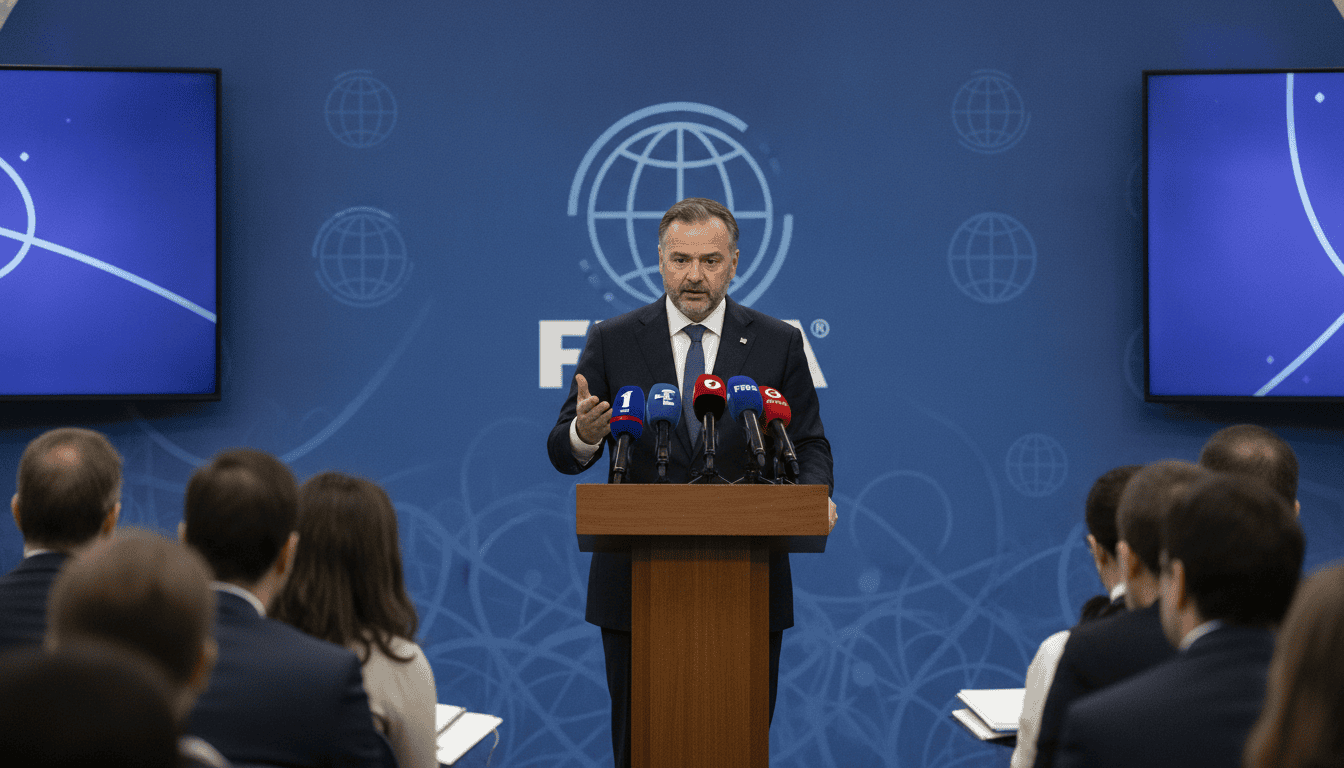
Gianni Infantino addressed mounting international criticism in a video message on July 29, 2026, framing the FIFA investor plans as a “once-in-a-lifetime” opportunity to accelerate football’s global development.
He argued the proposal was a suggestion to be decided through FIFA’s democratic process, requiring approval from the 211 member associations and the FIFA Council.
Proposal would give private investors up to 20 percent of new FFE vehicle
Under the plan outlined by FIFA, commercial rights to major competitions would be consolidated into a new subsidiary, FIFA Forward Enterprise (FFE), with an initial valuation set at $20 billion.
Private investors would be able to acquire roughly 20 percent of FFE, giving them exposure to revenues from men’s and women’s World Cups and other FIFA competitions.
FIFA says the structure would unlock external expertise and capital that can be redistributed across member associations through a revamped funding programme.
European federations accuse FIFA of coercive tactics and potential bribery
Senior officials in several European federations have reacted with alarm, alleging FIFA set a deliberately short timeframe to secure votes and that promised payments resemble inducements.
Critics have used stark language — from “bribery” to “sell‑out” — arguing that offering large, conditional payments to member associations could distort the democratic process.
Those objections have driven the fiercest public pushback against the FIFA investor plans to date, and several prominent national bodies have called for greater transparency and independent review.
Smaller member associations seen as likely beneficiaries and swing voters
Despite the controversy, FIFA insiders expect many smaller federations to back the deal because of the promise of significantly increased revenues.
Infantino has repeatedly positioned himself as a redistributor of football wealth, saying that too little of the sport’s commercial growth reaches the places that most need investment.
That pitch appears to resonate with federations that have limited commercial income and would gain immediate financial relief from an influx of investor funds.
Commercial strategy framed as next step after recent tournament reforms
FIFA defends the proposal as the logical financial follow-up to a decade of structural changes in competitions and calendar management.
Officials argue that creating a single commercial vehicle for rights will streamline sponsorship and broadcast deals and increase total returns, which can then be shared more widely.
Sceptics counter that the model would incentivize more tournaments and expanded formats to boost returns, potentially altering the sporting calendar and player workloads.
Conflict-of-interest concerns over post-presidency role for Infantino
Media reports and opponents have highlighted governance risks tied to a provision that could allow Infantino to become chief executive of the commercial vehicle after a further presidential term.
Such an outcome would concentrate influence over both the governing body and its commercial arm in a single individual and has raised alarm among governance experts.
FIFA insists appointments would follow established procedures, but the optics of a sitting president transitioning into an executive commercial role have intensified scrutiny.
Calls for oversight, independent audit and clearer safeguards
Opponents are demanding an independent audit of the valuation and structure of the FFE deal, as well as legal safeguards to prevent conflicts of interest and protect competitive integrity.
Several federations and external governance specialists say any sale of rights must include binding transparency measures, voting safeguards and clear distribution formulas.
FIFA has said the plan remains a proposal subject to member approval and that details will be finalised only through consultation and the Council process.
The debate over the FIFA investor plans underscores a deeper fault line between commercial ambition and institutional trust within global football.
As member associations prepare to weigh the proposal, the outcome will hinge on whether promised financial gains outweigh persistent concerns about governance, market influence and the long‑term shape of the sport.
