
German start-ups show momentum but lack the capital to scale into global tech leaders
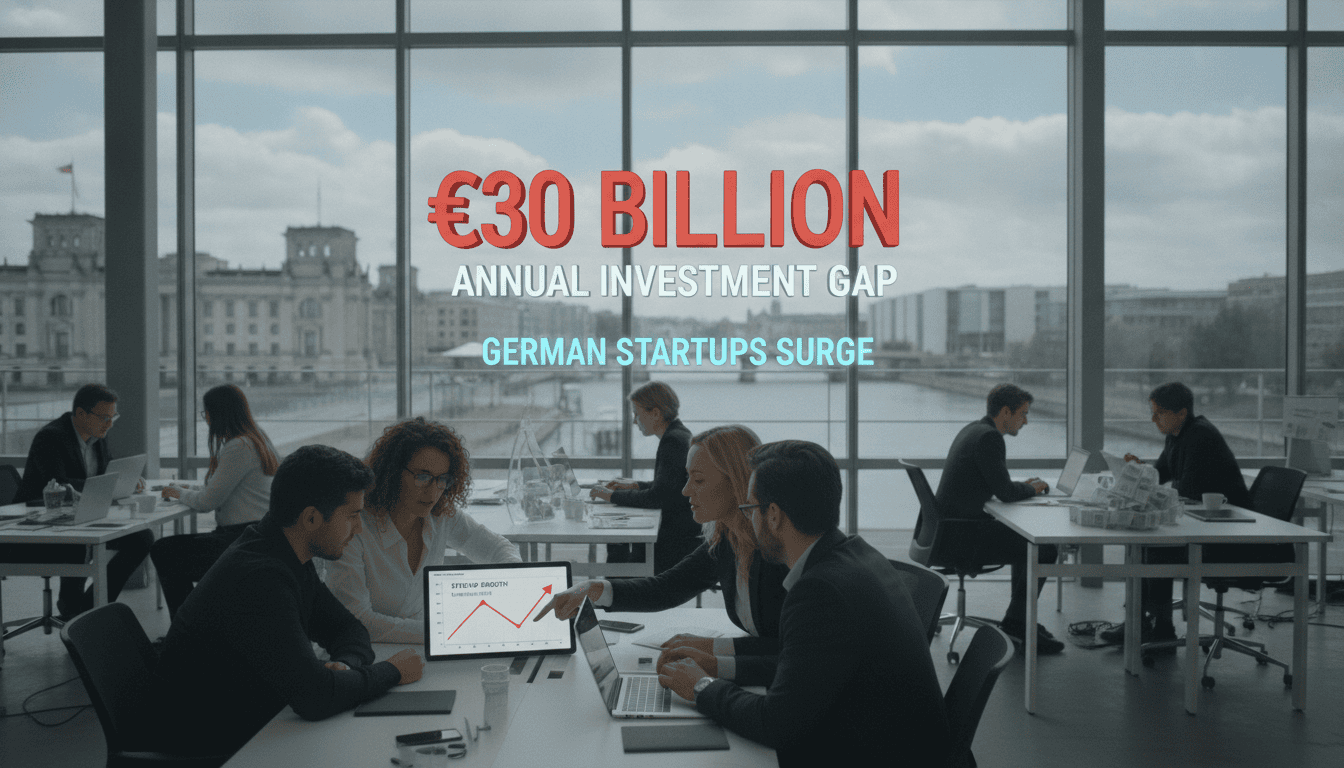
German start-ups are building strength in AI, robotics and hardware, but analysts warn of a roughly €30 billion annual funding shortfall versus U.S. peers and call for bolder investors and policy action.
Germany’s start-up ecosystem has picked up significant momentum, drawing attention from political leaders who cite rising founding rates as evidence of resilience. Yet the surge in companies across AI, robotics, defense and quantum technologies is colliding with a structural gap in late-stage capital and ambition that could limit the country’s ability to produce global tech champions.
Chancellor spotlights start-up growth
Chancellor Friedrich Merz has repeatedly highlighted the recent uptick in start-up formations as proof that Germany remains an attractive location for entrepreneurs. His public remarks framed young companies as potential future “champions” for jobs and prosperity, bringing the sector into the national policy conversation.
Policymakers and business leaders now face pressure to translate rhetoric into measures that sustain and scale innovation, especially as new ventures move from proof-of-concept to capital-intensive product development.
Deep tech and hardware are driving momentum
Beyond software, German founders are increasingly focusing on hardware-intensive fields such as quantum computing, fusion, drones and rockets. Start-ups in defense and robotics have moved rapidly from small teams to billion-euro valuations, and homegrown AI firms are competing on the international stage.
This shift aligns with Germany’s industrial strengths and university-linked innovation clusters in cities like Munich, Aachen, Dresden and Darmstadt, where research labs and spin-outs are forming tighter links with entrepreneurial ecosystems.
Funding totals have recovered but remain small by U.S. standards
Investment into German startups has stabilized after turbulent post-pandemic years, with half-year figures running into several billions of euros. Still, Europe’s flow of venture and growth capital is modest compared with U.S. megadeals that have reshaped the global landscape.
Observers point to an approximate annual shortfall of around €30 billion needed to match U.S. ratios of growth investment to economic output—an imbalance that narrows the pathway from promising start-up to global market leader.
Market dynamics show uneven participation in AI boom
The international rebound in tech spending, especially in AI, has not benefited Germany proportionately. Forecasts anticipate substantial growth in global IT expenditures, yet domestic firms and investors have captured only a portion of the resulting opportunity.
Europe’s overall tech ecosystem has expanded rapidly in recent years, but its aggregate value still compares unfavorably with the valuations of a handful of U.S. chip and software giants, underscoring the concentration of capital abroad.
Calls for bolder investors and strategic corporate engagement
Industry voices argue that changes in investor behavior are essential: founders should pursue global scale rather than early exits, and venture backers should tolerate longer timelines and larger follow-on rounds. Institutional investors, including pension funds and insurance companies, could broaden allocations to diversified venture portfolios.
Established German corporations are also urged to deepen strategic partnerships with start-ups through procurement, co-development and selective acquisitions that recycle capital back into the ecosystem and accelerate commercial validation.
Policy levers and the government start-up strategy
Government measures could ease critical bottlenecks such as visa processing for tech talent, administrative hurdles for founders and fragmented capital markets. A strengthened European Capital Markets Union and more harmonized single-market rules are frequently cited as long-term enablers of scale.
The current federal start-up strategy signals movement on these fronts, but its impact will be judged by specific reforms and measurable increases in late-stage financing and cross-border investment activity.
German founders, investors and policymakers face a decisive moment: sustaining the recent gains requires coordinated action that matches technological ambition with financial firepower.
Germany’s start-up scene has assembled many of the ingredients for success—strong research institutions, growing deep-tech cohorts and rising deal activity—but converting that potential into a steady stream of global technology leaders will depend on larger, patient capital pools, more ambitious exit strategies and swifter policy reforms to attract talent and investment.
