
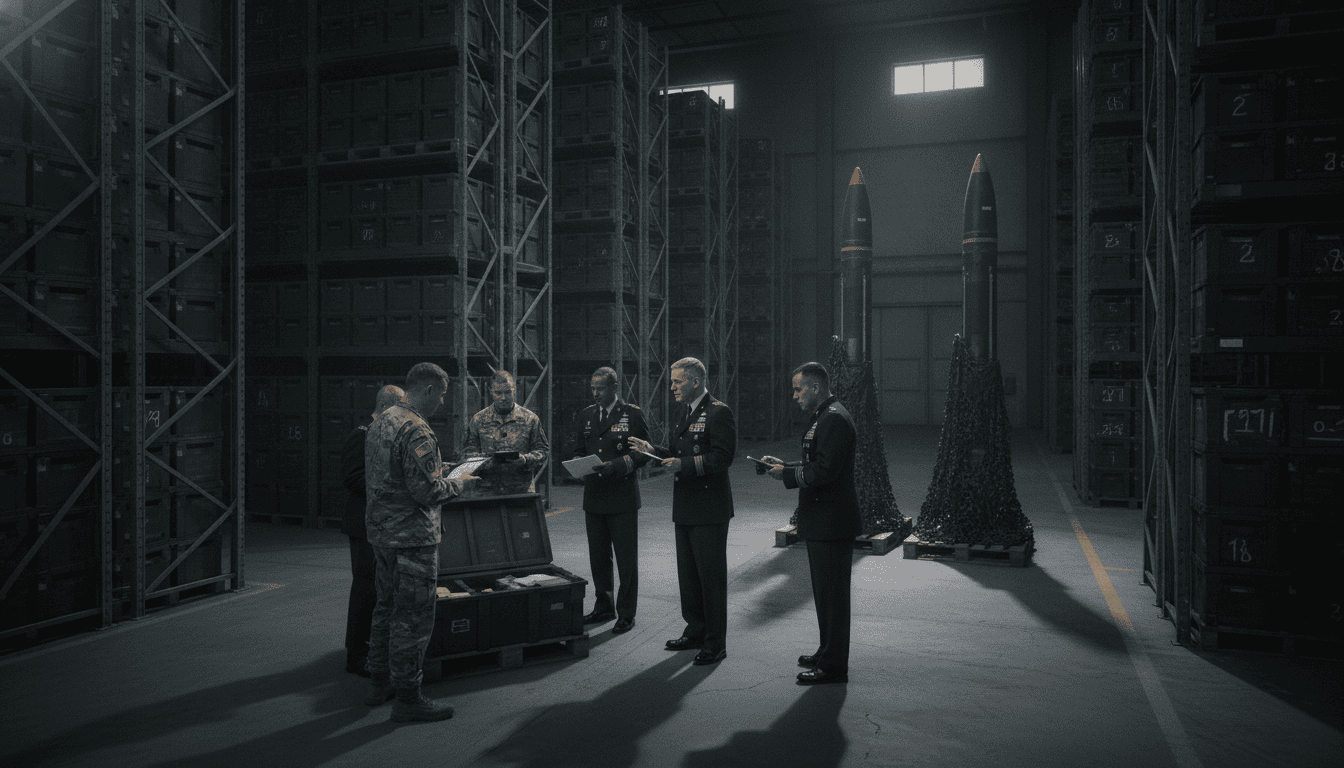
US munitions stockpile strain raises risks for troops amid war on Iran
Warnings say the US munitions stockpile of Patriot and THAAD interceptors has been depleted by operations tied to the war on Iran and could endanger troops.
The chairman of the Joint Chiefs of Staff Dan Caine told US President Donald Trump that strains on the US munitions stockpile could affect military operations in Iran according to an AP account citing a US official. The warning follows a fresh analysis by the Washington think tank Center for Strategic and International Studies which found that ongoing combat has further drained already limited inventories of Patriot and THAAD interceptors. Military planners and analysts say the depletion increases risk for forward deployed forces and complicates contingency plans if the regional conflict continues or expands.
Senior military warning to the president
The chairman briefed the president on how reduced interceptor inventories could constrain missile defense options and shape operational choices on the ground and at sea. That assessment was delivered as commanders try to balance immediate protection of forces with the need to preserve munitions for future contingencies. Officials who spoke to the press emphasized that the warning was meant to prompt urgent consideration of replenishment and risk mitigation measures.
CSIS analysis finds further depletion of Patriot and THAAD interceptors
The Center for Strategic and International Studies analysis concluded that successive rounds of engagements have consumed a significant share of available interceptors for Patriot and THAAD batteries deployed to the region. CSIS researchers warned that these systems do not have unlimited munitions and that current rates of expenditure are not matched by steady resupply. The think tank described the situation as a stress test for US missile defense logistics and warned of heightened vulnerability if fighting persists.
How Patriot and THAAD interceptors are used and why they matter
Patriot and THAAD are layered air and missile defense systems designed to intercept a range of threats from short range rockets to medium range ballistic missiles with different kill mechanisms and engagement envelopes. Interceptors are single use munitions which are launched from ground batteries and expended each time they are fired against an incoming threat. Commanders rely on these systems to protect bases, ships, and population centers so diminished inventories reduce tactical options and increase the chance that some aerial threats will go unengaged.
Operational implications for forces in the region
Military planners say lower interceptor counts force prioritization of assets to protect the most critical sites which can leave secondary installations more exposed. Reduced stockpiles also complicate surge operations and heighten the risks for personnel who operate in contested areas where air defense is limited. Analysts note that adversaries observe these constraints and may adjust tactics to exploit gaps in layered defenses.
Pentagon and White House response and deliberations
In response to the briefings and the CSIS analysis, senior officials at the Pentagon and in the White House are reported to be weighing options that include emergency purchases from domestic producers allied stock transfers and reallocation of existing inventories. Procurement and logistics leaders are also examining how quickly production lines for interceptor components can scale up without undermining quality or safety. Officials declined to provide detailed timelines but acknowledged the need to align diplomatic and military measures with practical resupply plans.
Constraints on rapid replenishment and industrial factors
Replenishing Patriot and THAAD interceptors is not a matter of simple procurement because many components are manufactured to strict specifications and require integration testing and qualified assembly. The industrial base for advanced interceptors involves multiple suppliers and long lead times for critical components which limits how rapidly inventories can be rebuilt. Export controls allied commitments and competing global demands for munitions further complicate the supply picture and could prolong shortages even if political will and funding are available.
The intersection of military warnings and independent analysis has placed the question of the US munitions stockpile at the center of strategic debates about force posture and risk management. If the conflict in the region continues the pace of interceptor use will be the deciding factor in whether current defense arrangements remain sustainable. Policymakers now face choices about immediate resupply operational trade offs and longer term investments that will determine how effectively the United States can protect forces and deter further escalation.
