
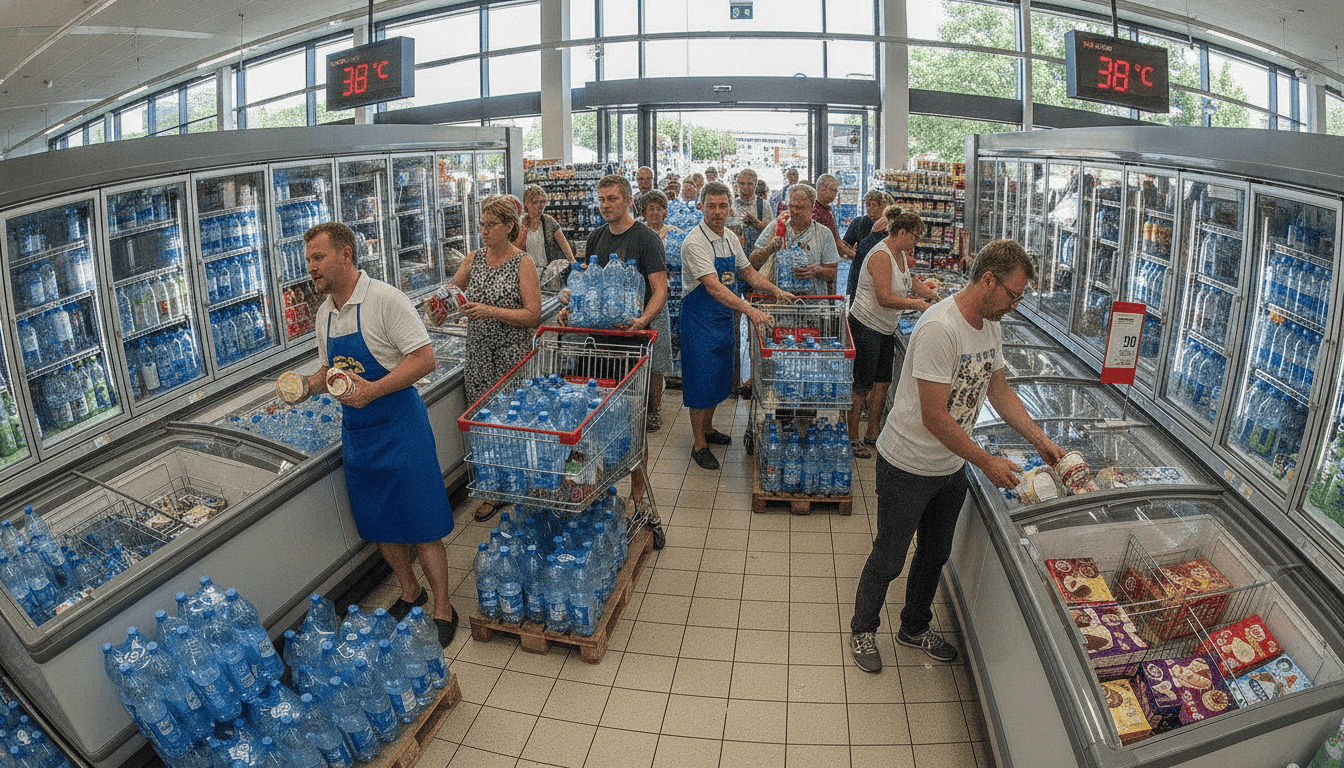
Germany heatwave drives record supermarket sales of water and ice cream
Germany heatwave in late June triggered record supermarket sales: still water up 77%, sparkling 63%, ice cream 90% — Destatis reports broad beverage surge.
The Germany heatwave that peaked from June 22 to June 28 sent shoppers into supermarkets and convenience stores in search of relief, producing the highest sales of bottled water and ice cream recorded since early 2023. The Federal Statistical Office (Destatis) reported that still water sales rose 77 percent and sparkling water 63 percent compared with an average summer week from 2023 to 2025, while packaged ice cream jumped by 90 percent. The surge extended beyond basics, touching beer mixes, soft drinks and non‑alcoholic beer as consumers sought refreshment and small comforts during the hot spell.
Record surge in water and ice cream sales
The most dramatic shifts were concentrated in everyday cooling staples, with buyers favoring chilled and easily transported products. Retailers saw a near‑instant rebound in freezer and cooler aisle turnover, driven by single‑serve and family packs of ice cream and multi‑pack bottled water.
Supermarket managers reported that the increase represented not a gradual trend but a compression of demand into the heatwave week, overwhelming normal stocking cycles. The spike underscores how acute temperature events can cause a short, sharp reordering of household shopping lists.
Detailed figures from the Federal Statistical Office
Destatis compared the week of June 22–28 with an average week across the summers of 2023–2025 to arrive at the headline figures. Still water sales rose by 77 percent, sparkling water by 63 percent and packaged ice cream registered a 90 percent increase over the reference period.
The statistics office characterized these as the highest volumes measured since the start of its observation window in early 2023, signaling an exceptional short‑term response rather than a steady year‑on‑year climb. The method highlights how extreme weather weeks can skew retail volumes when contrasted with multi‑year averages.
Broader beverage demand spike across categories
The heatwave’s effect spread to other drink categories, with sales of beer mixtures up 63 percent, non‑alcoholic beer rising 38 percent and soft drinks increasing by 34 percent during the same week. These gains suggest consumers balanced hydration needs with taste preferences and social drinking habits even while seeking cooler options.
Industry analysts said the pattern reflects both physiological demand — higher fluid intake to counter heat — and behavioral choices, such as choosing ready‑to‑consume bottled options over preparing beverages at home. Cooling products with longer shelf life or immediate gratification, like bottled drinks and ice cream, dominated baskets.
Retailers scramble to restock and adapt
Supermarket chains and local shops responded by accelerating deliveries and reprioritizing chilled and frozen slots to meet the surge. Some stores reported temporary shortages on popular SKUs and increased reliance on rapid replenishment from regional distribution centers.
Retail buyers said the episode will likely prompt adjustments to inventory models for future heat events, including larger buffer stocks for peak summer weeks and more flexible routing from suppliers. The experience highlights the logistical pressures heatwaves can place on just‑in‑time systems that are optimized for steady demand.
Markets, margins and short‑term economics
The spike in sales translated into higher volume for beverage and frozen dessert suppliers, though margins varied depending on SKU mix and promotional activity. Brands with strong chilled distribution networks captured the bulk of the upside, while smaller producers faced supply constraints.
Promotional offers and price sensitivity played a secondary role in the surge, according to retailers, who said purchases were driven more by immediate need than by discounts. For many suppliers and grocers, the heatwave represented a profitable volume event but also a stress test of supply chain resilience.
Climate context and longer‑term retail planning
Experts caution that while this episode is a short‑term sales story, it fits a broader pattern of more frequent extreme heat periods shaping consumer behavior. Retailers and suppliers are increasingly factoring climate variability into planning, from cold‑chain investment to more adaptive procurement strategies.
Public health officials continue to emphasize hydration and heat precautions, noting that consumer purchasing is one visible response to a wider need for preparedness. For the retail sector, the lesson is clear: heat events can reorder demand within days, and systems must be ready to respond.
The late‑June heatwave therefore stands out as both an immediate commercial windfall for certain categories and a reminder of how weather extremes are reshaping shopping habits and supply chains.
