
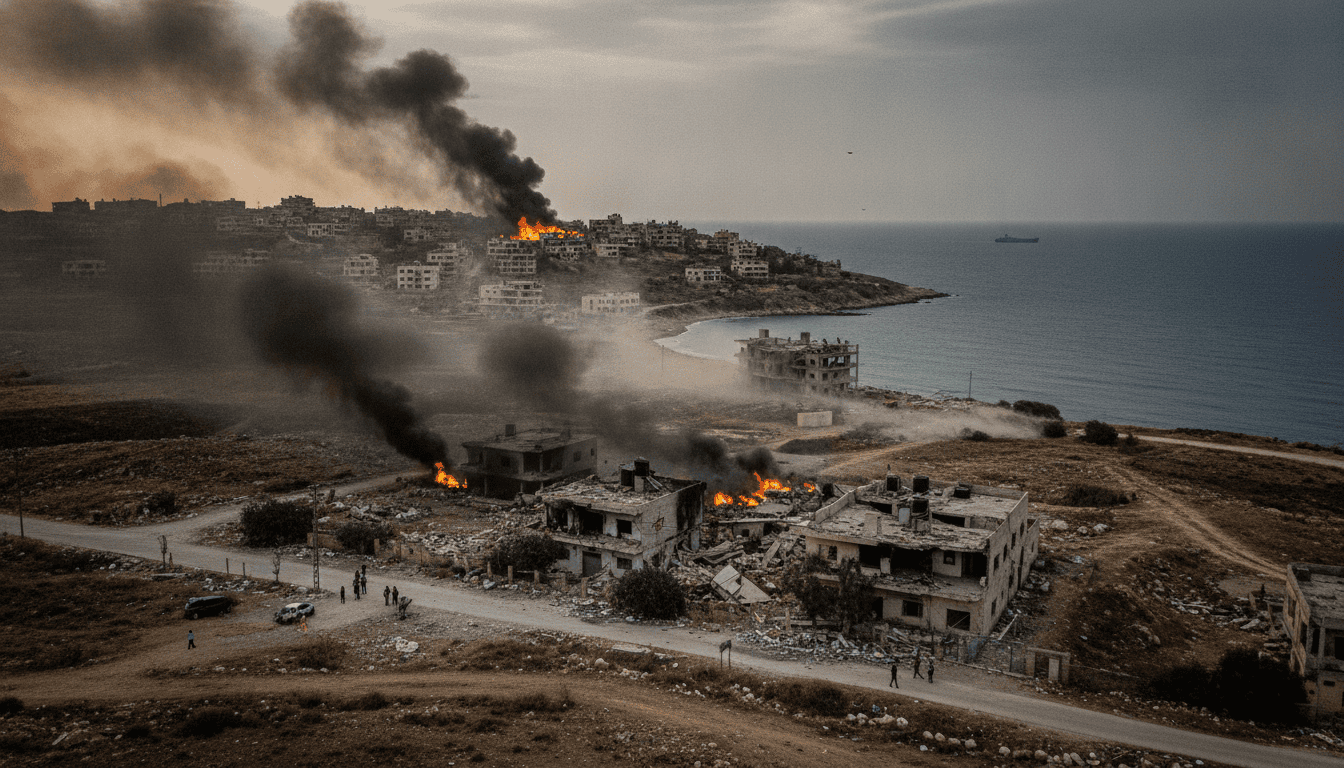
Israeli attacks in southern Lebanon strike Majdal Zoun, Mansouri and Bint Jbeil
Israeli attacks in southern Lebanon struck Majdal Zoun, Mansouri and Bint Jbeil early Tuesday, state media report, raising fears of regional escalation.
Israeli strikes reported in Majdal Zoun, Mansouri and Bint Jbeil
Early on Tuesday morning, Israeli forces carried out bombing and demolition operations in several towns across southern Lebanon, including Majdal Zoun, Mansouri and Bint Jbeil, according to Lebanese state media. The National News Agency provided the initial account of the strikes, describing a series of targeted actions that officials said took place before daylight. Local residents reported loud explosions and visible damage in the affected areas, creating immediate concern among civilian populations.
Lebanese National News Agency provides initial account
The National News Agency (NNA) was the first official outlet to relay details of the operations, citing sources on the ground and municipal officials in the impacted towns. NNA’s report focused on the locations targeted and described both aerial bombardment and demolitions carried out by Israeli forces. Independent verification was limited in the immediate aftermath, and the agency noted that information remained preliminary as assessments continued.
Damage, casualties and civilian impact
Local witnesses described buildings damaged by blasts and debris scattered across streets, though precise casualty figures were not available at the time of the initial reports. Hospitals in the surrounding district began preparing for potential casualties and treating those with injuries consistent with explosions and shrapnel wounds. Humanitarian and emergency responders emphasized the urgent need to confirm numbers and assist displaced residents who fled homes during the strikes.
Hezbollah presence and cross-border dynamics
Southern Lebanon has long been a focal point for tensions between Israel and armed groups operating in the area, and the latest strikes come amid heightened cross-border dynamics. While Lebanese officials have not attributed the recent operations to targeting any specific group in their public statements, analysts note that strikes in this region often relate to efforts to degrade militant capabilities or respond to perceived threats. The potential for retaliatory exchanges remains a central concern for security officials on both sides of the border.
Local authorities impose security measures
Municipal and civil defense authorities in affected towns instituted security measures following the strikes, closing off impact sites and conducting damage assessments to prevent further harm. Roadblocks and emergency cordons were reported around several neighborhoods to allow rescue teams to operate and to secure unexploded ordnance. Local leaders called for calm while coordinating with regional emergency services to restore essential services and clear debris from key routes.
Diplomatic and regional implications
The strikes are likely to draw diplomatic attention regionally and internationally, as cross-border incidents between Israel and Lebanon carry risks of broader escalation. Foreign missions and international organizations monitoring the situation urged restraint from all parties and called for accurate, verifiable reporting on civilian harm. The incident is expected to feature in upcoming diplomatic discussions as states and multilateral bodies assess measures to prevent further deterioration of security in the area.
Humanitarian access and aid concerns
Humanitarian organizations expressed concern about access to the affected towns and the ability of aid workers to reach displaced residents safely. Damage to infrastructure, including roads and utilities, can compound the immediate humanitarian needs and delay emergency medical response. Local and international relief agencies emphasized the importance of unobstructed access for medical supplies, shelter materials and water and sanitation support in the days ahead.
Israeli attacks in southern Lebanon on Tuesday underscore the fragile security situation along the border and the acute risk posed to civilians living in contested areas. Authorities in Beirut and local municipalities continue to assess damage and coordinate emergency services while calls for independent verification of the events grow louder. Observers warn that without de-escalatory steps and clear communication between parties, the cycle of strikes and reprisals could further strain regional stability and humanitarian conditions.
