
Iran Says It Controls the Strait of Hormuz, Rejects Talks with US
Iran says it controls the Strait of Hormuz and will not negotiate with the US after a pause in US attacks, the foreign ministry said July 27, 2026.
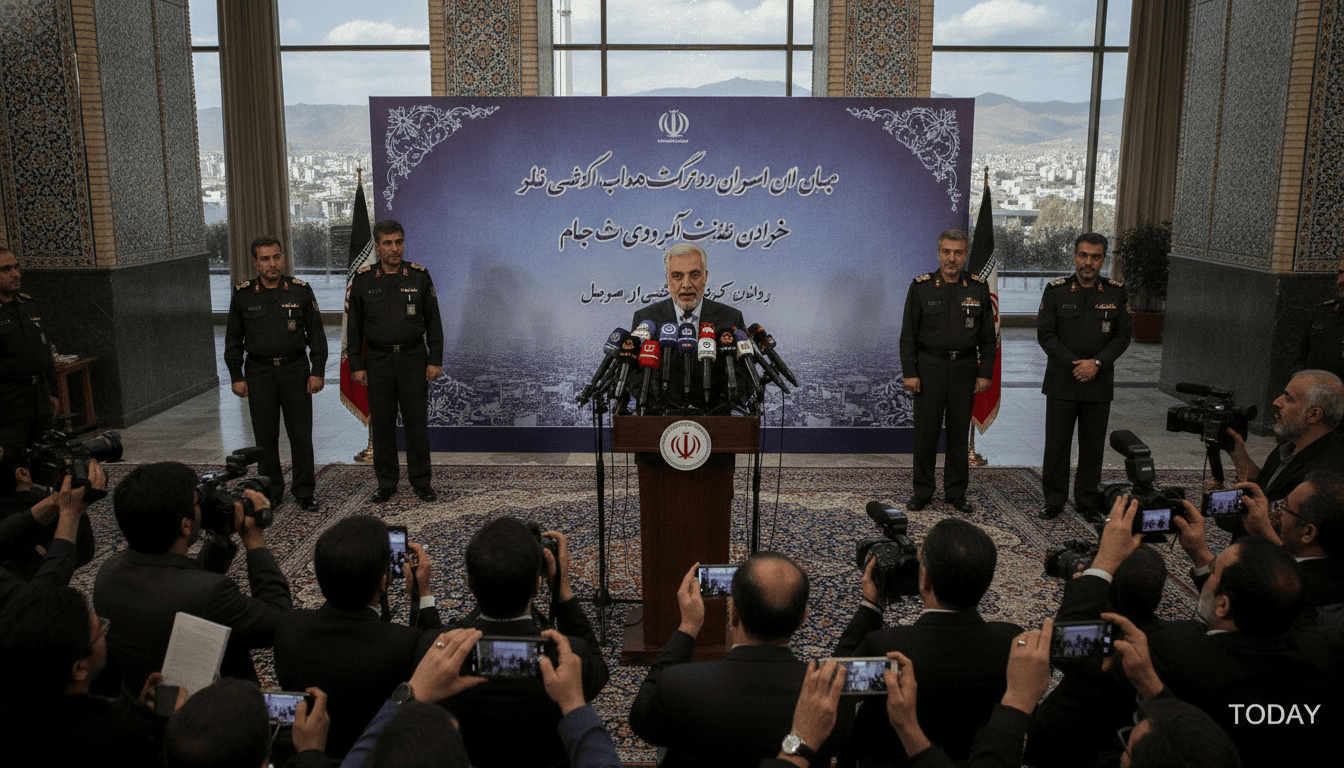
Iranian officials declared on Monday that Tehran remains fully in control of the Strait of Hormuz and is not seeking negotiations with the United States, a statement issued by Foreign Ministry Spokesperson Esmaeil Baghaei on July 27, 2026 said. The announcement followed a weekend in which President Donald Trump ordered a pause in planned US strikes, a move that temporarily de-escalated a series of confrontations in the Gulf. The development sharpens focus on the strategic waterway and signals Tehran’s intent to retain a firm posture amid ongoing tensions.
Spokesperson’s declaration and refusal to negotiate
Esmaeil Baghaei told reporters that Iran “remains completely in control” of the Strait of Hormuz and that Tehran was not seeking talks with US officials, according to the foreign ministry’s statement. The language was categorical and left little room for immediate diplomatic engagement between the two capitals. Iranian officials framed the stance as both a warning to external powers and a reassurance to domestic audiences about Tehran’s regional influence.
US pause in strikes and White House posture
The pause in US attacks announced over the weekend by President Donald Trump introduced a brief lull in an otherwise intensifying confrontation between Washington and Tehran. US officials described the pause as a temporal decision while the White House reassessed its options, but they did not signal a change in long-term policy toward Iran. The interruption reduced immediate risk of kinetic escalation, yet analysts warn that few structural shifts have been made to address the underlying disputes.
Strategic significance of the Strait of Hormuz
The Strait of Hormuz is a narrow maritime corridor linking the Persian Gulf with the Gulf of Oman and the Arabian Sea, and it is a globally vital route for energy and trade shipments. Control or disruption of traffic through the strait has outsized consequences for global energy markets and shipping insurance costs. Iran’s assertion of control underscores the waterway’s diplomatic and military value to Tehran and raises concerns among nations dependent on Gulf energy exports.
Implications for regional security and commerce
Maritime operators, insurers and regional governments closely monitor statements about the Strait of Hormuz because even rhetorical escalation can prompt commercial rerouting and higher costs. Shipping companies may seek alternative passages or adjust schedules in response to sustained instability, while insurers could raise premiums on transits through the area. Gulf states, whose economies are tightly linked to seaborne energy exports, face potential disruptions if tensions persist or intensify.
Potential international and diplomatic responses
Foreign capitals and international organizations are likely to urge restraint and call for de-escalation in the wake of Iran’s declaration, though responses will vary in tone and substance. Some countries may press for emergency consultations at multilateral forums, while others will weigh closer security cooperation with the United States or regional partners. Diplomatic avenues remain limited by mistrust, but back-channel contacts and third-party mediation have historically offered ways to relieve acute crises.
Iran’s statement and the US pause together create a fragile equilibrium that could unravel if either side changes posture or if a third-party incident occurs at sea. Both military and commercial actors will be watching movements in and around the strait for signs of a new pattern of confrontation or accommodation. Markets and maritime stakeholders will react quickly to credible indications of increased risk.
The coming days will test whether the current lull leads to sustained diplomatic engagement or simply buys time before another round of brinkmanship. Observers caution that without concrete confidence-building measures, assertions of control and pauses in strikes are unlikely to produce long-term stability around the Strait of Hormuz.
