
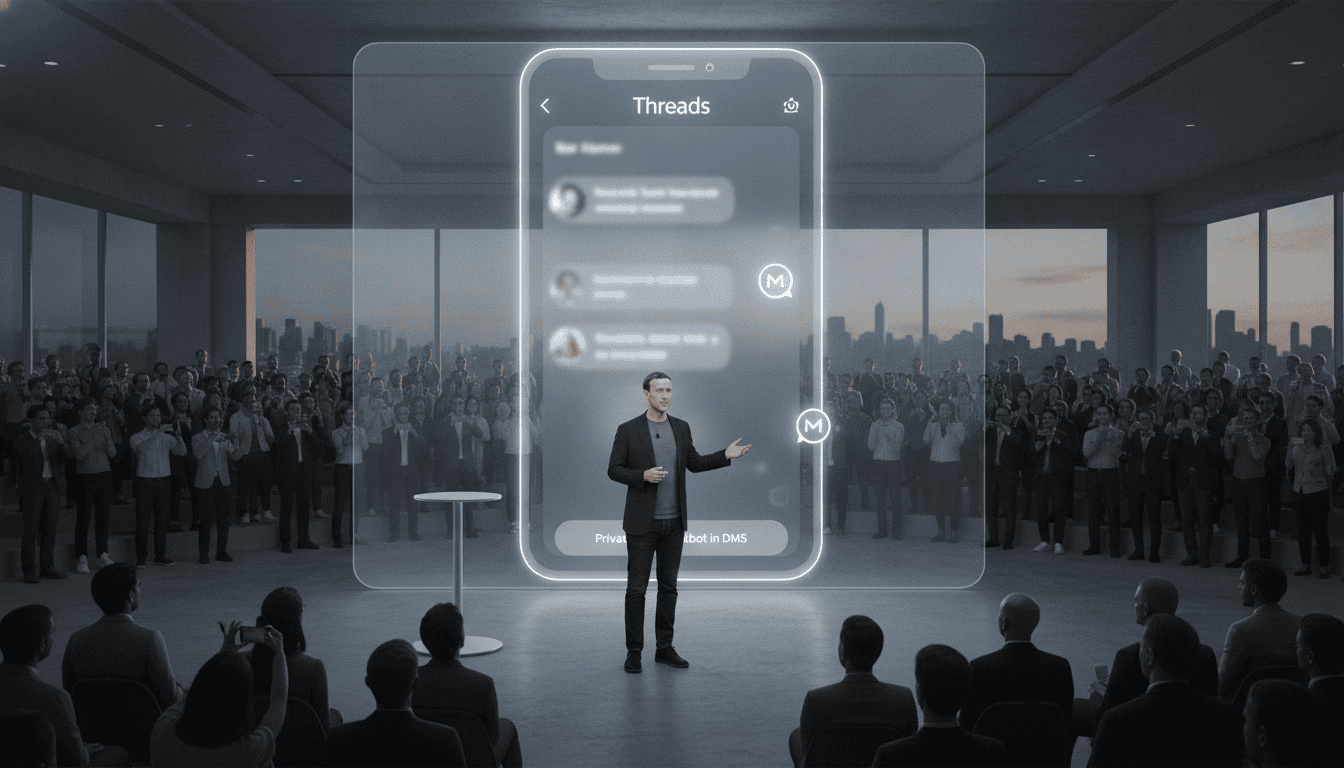
Meta AI Now Available in Threads DMs as Global Rollout Begins July 27, 2026
Meta brings Meta AI to Threads DMs, enabling private chatbot conversations, media sharing and follow-ups. Global rollout starts July 27, 2026 with controls.
Meta said on July 27, 2026 that it is rolling out its Meta AI chatbot inside Threads direct messages, giving users a private way to converse with the company’s generative assistant. The addition brings Meta AI’s conversational features into Threads DMs for users worldwide, letting people ask questions, share content and request follow-ups in one-on-one chats. The company framed the rollout as a step to make Threads a fuller destination for information and recommendations without leaving the app.
Meta launches Meta AI chatbot in Threads DMs
Meta confirmed the DM integration as part of a wider strategy to embed its assistant across its social apps. The company already offers Meta AI in other messaging environments, and Threads now joins Facebook, Instagram and WhatsApp as places where users can summon the assistant privately. Meta described the move as both a convenience feature for users and a way to encourage longer engagement inside its ecosystem.
How the Threads DM integration works
Users will be able to start private conversations with Meta AI directly from a Threads DM window and can share posts, images, links and videos with the assistant for commentary or analysis. The chatbot supports follow-up questions, which enables iterative, conversational exploration of topics or media shared in the conversation. Responses are presented inside the DM thread so users can keep the context of their exchange and return to previous replies.
The integration mirrors features Meta has deployed elsewhere while adapting to Threads’ interface, with a focus on short-form content and conversational prompts. Meta emphasized that the assistant is intended to assist with everyday tasks such as summarizing a post, suggesting next steps or offering quick research, rather than replacing detailed expert sources. The company also said the assistant’s replies can be refined by asking clarifying questions, preserving a natural back-and-forth.
Rollout schedule and testing approach
Meta said the Threads DM rollout will begin globally on July 27, 2026, with availability becoming wider over the days and weeks that follow as server-side updates reach different regions. The company noted it has been testing Meta AI responses in public Threads feeds in a handful of markets and will continue to collect user feedback before expanding additional public features. That staged approach reflects Meta’s pattern of phased rollouts, where functionality often appears to users incrementally rather than in a single synchronized update.
The company did not publish a detailed timeline for every market, and access may vary by region and account settings during the initial rollout. Users who do not see the feature immediately should expect a gradual appearance as Meta completes backend deployment and addresses early feedback. Meta said it will adjust the public and private feature mix based on how people engage and what issues are reported.
Controls and moderation options for users
Meta built controls so users can limit exposure to Meta AI replies across Threads if they prefer fewer automated responses in public feeds. Users can mute the @meta.ai account, use the “Not interested” option on any Meta AI post, or hide Meta AI replies that appear on their content, according to the company. Those mechanisms are intended to give users choice over whether assistant-generated content appears in their feed while still allowing private access in DMs.
In private conversations, standard messaging controls remain in effect, and Meta said users can manage notification preferences for assistant replies. The company also reiterated that it is listening to feedback about the assistant’s behavior and will use that input to refine moderation and response quality. Meta’s emphasis on configurable visibility reflects rising user expectations for granular control over automated content.
Competitive context and business rationale
The Threads DM integration positions Meta to compete more directly with other platforms and standalone AI assistants by offering an in-app conversational option that handles questions and media without a separate service. By keeping AI interactions inside Threads, Meta aims to reduce friction that might push users to third-party assistants and to strengthen the company’s portfolio of integrated features. Analysts have noted that embedding AI into core social products is a common strategy among large tech firms seeking to increase time spent and data-driven engagement.
Meta’s move also reflects broader industry momentum to fold generative AI into social and messaging experiences rather than treat it as a separate product category. That approach can yield immediate utility for users—such as summarizing a shared clip or drafting a reply—while giving platforms opportunities to learn from real-world conversational use.
Meta AI already present across Meta apps
Meta AI has been available in direct messages on Facebook, Instagram and WhatsApp prior to the Threads rollout, and the Threads integration extends that cross-platform presence. Bringing the assistant into Threads DMs makes it easier for users who already rely on Meta’s messaging tools to access consistent AI capabilities across different social contexts. Meta said continuity across its apps is a priority, allowing people to expect similar conversational features whether they are on a social feed or in a private chat.
The company is continuing to test public feed interactions separately from the DM release, and it encouraged users to submit feedback about both public and private experiences. Meta framed the Threads update as one piece in a larger, iterative process to improve its assistant’s usefulness and safety.
The Threads DM rollout marks the latest step in Meta’s effort to integrate generative AI into everyday social interactions, pairing private conversational access with filters and controls to let people choose how much they see. As the update expands after July 27, 2026, users and regulators alike will be watching how Meta balances convenience, content quality and user control across its social platforms.
