
Rudi Völler Says He Nearly Quit but Will Stay as DFB Sporting Director Through Euro 2028
Rudi Völler nearly resigned after Germany’s World Cup exit but will remain DFB sporting director through Euro 2028, endorsing Jürgen Klopp’s rebuild firmly.
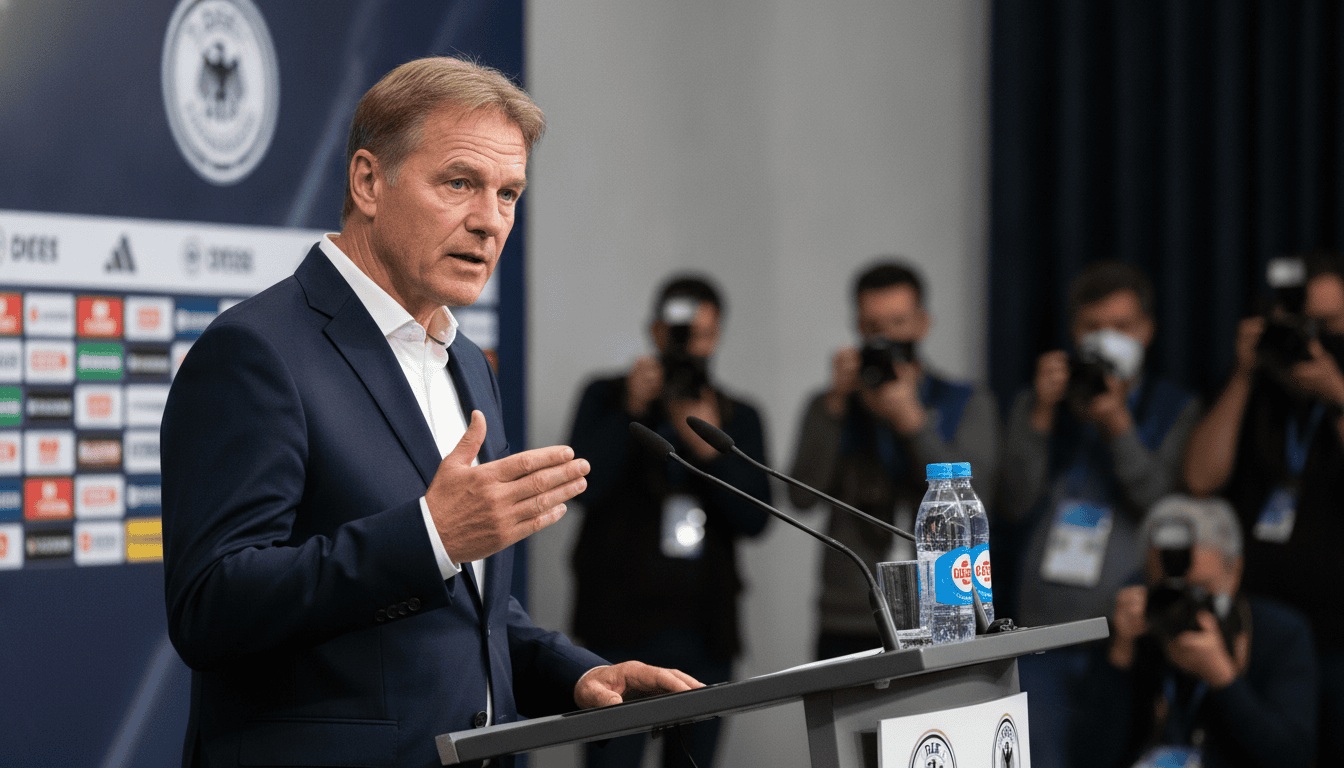
Rudi Völler told delegates at the International Coaches Congress in Mainz that he seriously considered stepping down after Germany’s disappointing World Cup exit. He said he “wavered” on whether it made sense to continue in the post, but reversed course following talks with DFB leadership and incoming coach Jürgen Klopp. Völler confirmed he will fulfil his contract through the European Championship in 2028 and pledged to support Klopp’s work on and off the pitch.
Völler’s near-resignation and turnaround
Völler said the decision to stay was not taken lightly and came after intensive discussions with the federation’s leadership. The 66-year-old described a period of reflection in which he questioned the value of remaining in the role after the national team’s setback. He credited conversations with Jürgen Klopp and the DFB executive board for persuading him to continue, emphasizing that Klopp’s endorsement carried significant weight.
Völler insisted his commitment is now firm and that he will “support him in my way,” signaling a pragmatic working relationship. He did not outline any immediate structural changes but framed his role as one of steadying and enabling the coaching staff. The announcement closes a chapter of internal uncertainty inside the German Football Association while opening a new phase focused on rebuilding.
Klopp’s appointment and Völler’s endorsement
Völler described Klopp’s appointment as a decisive factor in his choice to remain, citing the new coach’s record and ability to galvanize players and public alike. He praised Klopp’s “enormous vita” and highlighted the manager’s capacity to generate enthusiasm across the country. According to Völler, Klopp can give the national project a renewed sense of optimism in the crucial two-year run-up to Euro 2028.
Völler also stressed Klopp’s latitude to experiment, saying the new coach has earned the authority to try different approaches and be granted leeway when things do not immediately work. That assessment positions Klopp as both a tactical leader and a public figure capable of restoring confidence in German football.
Priority shift: attractive football and fan engagement
Central to Völler’s stated remit is a return to more attractive, engaging football as a pathway to reconnect with supporters. He said the DFB must “reignite” public enthusiasm by playing a style that excites the masses and delivers better results at the next European Championship. The sporting director identified fan sentiment and national expectations as key metrics for success over the coming seasons.
Völler framed aesthetic and competitive improvement as complementary goals that will shape selection and long-term planning. He suggested the federation will prioritize development and identity in its selection of players and staff, aligning recruitment and youth pathways with Klopp’s preferred style.
Reflection on the Nagelsmann era
Völler drew a direct contrast between Klopp’s anticipated tenure and the final months of Julian Nagelsmann’s spell as head coach. He argued Nagelsmann lost critical backing and became increasingly isolated, with many of his decisions meeting persistent scepticism. That environment, Völler said, undermined the coach’s effectiveness and contributed to the federation’s decision to change course after the World Cup exit.
The sporting director indicated that Klopp’s tenure should benefit from a stronger alignment between management, coach and public expectations. Völler’s comments implicitly signal a desire to avoid the public and institutional fractures that marked the previous cycle, and to provide Klopp with clearer authority and support.
Leadership core and Joshua Kimmich’s role
Völler expects captain Joshua Kimmich to remain a central figure within the national squad despite three successive World Cup disappointments. He praised Kimmich for consistently demonstrating leadership and carrying the team in numerous international fixtures. While ultimate selection decisions rest with the head coach, Völler said he can’t imagine a major change to the captaincy given Kimmich’s proven standing.
The sporting director underlined that squad continuity around experienced leaders will be balanced with opportunities for new talent. That dual approach aims to preserve institutional memory while allowing Klopp to shape the team’s tactical and cultural identity ahead of Euro 2028.
Roadmap to Euro 2028 and immediate priorities
Völler set out a loose roadmap focused on strengthening domestic and international preparation in the next two years. Key priorities include aligning youth development with the national team’s tactical aims, increasing public engagement, and ensuring the coaching staff has the stability to implement a long-term plan. He signalled that concrete programme adjustments and selection policies will be driven by Klopp’s footballing philosophy.
The DFB will also face the practical task of coordinating fixtures, training camps and talent monitoring to deliver measurable progress before the European Championship. Völler’s pledge to stay through 2028 frames the next cycle as a medium-term project rather than a short-term reset.
The coming months will test whether the combination of Völler’s continued stewardship and Klopp’s appointment can translate into improved performances and renewed public confidence. Völler has committed to a supportive role and to pursuing a style of play that aims to win back fans while restoring competitiveness at major tournaments.
