
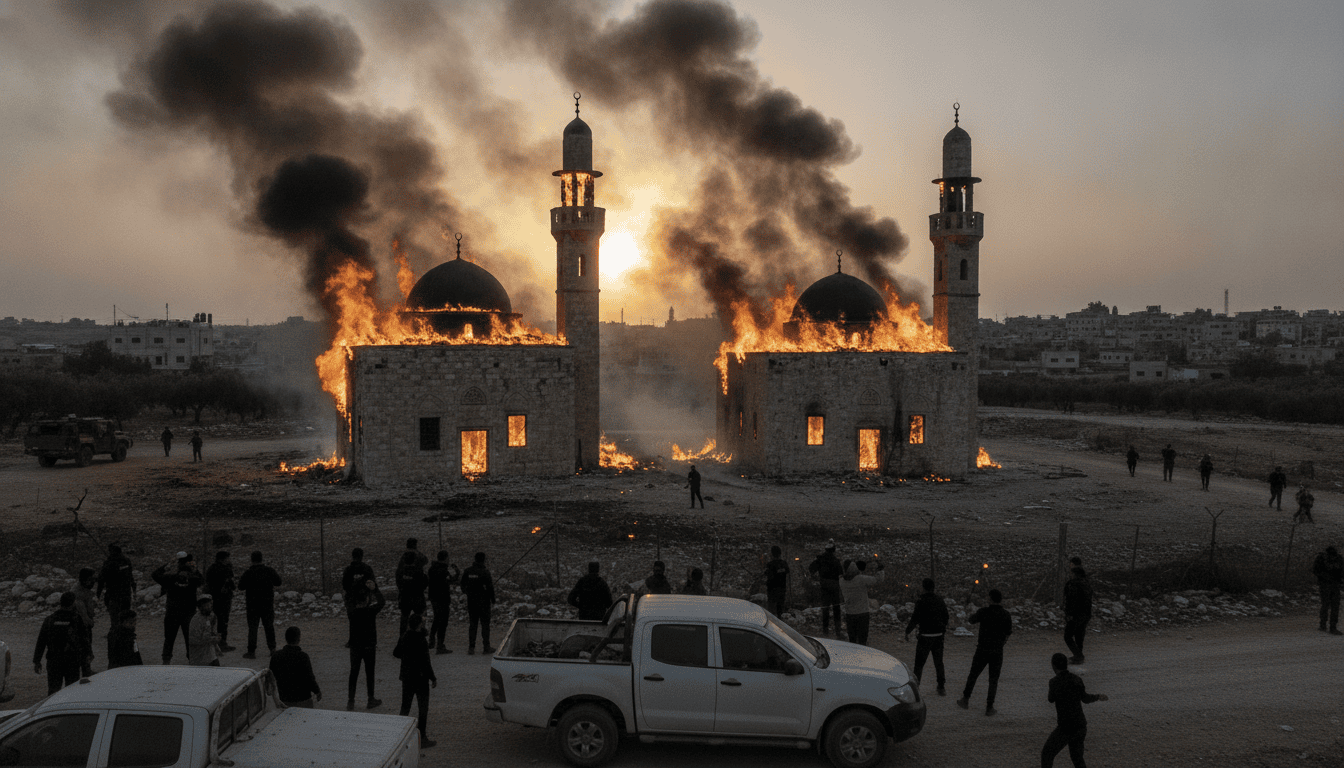
West Bank mosque attacks: Two mosques torched in separate incidents as Palestinians report surge in vandalism
Two mosques in the occupied West Bank were set alight with racist graffiti on July 26, 2026, amid Palestinian claims that 45 mosques were vandalised since 2025.
Israeli settlers are reported to have carried out two separate arson attacks on mosques in the occupied West Bank on July 26, 2026, leaving both buildings badly damaged and daubed with hate slogans. Palestinian officials say the incidents are part of a wider wave of violence, tallying at least 45 mosques that have been vandalised or burned since 2025. Local communities described shock and anger as religious sites were targeted in what residents and leaders called deliberate acts of intimidation.
Two mosques torched in separate incidents
The two mosques were set on fire in distinct locations across the occupied West Bank, according to Palestinian authorities, with fires causing structural damage and smoke damage to interiors. Witnesses and local officials reported that in both cases attackers left racist graffiti on walls and entrances, escalating the symbolic impact of the arson. Emergency services responded to extinguish flames, but the damage left at least parts of the buildings unusable for worship and community gatherings.
Investigators have been examining the scenes to determine the origin and spread of the fires and to document the graffiti for evidentiary use. Palestinian religious leaders have described the destruction as an attack on both faith and community life, stressing the long-term cost of repairing sacred sites and restoring a sense of safety.
Palestinian officials cite 45 mosques targeted since 2025
Palestinian authorities said the two latest attacks increase a previously reported count of at least 45 mosques that have been vandalised or set alight since the beginning of 2025. The figure, offered by Palestinian officials, frames the incidents as part of a sustained pattern rather than isolated outrages. Documentation of damage and attacks has been cited by local leaders to demand greater protection for religious sites across the occupied territories.
Humanitarian and religious organizations monitoring violence in the West Bank have repeatedly highlighted the cultural and social impact when places of worship are attacked. Officials argue that repeated targeting amplifies fear among worshippers and undermines the possibility of peaceful coexistence in mixed or contested areas.
Community response and immediate consequences
Residents near the affected mosques described scenes of grief and indignation as congregants confronted scorched prayer halls and defaced walls. Community committees have begun to mobilize funds and volunteers to clear debris and begin repairs, while local religious councils coordinate temporary arrangements for prayers and services. The immediate loss includes not only physical damage but also the symbolic erosion of safe public space for worship.
Local educators and youth workers warned that the psychological impact on children and families could deepen existing tensions, especially where mosques also serve as community centers. Repair efforts may take weeks or months, and some villagers expressed concern that repeated attacks could disrupt daily life and economic activity in affected towns.
Calls for accountability and investigation
Palestinian officials and civil society groups have called for thorough investigations and prosecutions to hold perpetrators to account, saying impunity risks encouraging further attacks. Documents and photographs collected at the scenes are being assembled by local authorities and religious institutions to support any future legal or administrative actions. Appeals have also been made to international monitors and human-rights groups to increase scrutiny of settler violence in occupied areas.
There has been public pressure for Israeli authorities to prevent such attacks and to pursue perpetrators, though public statements from Israeli officials regarding these specific incidents were limited at the time of reporting. Observers note that the effectiveness of any response will be judged not only by statements but by arrests, prosecutions and measures that prevent recurrence.
Broader context of settler-related violence in the West Bank
Analysts say incidents targeting mosques fit within a wider pattern of settler-related violence and property damage that has affected Palestinian communities across the occupied West Bank in recent years. Such episodes often occur against a backdrop of contested land claims, settlement expansion, and intermittent clashes between residents and settlers. International observers and rights groups have previously linked attacks on religious sites with efforts to intimidate and displace populations in sensitive areas.
The repeated targeting of religious and cultural sites has prompted renewed calls from peace advocates for stronger protective measures and impartial investigations. Community leaders and religious officials stress that preserving access to places of worship is essential to maintaining the social fabric of towns and villages affected by the violence.
Investigations and documentation of the latest mosque attacks are ongoing, with Palestinian officials compiling evidence and local communities preparing to rebuild damaged sites while pressuring authorities for accountability and protection.
