
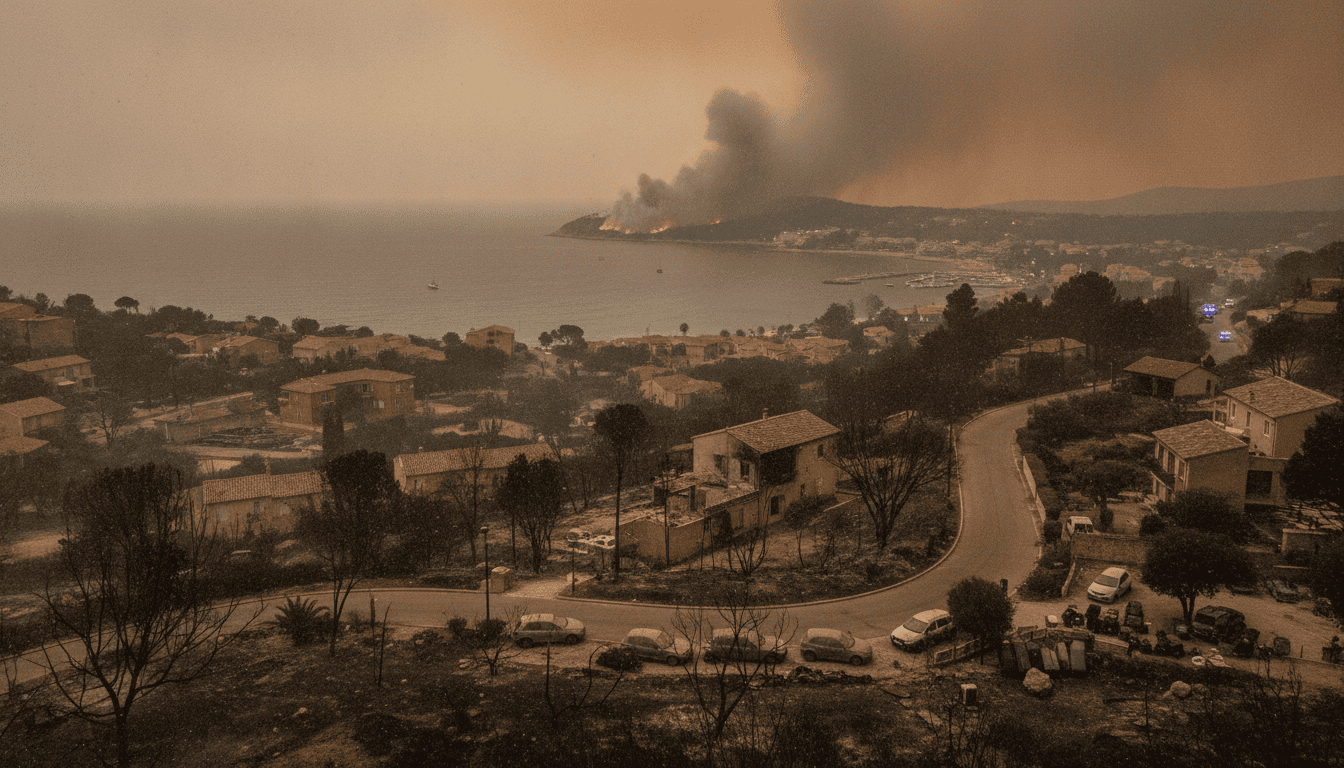
French wildfires reshape summer memories as coastal resorts face recurring smoke and flames
Ancient images of summer infernos now collide with new patterns as French wildfires return to the country’s beloved southern coasts, renewing fears for holiday towns and residents. The surge in blazes along the Côte d’Azur, near Marseille and across the Languedoc has rekindled scenes of black smoke, crews in heavy gear and desperate homeowners trying to defend their properties.
Historic summer fires in southern France
For generations the French association between summer and wildfire has been rooted in dramatic visuals: rolling hills aflame, plumes of smoke above resort beaches and columns of soot-streaked firefighters. Those memories include repeated scenes from the Côte d’Azur through the Côte Bleue and into the Languedoc, where communities have long braced for seasonal blazes. The recurrence has made wildfires a part of the national summer narrative and a fixture in local disaster planning.
Coastal holiday spots repeatedly affected
Photographs of smoke over popular seaside destinations have become familiar to holidaymakers and local officials alike. Areas such as the Côte Vermeille on the Spanish border and stretches of the Mediterranean coast have seen evacuations that disrupted tourism and strained emergency services. The visual impact of fires near beaches and villas intensifies public concern, because these are not remote forests but landscapes interwoven with homes and vacation infrastructure.
Firefighters and residents on the front line
Fire crews work in heavy protective clothing and often face rapidly changing conditions, battling flames while protecting lives and property. Residents frequently attempt to defend houses by wetting roofs and gardens with hoses before retreating when blazes approach too closely. Those last-minute efforts, sometimes carried out amid tearful farewells, underscore the human toll of French wildfires and the split-second choices communities must make during fast-moving events.
Evolving fire behavior and seasonal shifts
Observers increasingly note changes in when and how fires ignite and spread, altering traditional expectations of the summer fire season. Prolonged heat, extended drought and variable winds have contributed to larger, more unpredictable blazes in recent years, complicating containment efforts. As a result, areas once considered lower risk along the coast now must incorporate wildfire scenarios into emergency plans and land-use decisions.
Impacts on tourism and local economies
Wildfires near popular coastlines carry direct economic consequences for hotels, restaurants and small businesses that depend on summer visitors. Even temporary evacuations and road closures can cut into peak-season revenues and ripple through local supply chains. The visual reminders of smoke over resort towns also influence traveler perceptions and booking decisions, making recovery both a public safety and an economic priority.
Prevention, response and community preparedness
Authorities have stepped up measures including targeted fuel management, public awareness campaigns and improved coordination among firefighting units to limit the scale of French wildfires. Local governments are expanding evacuation routes and investing in early warning systems to reduce risk to populated areas. Community preparedness — from household evacuation plans to volunteer firefighting crews — continues to play an essential role alongside professional responders.
Wildfires on France’s southern coast have become a recurring summer story, one that blends long-standing images with changing climate realities. The intersection of popular coastal living, fragile ecosystems and shifting weather patterns has raised stakes for communities, policymakers and the tourism industry. As officials refine prevention and response strategies, residents and visitors alike must reckon with a new normal in which the sight of smoke on the horizon is no longer an isolated scare but a recurring test of resilience and planning.
