
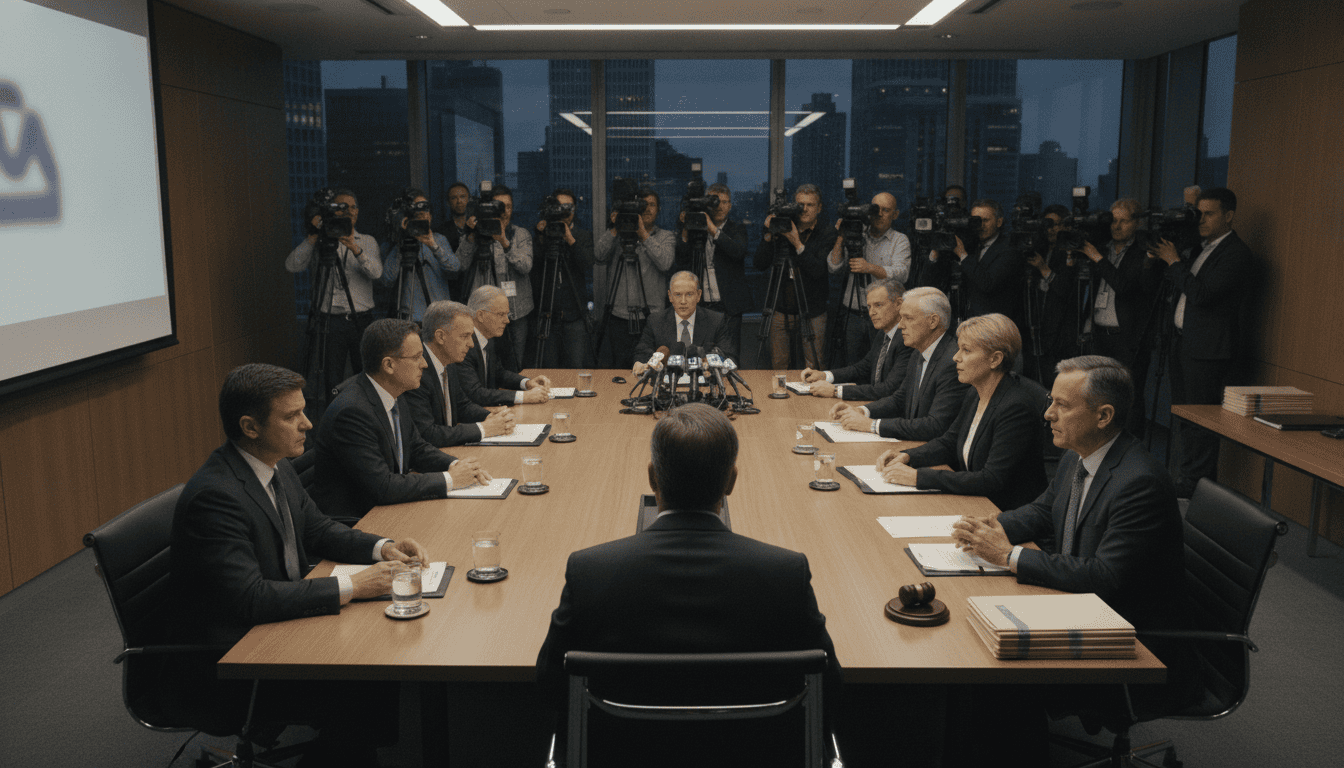
Paramount Pauses Warner Takeover After 12-State Antitrust Lawsuit
Paramount pauses Warner takeover as court filings show the $111 billion merger will remain on hold until a legal decision or June 1, 2027, amid competition concerns.
Paramount Global has agreed to suspend progress on its planned acquisition of Warner Bros. Discovery following a lawsuit filed by twelve U.S. states challenging the merger on antitrust grounds. Court documents indicate the companies will delay closing until a judge resolves the states’ request for an injunction or until a firm deadline of June 1, 2027. The move follows an earlier temporary pause ordered by a federal judge to consider the states’ arguments.
Court Filing Halts Closing Timeline
The companies told the court they will not advance the transaction while litigation over the states’ request is pending. A judge previously paused the deal through mid-August to evaluate the states’ motion for a preliminary injunction, signaling that the legal challenge raised substantial questions. The pause pushes key timing for a takeover that would combine two of Hollywood’s largest studios and streaming operations.
The agreement to delay reflects mounting legal uncertainty and preserves the status quo while the judiciary weighs whether an immediate halt is warranted. Paramount’s statement in filings framed the pause as a response to the procedural posture of the litigation rather than an admission about the merits of the claims.
States Cite Harm to Film Distribution and Theatrical Competition
The coalition of states argues the merger would distort competition for major film releases and place independent and chain cinemas at a disadvantage. Prosecutors contend that consolidation of content production and distribution under one corporate roof could give the combined company leverage over release windows, pricing, and licensing terms. Those competitive effects, the states say, would ripple through exhibition, streaming, and related markets.
Plaintiffs argued in court papers they had demonstrated a plausible case that the tie-up would give Paramount and Warner a dominant combined share in certain segments of the market. That showing helped persuade the judge that at least a temporary restraining posture was appropriate to prevent irreparable harm pending a fuller adjudication.
Judge Acknowledges Evidence of Market Concentration
In reviewing the injunction request, the court noted the evidence that Paramount and Warner, if merged, would control a significant portion of the market for high-profile film releases. The judge’s initial rulings reflect concern that the plaintiffs’ factual showing was sufficient to warrant a pause while the government and state claims are litigated. Legal experts say that demonstrating likely success on the merits is the high bar required for preliminary relief, making the judge’s reaction notable.
The court’s scrutiny centers on whether the competitive risks outweigh the business rationale for combining two major studios and their streaming platforms. Any permanent injunction would require a more detailed record and robust economic analysis from both sides.
Federal and European Regulators Reached Different Conclusions
The U.S. Department of Justice approved the transaction without conditions, concluding the merger would not substantially harm competition in television, streaming, or film production. That federal clearance contrasts with the approach taken by the European Commission, which approved the deal subject to certain remedies. Regulators overseas imposed conditions aimed at preserving competitive dynamics in affected markets.
The disparity between regulators underscores the fragmented global review process for large media mergers, where national and regional authorities can take divergent views about market power and remedies. The states’ lawsuit highlights the additional layer of enforcement that state attorneys general can bring even after federal clearance.
Ownership, Bidding Drama, and the Deal’s Stakes
Paramount is backed by the family of tech billionaire Larry Ellison, whose support elevated the company’s bid for Warner Bros. Discovery. The offer, which eclipsed an earlier proposal that would have split Warner’s assets, represents a sweeping attempt to control studios, streaming services, and cable networks under a single ownership structure. The transaction, valued at roughly $111 billion, would include networks and brands such as CNN and several entertainment properties.
Earlier negotiations saw other major players, including a proposed Netflix deal to buy parts of Warner’s streaming and studio operations, but Paramount moved to acquire the entire company with a higher bid. That aggressive bidding strategy intensified scrutiny over what a vertically and horizontally integrated media giant might mean for consumers and competitors.
Next Steps for Litigation and Corporate Strategy
With the companies agreeing to pause the deal, attention now turns to the judge’s forthcoming rulings and to the states’ ability to secure a preliminary injunction. If the court denies immediate relief, the parties could resume merger activity, subject to ongoing litigation. If the injunction is granted, the transaction could be blocked or require significant remedies, and any ultimate resolution may take months or longer to reach finality.
Both studios will also be managing investor expectations and operational planning during the legal pause, balancing regulatory risk with pressures from shareholders and employees. Corporate leaders may face strategic choices about whether to modify terms, pursue divestitures, or engage in settlement talks to resolve the antitrust challenge.
The pause marks a significant moment for consolidation in the media industry, as courts, regulators, and state attorneys general test the boundaries of permissible scale and influence in film, television, and streaming markets.
