
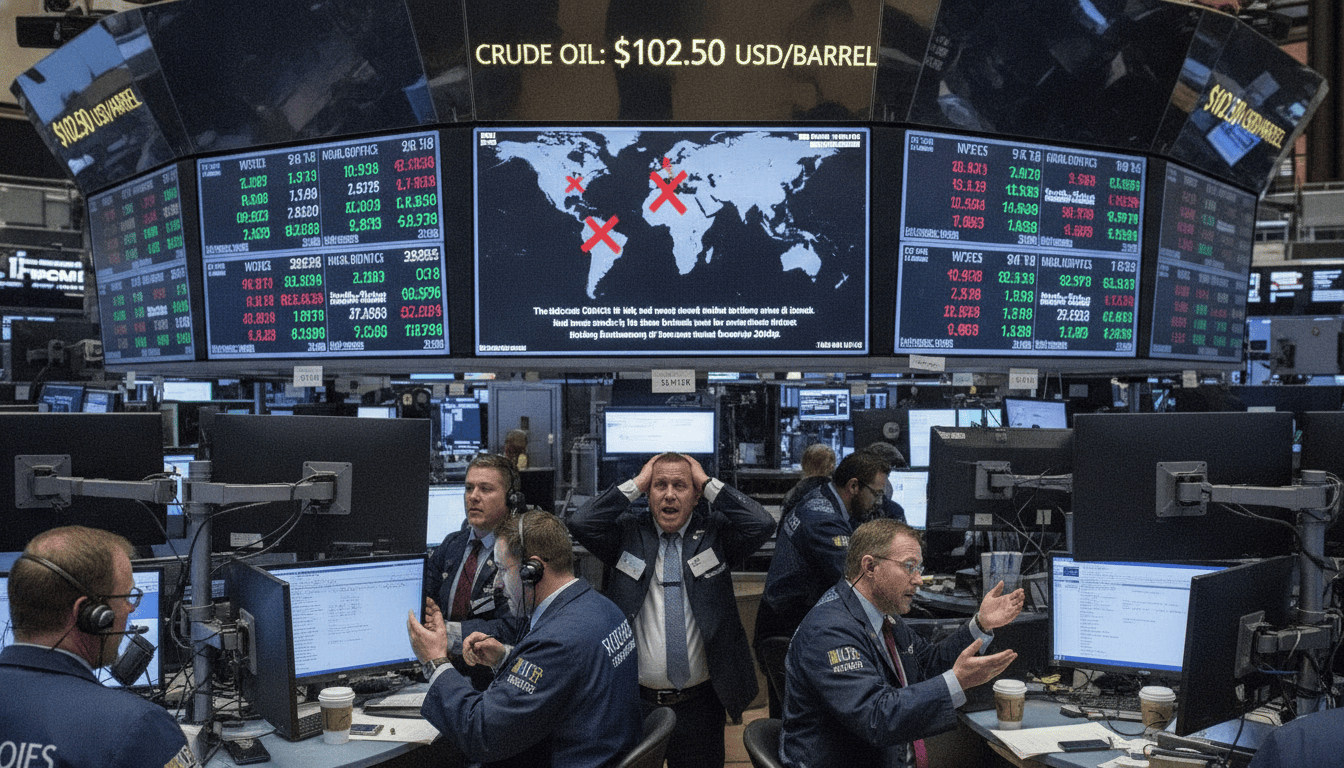
Oil crisis deepens as attacks on three chokepoints send Brent above $100
Oil crisis deepens as attacks on the Strait of Hormuz, Bab al‑Mandeb and the Black Sea lift Brent above $100; strategic reserves at decades‑low heighten fuel supply risks.
Global oil markets have surged back into crisis mode as coordinated attacks and blockades this month disrupted three critical shipping routes, pushing Brent crude above $100 per barrel on July 23–24, 2026. The renewed spike follows a temporary cooling after a June 17 agreement between the United States and Iran had briefly eased supply fears, but fresh incidents in the Strait of Hormuz, Bab al‑Mandeb and the Black Sea have reversed that respite. Analysts warn the oil crisis is now being driven not only by immediate disruptions at sea but by the exhaustion of strategic buffers that previously prevented a larger price shock.
Attacks on three maritime chokepoints reignite supply fears
Shipping lanes that carry a large share of global crude and refined fuels were hit this week, with reported strikes, drone activity and temporary blockades affecting transit through the Strait of Hormuz, Bab al‑Mandeb and parts of the Black Sea. Each passage is vital for different flows: Gulf crude through Hormuz, Red Sea and trans‑Suez traffic through Bab al‑Mandeb, and Black Sea exports from Russia and neighboring producers. The simultaneous stress on all three routes has amplified market anxiety by narrowing alternative paths and forcing longer, costlier voyages.
Strategic reserves increasingly depleted and technically impaired
Governments and international agencies kept a large market crash at bay earlier by releasing emergency stocks and coordinating temporary measures, but those buffers are now thin. The International Energy Agency and several national authorities conducted reserve releases that helped stabilize prices after the June agreement, while large commercial stocks also provided relief. Officials and energy specialists now say those emergency stores are approaching multi‑decade lows, and some infrastructure — particularly parts of the U.S. Strategic Petroleum Reserve — has faced technical limits on further withdrawals, reducing flexibility.
Russia‑Ukraine fighting deepens refined fuel shortages
Separate from Middle East tensions, intensified Ukrainian strikes on Russian refineries and export terminals have cut diesel and heating‑oil flows, prompting Moscow to curtail exports and, in some cases, import refined product from India. That disruption has tightened the global diesel market in particular, raising costs for road freight and heating and feeding through to higher prices for goods and food. The combined effect of crude shipping disruptions and refined‑product shortages has complicated traders’ ability to substitute supplies across regions.
China’s emergency levers are fraying amid domestic measures
China, which previously helped blunt price spikes by curbing refinery runs, delaying imports and tapping alternative fuels, has less room to maneuver than before. State inventories and flexible demand responses that restrained prices after mid‑June have been drawn down through months of elevated buying and strategic adjustments. Energy policymakers in Beijing now face a tradeoff between preserving industrial activity and conserving stocks, limiting China’s capacity to act as a market stabilizer if conditions worsen.
Market reaction from traders, insurers and shipping lines
Traders have reacted swiftly: freight rates for longer rerouted voyages have risen and oil forwards show a steeper near‑term risk premium, reflecting elevated delivery uncertainty. Marine insurers and protection‑and‑indemnity clubs are recalculating premiums and exclusions for voyages through high‑risk corridors, and some shipping companies are choosing longer, costlier routes to avoid hotspots. Finance and commodity desks warn that volatility is likely to persist until either supplies are visibly restored or major buyers signal coordinated stockpile replenishment.
Policy options and diplomatic pressure mount to defuse crisis
Governments facing higher fuel bills and rising transport costs are under pressure to coordinate responses, including targeted reserve releases, diplomatic efforts to reopen sea lanes, and temporary measures to shield vulnerable sectors. The European Union, the United States and other large importers are considering a mix of short‑term relief and longer‑term measures to diversify supply and accelerate switching to lower‑carbon alternatives. However, policymakers must also weigh fiscal and inflationary consequences at a time when many economies remain sensitive to energy shocks.
Markets and analysts say the trajectory from here will depend on two variables: whether shipping through Hormuz, Bab al‑Mandeb and the Black Sea can be secured without further escalation, and whether major consumers can replenish strategic stocks once disruptions ease. If either element falters, the current squeeze on oil and refined fuels could extend into the autumn, with broader consequences for freight costs, food prices and inflation in importing economies.
Global energy officials and traders will be watching for concrete signs of restored flows and renewed inventory replenishment over the coming weeks, while consumers and businesses prepare for the possibility that higher pump prices and transport costs may not be short‑lived.
