
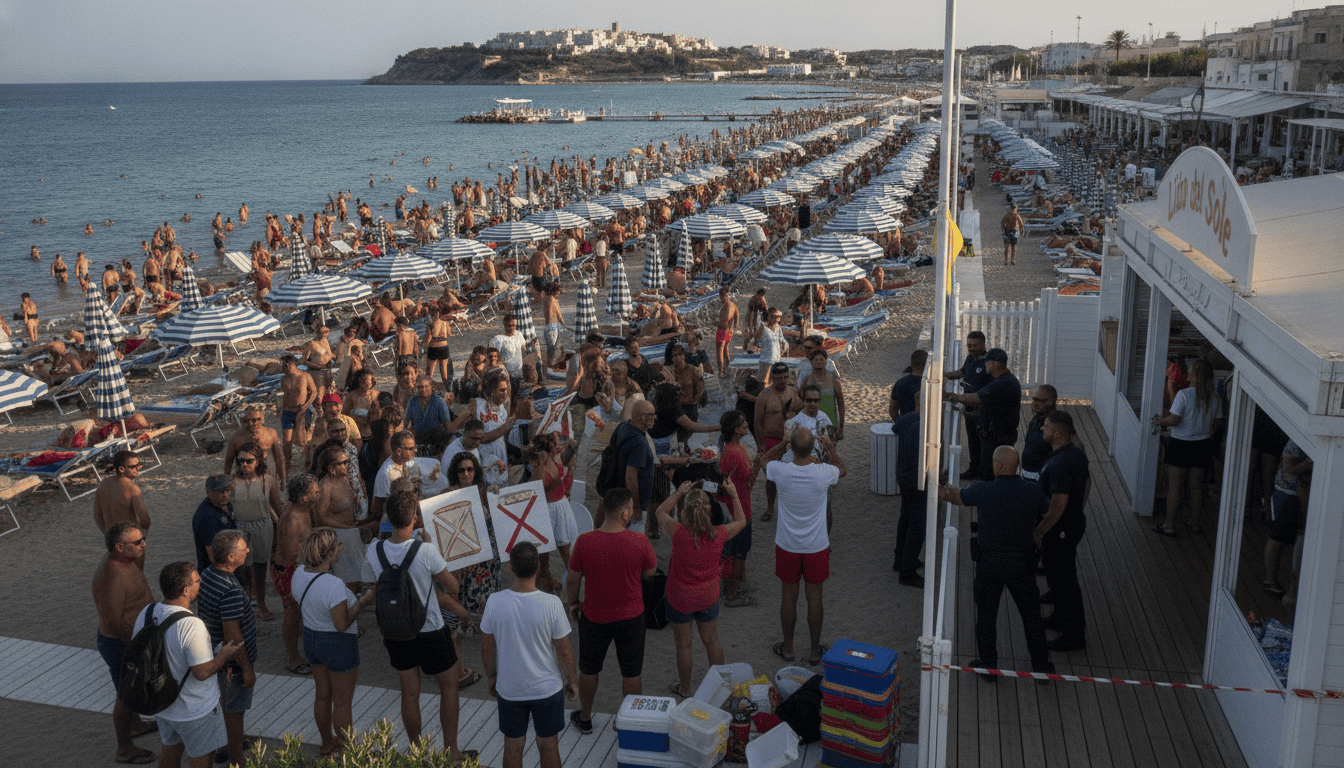
Italian summer tourism surges as Apulia beach concession dispute and Four Seasons resort fuel wider debate
Italian summer tourism surges as record occupancies push a national debate over beach concessions, picnic bans and a contested Four Seasons resort in Apulia.
Italy’s summer tourism recovery has arrived with force, producing record occupancy rates and packed beaches even as regional disputes over access and development intensify. The boom in Italian summer tourism is colliding with a political and legal fight in Apulia, where beach operators have restricted brought-in food and drink and a planned luxury Four Seasons resort has provoked protests. The clash highlights tensions between longstanding, family-run lidos, new investment projects and European rules that will require municipalities to re-tender coastal concessions after 2027.
Record occupancies and resilient demand
Tourist numbers this summer have exceeded expectations, with hotels and beach establishments reporting some of the highest occupancy rates in Europe. June and July posted roughly a 12 percent increase in overnight stays compared with the prior year, and bookings remain strong ahead of the peak Ferragosto period. High fuel and flight costs have done little to deter visitors, underscoring a robust consumer appetite for seaside and cultural destinations across Italy.
Apulia dispute over picnic bans at lidos
The dispute in Apulia began when several privately managed beach establishments prohibited guests from consuming food and drink they brought themselves, citing financial harm and the need to protect on-site restaurant revenue. Regional authorities pushed back, arguing that steep charges for umbrellas and sunbeds are already burdensome and that the sea should remain a public good. The clash has become emblematic of broader questions about who controls coastal space and what obligations operators owe to local communities and tourists.
Economic weight of Italy’s lidos
Italy’s managed beaches are a major economic sector: about 30,000 concession holders operate lidos along the coast, roughly 98 percent of them family businesses passed down through generations. During the May-to-September season these operators employ as many as 300,000 workers and generate an estimated €15 billion in revenue over five months. Municipalities collect roughly €100 million annually in lease fees, a sum that industry groups describe as fair compensation for maintenance and job creation but that consumer advocates say is insufficient given the growth of private beaching.
EU rules and the forced re-tendering of concessions
A long-running tension centers on the EU’s services rules, commonly traced to the 2006 Bolkestein directive, which require transparent, competitive tendering for public concessions. Rome previously argued that Italy’s extensive coastline and the relatively small share under private concession exempted many lidos, and a recent national re-measurement of the shoreline sought to buttress that position. Brussels, however, has insisted that coastal concessions comply with EU procurement rules, and Italian municipalities must begin EU-compliant re-tendering of beach licenses no later than after the 2027 season.
Luxury resort plans and local resistance
The dispute has been amplified by plans for a high-end Four Seasons development on Apulia’s coast, a project announced in 2021 and billed by developers as a low-density, sustainable luxury resort. That plan, estimated at around €100 million and including villas, apartments, pools and an exclusive beach club, has drawn scorn from environmental groups and left-leaning politicians. Activists staged protests on the site this summer, unfurling banners and arguing that state-supported incentives for the project risk weakening environmental safeguards and privileging outside capital over local interests.
Political alignments and the stakes for next year
The controversy touches deep political currents. Lido operators have long provided local political support to conservative and pro-business parties, while left-leaning forces and consumer advocates push for greater public access and transparency. The national government has sought technical fixes and redefinitions of the coastline to shield domestic operators, but regions and municipalities face pressure from Brussels and from citizens demanding clearer rules. With the required re-tendering deadline approaching after the 2027 season, municipal councils and regional assemblies are already exploring transitional measures and carve-outs that could shape the next decade of coastal tourism.
The debate is also influencing how regions position themselves for high-end visitors and international investment. Apulia has marketed itself as a polished alternative to overcrowded hotspots, hosting international summits and courting luxury projects to boost local economies. Yet opponents warn that the balance between preserving free public access to beaches and promoting upscale development will determine whether coastal communities benefit broadly or see profits concentrated in a few hands.
As Italy moves through its busiest months, the clash over picnic rights, concession rules and a high-profile resort project will test how the country reconciles traditional family-run beach businesses with EU transparency requirements and global investment. The outcome of municipal re-tendering, regional regulations and national policy decisions after 2027 will shape who controls Italy’s coastline and how its summer tourism model evolves in the years ahead.
