
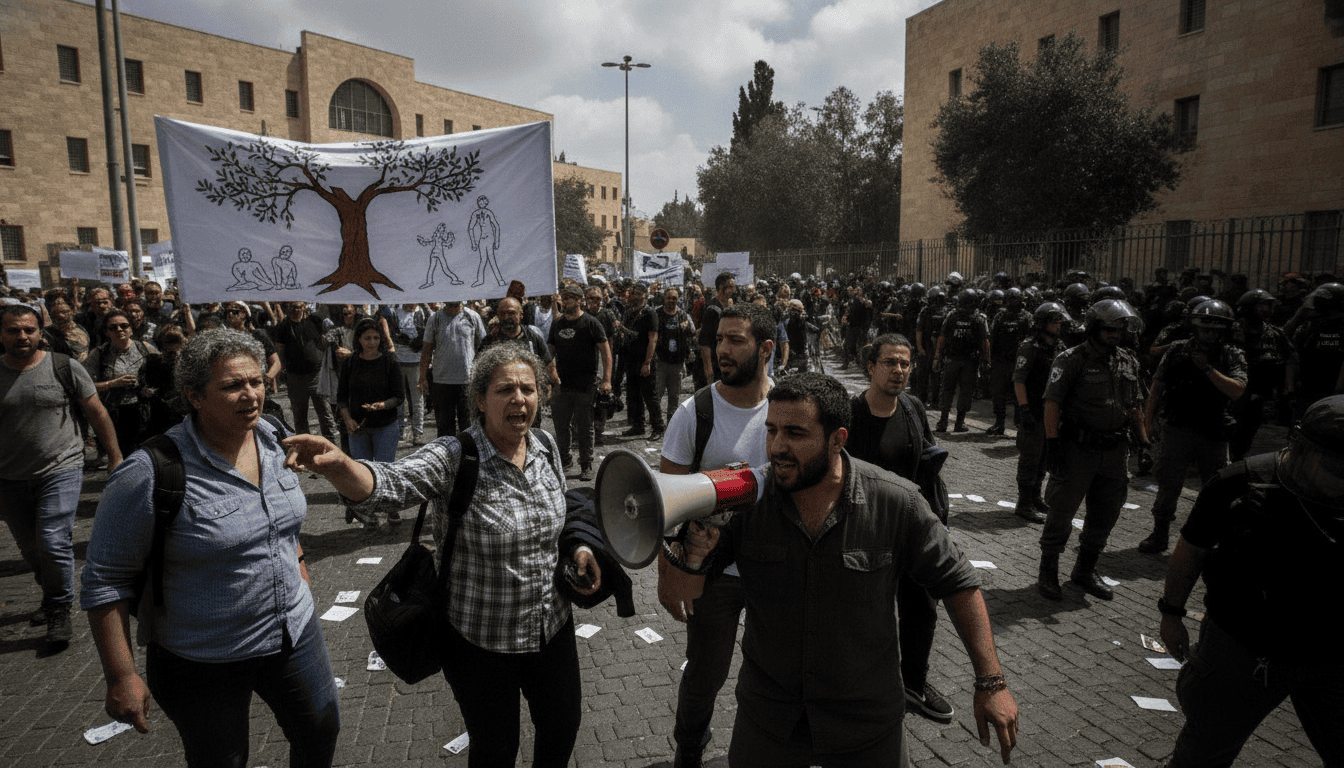
Rights groups warn of West Bank pogrom after settler attack kills four Palestinians
Rights groups including B’Tselem, Rabbis for Human Rights and Adalah have urged urgent international intervention to prevent a “West Bank pogrom” after violence in the village of Tal on July 24, 2026 left four Palestinians dead.
The group of organisations said the incident, and the measures taken by Israeli authorities in its aftermath, risked escalating communal violence across the occupied West Bank.
Their appeal comes as Israeli forces increased deployments around Nablus and authorities announced criminal and administrative steps tied to the incident.
Settler attack and fatal Palestinian casualties
A group of armed Israeli settlers attacked the Palestinian village of Tal, southwest of Nablus, on Friday, July 24, 2026, according to local and rights-group accounts.
The Palestinian health ministry and witnesses reported that four villagers were killed during the incursion, and several others were wounded as clashes spread through the community.
Rights organisations described the scale and character of the assault as indicative of a broader pattern of settler violence in northern West Bank governorates this year.
Palestinian response and Israeli casualties
According to Israeli statements and settler accounts, a Palestinian in Tal seized a weapon from one of the settlers and opened fire, killing two Israelis at the scene.
The initial exchange of gunfire and subsequent confrontations left both Palestinian and Israeli fatalities, a dynamic that has fueled sharply divergent narratives about who instigated the violence.
Local officials said the incident triggered widespread fear among Palestinian residents and prompted immediate security operations by the Israel Defense Forces.
Military operations, detentions and troop movements
Following the killings, the Israeli army launched operations in and around Tal and nearby towns, including increased checkpoints and raids in the Nablus area.
The military said it detained several Palestinians in hospital and during follow-up searches, and that units had been ordered to secure the area amid concerns of further unrest.
Reports from the scene said Israeli forces canceled leaves and reinforced positions across parts of the northern West Bank as tensions rose late on July 24, 2026.
Human rights groups call for international intervention
B’Tselem, Rabbis for Human Rights and the Palestinian legal group Adalah issued a joint appeal asking foreign governments, international bodies and human rights monitors to act to stop what they called a looming pogrom.
Those organisations argued that the combination of settler violence, insufficient protection for Palestinian communities and punitive state measures risked systematic collective punishment.
They urged independent investigations, increased protection for Palestinian civilians and immediate steps to prevent further settler incursions into Palestinian villages.
Investigation findings and demolition order
An initial Israeli army inquiry reported that settlers had entered an area that the military considered off-limits, a finding that complicated the official account of the incident.
Despite that finding, the government moved to order the demolition of the home of the Palestinian suspected of shooting the settlers, a step rights groups said amounted to collective punishment.
Legal activists warned that demolition orders and punitive administrative measures taken without transparent judicial oversight would further inflame tensions and risk violating international law.
Local humanitarian impact and regional concern
The violence and the subsequent military measures have had immediate humanitarian consequences for residents of Tal and neighboring communities, aid workers said.
Access to medical care, agricultural land and basic services has been disrupted by checkpoints and raids, compounding trauma for families who witnessed the attack or lost relatives.
International and local charities expressed alarm that continued clashes could produce larger displacement and increase the risk of reciprocal attacks across the occupied West Bank.
The killings in Tal and the sharply worded appeals from Israeli and Palestinian rights groups have intensified scrutiny of settler violence, military conduct and government policy in the occupied West Bank, and left communities awaiting decisive action to prevent further bloodshed.
