
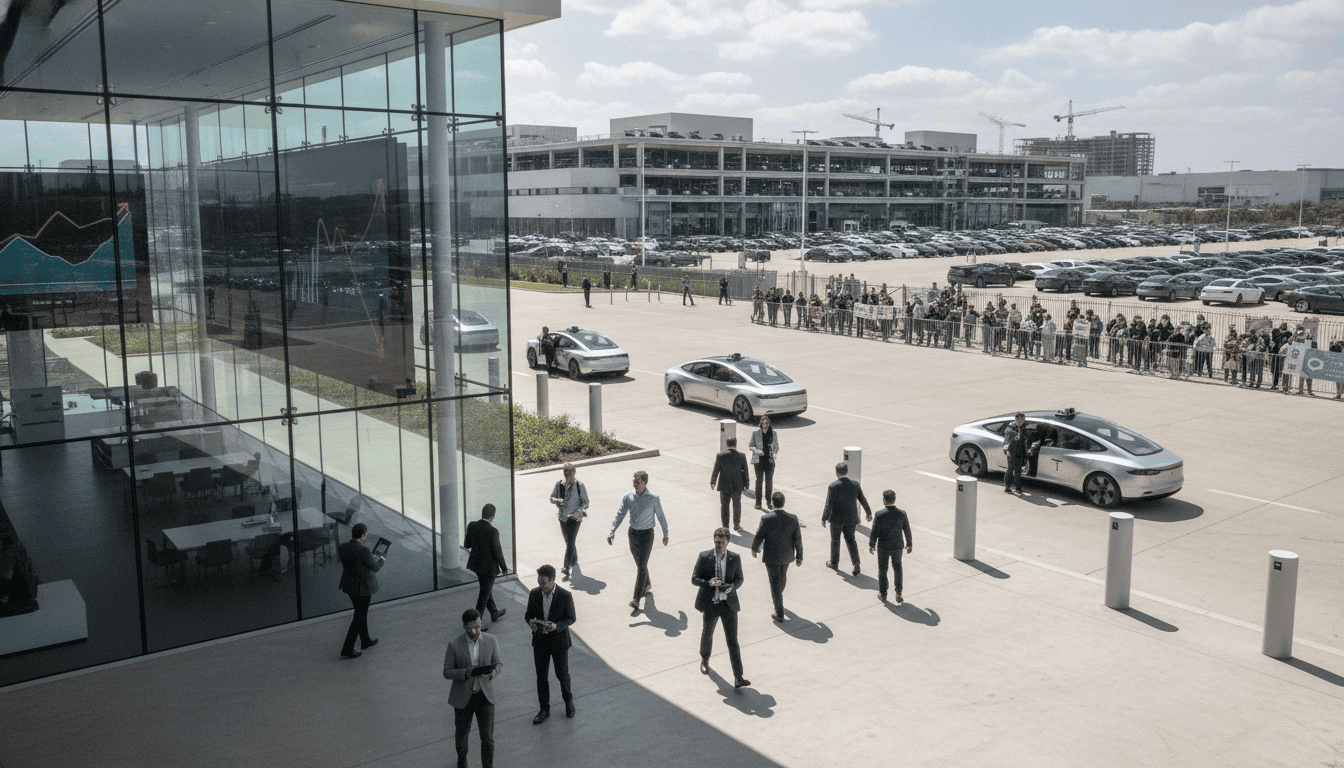
Tesla quarterly report: deliveries rise but profit slips as robotaxi rollout advances
Tesla quarterly report shows stronger deliveries and robotaxi progress, but rising costs weighed on profit and the stock dipped in after-hours trading.
Strong delivery growth masks profit decline
Tesla’s latest quarterly report showed a clear rebound in vehicle deliveries, with the automaker selling more than 480,000 cars during the period — roughly a 25% increase year over year. The Tesla quarterly report also highlighted progress on autonomous vehicle trials and new product lines, which CEO Elon Musk has promoted as the company’s strategic focus. Despite rising revenue, the company reported a lower net profit, a sign that higher costs and investment spending are pressuring margins.
Tesla posted revenue of about $28.2 billion for the quarter, up roughly 26% from a year earlier. Net income fell by about 5% to $1.1 billion, and adjusted earnings per share before special items came in at $0.33, below analysts’ expectations by approximately $0.18. Management attributed the profit decline largely to increased expenses tied to new initiatives and scaling operations.
Market reaction and valuation comparisons
Investors reacted to the mixed results with caution: Tesla shares fell nearly 3% in after-hours trading and are down about 17% year to date. The company’s market capitalization sits near $1.2 trillion, placing it behind SpaceX within the wider Musk portfolio after SpaceX’s recent public debut. SpaceX reached an estimated valuation of roughly $1.5 trillion at the time of its offering, although its stock has since eased below the initial listing price.
During the post-earnings conference call, Musk declined to rule out the possibility of a closer corporate alignment with SpaceX, noting existing collaboration between the companies but offering no concrete plans. Market speculation around a potential merger has persisted, but executives emphasized that any such moves would be subject to regulatory and operational scrutiny.
Sales rebound in Europe and China
Regional trends pointed to a recovery in several key markets. Data from the European Automobile Manufacturers Association (ACEA) showed Tesla registrations in the EU rising by about 77% in the first five months of the year, reversing a 38% decline recorded for all of 2025. Executives said Europe and China both contributed to the improved delivery totals, offsetting softer demand in the U.S.
Analysts cited multiple drivers for the recovery, including higher gasoline prices linked to geopolitical tensions that have made electric vehicles more attractive. However, Tesla’s home market remains challenging after the expiration of federal tax credits last autumn, which had previously provided up to $7,500 in incentives for qualifying EV purchases.
Rising costs and heavy investment plans
The financial results underscored a trade-off between growth and near-term profitability. Tesla said it plans to invest more than $25 billion this year — nearly three times its capital spending in 2025 — with further increases anticipated over the next two to three years. Management described 2026 as a “massive year” for investments, and Musk framed the spending as laying the groundwork for outsized long-term returns.
Higher operating expenses related to research, factory buildouts, and new product programs were cited as principal reasons for the compressed margins. The company’s finance chief noted that some of the spending is front-loaded for facilities and production lines that will support upcoming product launches.
Robotaxi tests and Cybercab production
Autonomous vehicle development featured prominently in Tesla’s investor update. The company said it has expanded robotaxi testing beyond its initial Austin pilot and that trials now include Dallas, Houston, Miami, Orlando and Tampa, though fleets remain limited in size. Tesla reported its autonomous vehicles have covered about 380,000 miles without direct driver supervision — more than 610,000 kilometers — and said that number includes no major accidents so far.
Some tested vehicles still carry safety drivers, but executives stated a growing share of miles were driven autonomously. Tesla is also converting Model Y units for trials while beginning production of a dedicated robotaxi, the Cybercab, at its Texas factory. The Cybercab is designed without a steering wheel or pedals, marking a distinct shift from modified consumer models toward purpose-built autonomous vehicles.
Optimus humanoid robot and Semi truck timeline
Beyond robotaxis, Tesla reiterated progress on other next-generation products. Production equipment for the Optimus humanoid robot is being installed at Tesla’s Fremont plant, with the company indicating that initial production is expected to begin later this year. Management also reaffirmed plans to start series production of the Semi truck within the current year.
These new lines are central to Tesla’s strategy of diversifying revenue beyond passenger vehicles, but they also help explain the company’s elevated capital expenditure plans. Executives maintain that scaling these programs will ultimately deliver substantial returns, even as near-term profits reflect the cost of buildout.
Tesla’s quarterly report paints a picture of a company regaining sales momentum while investing aggressively in future technologies, leaving short-term earnings under pressure as management balances growth, safety and long-term ambition.
