
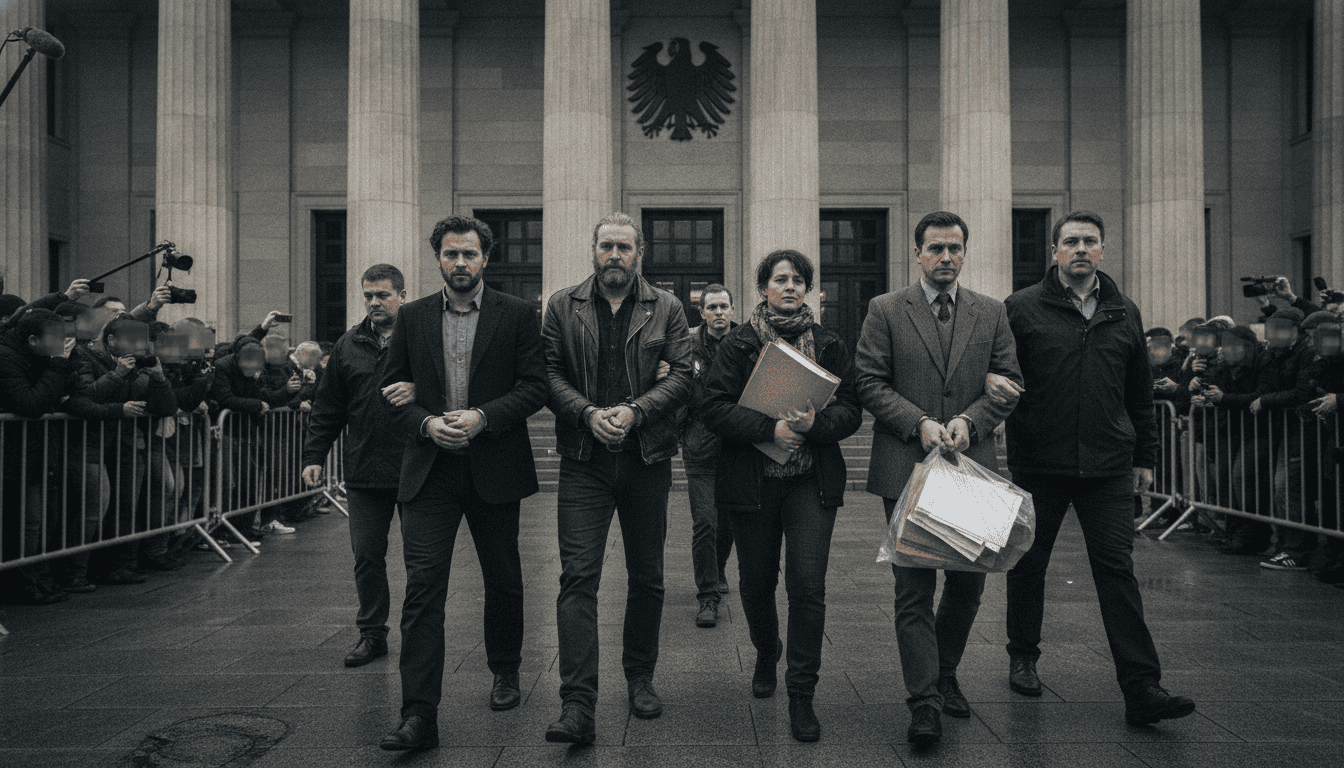
Reichsbürger Trial: Federal Prosecutors Indict Self‑Styled Monarch and Associates Over Alleged Million‑Euro Tax Evasion
Federal prosecutors in Germany have indicted a group of Reichsbürger, led by a self‑styled monarch from Saxony‑Anhalt, over alleged million‑euro tax evasion. The charges filed by the Federal Prosecutor’s Office accuse the defendants of complex financial schemes and large‑scale tax fraud. The case marks a notable development in legal action against elements of the Reichsbürger milieu.
Federal prosecutors file indictment
The Federal Prosecutor’s Office has brought formal charges against several men for tax evasion amounting to millions of euros. The indictment alleges coordinated attempts to conceal taxable income through fictitious entities and transnational transfers. Prosecutors say the filing moves the investigation from inquiry to a criminal trial phase.
Lead defendant described as self‑styled monarch in Saxony‑Anhalt
Authorities identify the principal defendant as a man who styled himself a monarch and led the group’s internal structures. Prosecutors contend he exercised direction over finances and issued internal decrees that underpinned the group’s operations. The defendant’s self‑presentation as a sovereign figure is a central element of the prosecution’s narrative.
Alleged million‑euro tax evasion scheme
The indictment accuses the group of systematic tax evasion that spanned several years and involved multiple income streams. Prosecutors allege the use of ghost companies, falsified bookkeeping and deliberately obscured ownership to reduce tax liabilities. The charges claim the scheme deprived the public coffers of a sum in the millions, though precise figures and time frames are set out in the indictment.
Investigative findings and evidentiary claims
Investigators reportedly relied on financial records, account traces and witness testimony to build the case against the defendants. According to the indictment, the documentation points to deliberate concealment and coordinated steps to thwart tax authorities. Prosecutors have highlighted paper trails and transaction patterns as key evidence supporting the criminal charges.
Potential legal consequences and judicial timetable
If convicted, the defendants face significant penalties under German tax law, including fines and prison terms proportionate to the scale of the evasion. The indictment moves the matter to a regional court, where pretrial motions and evidentiary hearings are expected to follow. Legal experts say the complexity of financial crimes combined with political‑style organization may prolong proceedings and require detailed financial forensics.
Broader questions about the Reichsbürger network
The case raises renewed scrutiny of segments of the Reichsbürger movement that combine ideological rejection of the constitutional order with parallel economic activities. Authorities have previously linked the milieu to a range of illegal behaviors, and this indictment underscores how financial crimes can intersect with political fringe movements. Observers warn that prosecutions focusing on economic misconduct may reveal wider organizational structures and funding mechanisms.
The trial will test prosecutors’ ability to connect political self‑representation with concrete criminal conduct and to untangle layered financial arrangements. Defense lawyers are expected to challenge the characterization of internal titles and question the sufficiency of documentary evidence. For investigators, the outcome may shape future enforcement strategies against groups that operate at the margins of the law.
Public and political reaction is likely to follow as the proceedings advance, with lawmakers and oversight bodies monitoring how such cases are handled. The matter also touches on questions about the resources allocated to probe and prosecute complex financial offenses linked to extremist milieus. Courts will need to weigh legal standards against the broader public interest in accountability.
The coming months will clarify whether the indictment leads to convictions and whether additional defendants or related investigations emerge. As the case proceeds through the German judicial system, prosecutors will present their evidence in open court while defendants mount their defenses. Observers say the trial could set precedents for how financial crimes tied to anti‑state movements are pursued and punished.
