
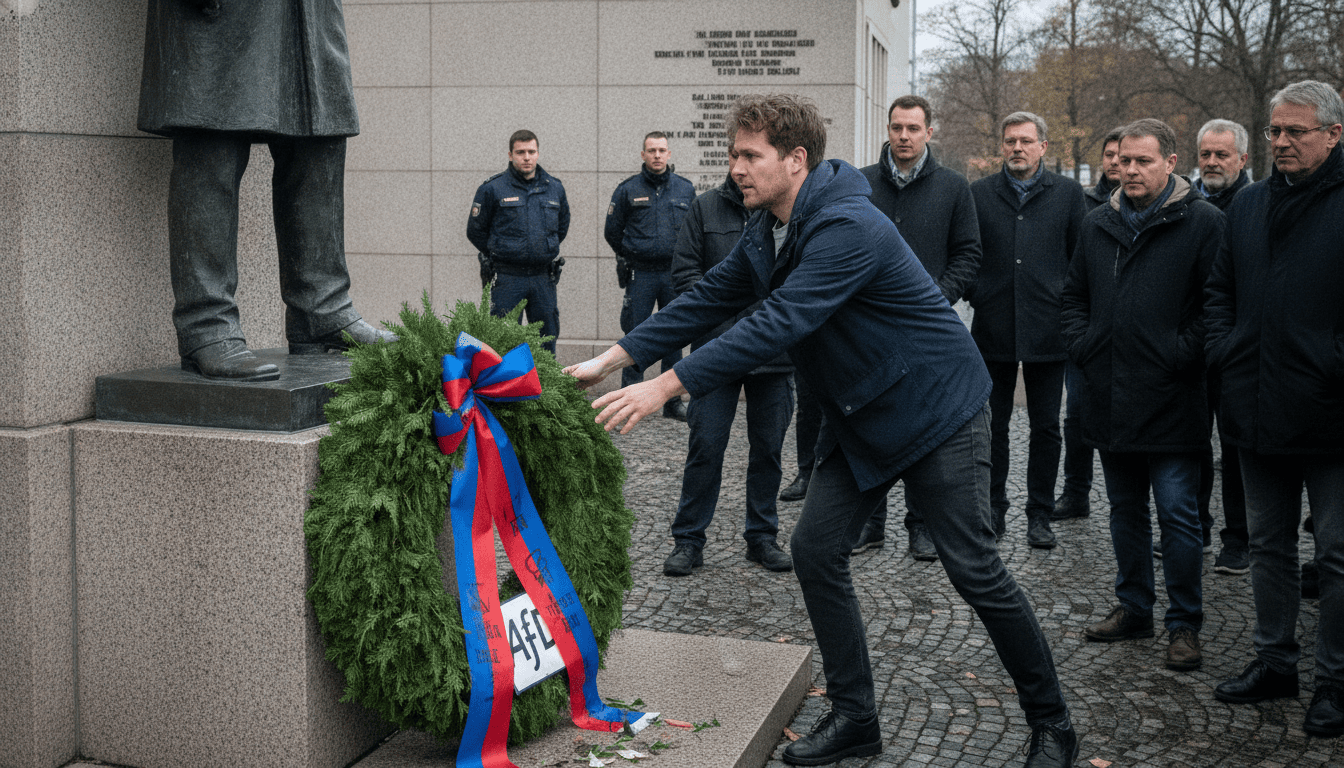
Historian Tobias Korenke Attempts to Remove AfD Wreath at Bendlerblock Memorial
Historian Tobias Korenke tried to remove an AfD wreath at the July 20 Bendlerblock memorial; publicly posted video shows a brief scuffle and the wreath was damaged.
The annual federal memorial at the Bendlerblock on July 20 was interrupted before it began when historian Tobias Korenke attempted to remove an AfD wreath placed at the site, witnesses and footage show. The AfD wreath incident unfolded on the steps of the building where the German resistance against Hitler is commemorated, and videos circulating online depict a brief physical confrontation and a damaged floral tribute. The event occurred ahead of the government’s official ceremony marking the failed Stauffenberg assassination plot of 1944.
Attempt to Remove Wreath Draws Attention
According to multiple clips shared on social platforms, Korenke reached toward the wreath shortly before the start of the official program and there followed a short exchange with other attendees standing nearby. The footage, which shows the wreath being tugged and later lying damaged, was the primary basis for reporting on the episode. Organizers and officials present moved to continue preparations for the memorial as security personnel monitored the situation.
Video Footage and Eyewitness Detail
The videos show a handful of people involved in the confrontation but do not capture extended violence; participants appear to be pushing and pulling rather than engaging in sustained aggression. The wreath’s ribbons and some of its floral arrangement were visibly disturbed by the end of the altercation. Several bystanders filmed the sequence from different angles, and those recordings have circulated widely online, prompting questions about motive and response by authorities at the scene.
Who Is Tobias Korenke
Tobias Korenke is identified in coverage as a historian and a descendant of members of the anti-Nazi resistance, a background he has discussed in interviews with the German press. He attended the government’s annual commemoration for the July 20 plot and, per accounts, moved to take down the wreath laid by the AfD Bundestag faction. Korenke’s lineage and professional interest in the history of resistance against National Socialism shaped public interest in his actions at the Bendlerblock.
Context of the July 20 Memorial
The July 20 remembrance marks the failed 1944 attempt by officers led by Claus von Stauffenberg to assassinate Adolf Hitler and end Nazi rule, and the Bendlerblock in Berlin is traditionally associated with those conspirators. Each year the federal government holds a ceremony and wreath-laying at the site to honor the memory of the resistance. The presence of political delegations and parliamentary factions with their own tributes is a recurring element of the commemorations, and the placement of wreaths by parties often attracts public and media attention.
Damage to the Wreath and Immediate Aftermath
Observers at the scene noted visible damage to the floral arrangement after the incident; petals and ribbons were disturbed and the wreath did not remain intact. Organizers completed the formal remembrance event as scheduled, and attendees took part in the government-led ceremony that followed. The incident itself did not appear to halt the official program, but it did galvanize on-site witnesses and viewers of posted footage to discuss propriety and symbolism at the memorial.
Questions Raised and Official Responses Pending
The episode raised immediate questions about intent, legal implications, and the responses of political actors and security services present at the Bendlerblock. At the time of reporting, public statements from the AfD Bundestag faction and from government officials directly addressing the confrontation were limited in the footage and material available. Media outlets asked participants for comment and have noted that the images alone do not provide a complete account of what led to the attempt to remove the wreath.
The publicly visible confrontation has prompted debate about the boundaries of protest at sites of national commemoration and about how political symbolism is managed during state memorials. Legal experts and commentators often point out that interference with another group’s wreath-laying can carry reputational and, in some cases, legal consequences, depending on the circumstances and reactions of those involved.
Political and historical observers have pointed to the sensitivity of actions taken at the Bendlerblock, given the site’s significance and the personal histories of many attendees. The presence of descendants of resistance members at the ceremony underscores a complicated public memory in which gestures of tribute and acts of dissent can collide.
In the days following the incident, coverage has focused on the balance between protest and respect at ceremonial sites, and on clarifying what took place in the moments before the recorded footage begins. Journalists and historians covering the affair have sought fuller accounts from those present and from organizers, and they continue to track any formal complaints or statements that may follow.
Authorities and political representatives have an opportunity to provide fuller explanations to the public, and the images from July 20 are likely to remain a reference point in discussions about commemoration, party representation, and the conduct of citizens at sites dedicated to the memory of resistance against tyranny. The Bendlerblock incident will likely be examined further as participants and witnesses offer more detailed accounts.
