
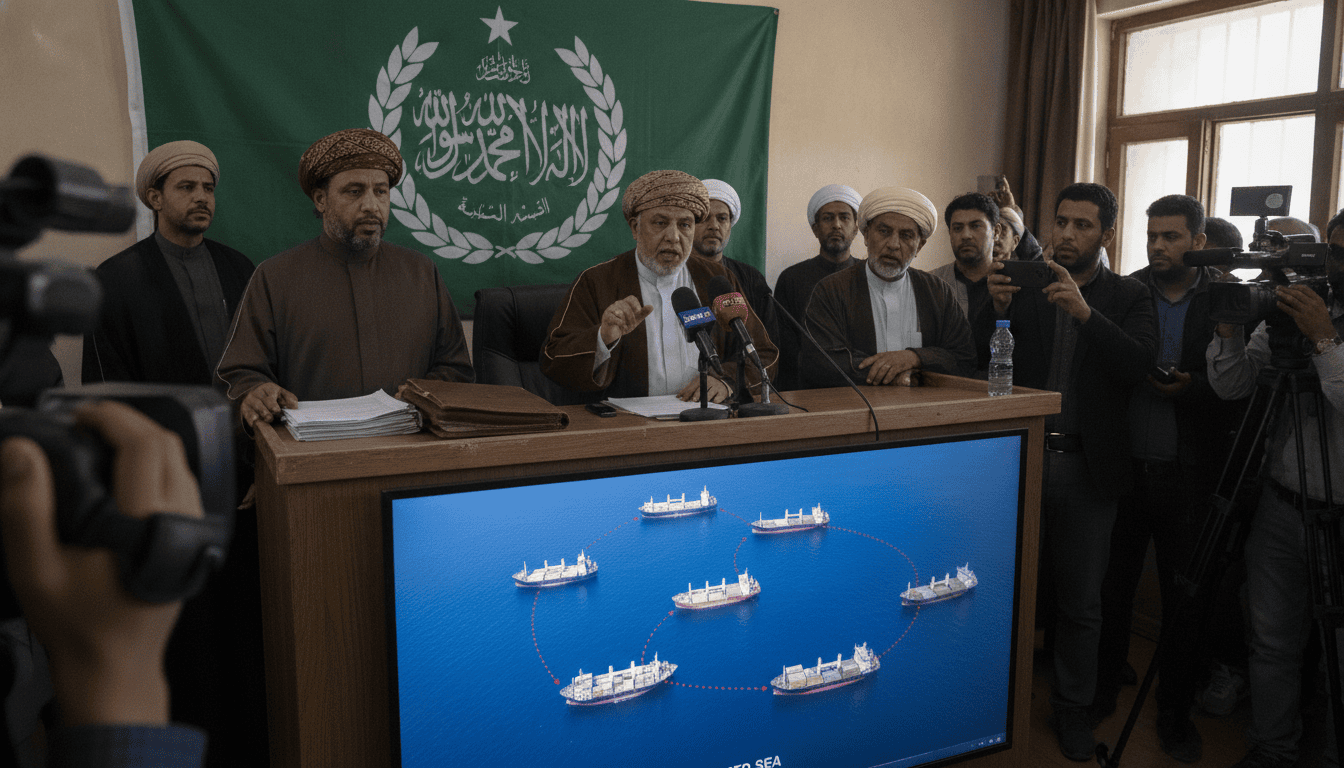
Huthi militia says six vessels forced to turn back amid declared blockade
Huthi militia reports six ships turned back within 24 hours after issuing warnings in the area, while U.S. officials say there is no confirmed blockade and are monitoring developments.
The Huthi militia said it had compelled six vessels to reverse course in the region as part of a self-declared “blockade,” according to a statement carried by the Saba news agency, which is controlled by the movement. The claim, the militia said, followed radio warnings to merchant traffic and a directive asking shipowners and operators to coordinate movements for the “safety of voyages.” There was no independent verification of the incidents or of the precise locations where the ships reportedly turned away.
Militia announcement and timeline
The Saba report said the six vessels changed direction after receiving warnings from the Huthi militia, and that the actions occurred within a 24-hour period. The statement detailed that maritime owners were instructed to coordinate with the militia’s operational centers to avoid risks to shipping. Those claims mirror the Huthi leadership’s recent posture of asserting control over certain maritime approaches linked to the conflict.
The Huthi militia has in the past used broadcast warnings and public statements to influence shipping patterns, and the latest announcement is consistent with that tactic. Observers cautioned that agency reports from conflict actors often lack independent corroboration and can be timed for political effect.
Verification gaps and location uncertainty
Independent maritime tracking services and international monitoring organs had not provided confirmation of the six vessels reversing course at the time of the militia’s claim. The Huthi announcement did not specify coordinates or sea lanes where the warnings were broadcast, leaving ship movements and the scope of disruption unclear. Analysts said the absence of concrete location data makes it difficult to assess immediate commercial or navigational impact.
Ship owners and insurers typically rely on Automated Identification System (AIS) data and port reports to verify such claims; when actors disable transponders or operate in contested waters, tracking becomes more complex. Neutral confirmation is key for assessing whether the events represent a sustained risk to regional commerce or an isolated episode.
Warnings to vessels and coordination requests
According to the Huthi-controlled humanitarian center in Sanaa, operators and owners were told to coordinate their voyages in advance to ensure “security of navigation.” The appeal suggests the militia is seeking to regulate maritime activity without necessarily engaging in direct interdiction in every case. Such communications can prompt commercial operators to alter routes, delay sailings, or seek escorts depending on perceived threat levels.
Maritime advisories from non-state actors complicate existing navigational procedures and place pressure on insurers and charterers to reassess risk profiles. Shipping firms typically adjust through route changes, slower transits, or temporary suspension of calls to ports considered risky.
U.S. response and presidential comments
In Washington, President Donald Trump said there had been no observable Huthi blockade in the region to date and downplayed the immediacy of the threat, adding that U.S. forces would respond if a blockade materialized. Speaking at a White House meeting with Lebanon’s president, the president noted prior U.S. military actions against Huthi targets and said his administration had acted “energetically” in the past. The White House reiterated that U.S. authorities continue to monitor maritime security closely.
U.S. officials have previously conducted strikes and patrols intended to deter Huthi attacks on commercial shipping and to protect freedom of navigation in key waterways. The president’s remarks indicate Washington views the reported incidents as a matter warranting continued surveillance rather than an immediate escalation requiring broader intervention.
Regional shipping and economic implications
Any credible disruption to vessel traffic in the Red Sea, Gulf of Aden or adjacent approaches has potential ramifications for global trade and energy shipments, as those corridors carry a large share of seaborne commerce. Traders and carriers watch such developments closely because even limited diversions can lengthen transit times and increase costs. The psychological effect of announced blockades can drive precautionary measures by operators even when concrete interdictions are limited.
Marine insurers and commodity markets often price in geopolitical risk when access to chokepoints appears threatened, while logistics chains scramble to reroute shipments. For countries dependent on maritime trade through affected corridors, prolonged uncertainty could translate into elevated shipping bills and supply-chain delays.
Humanitarian and political dimensions
The Huthi militia’s communications also referenced humanitarian considerations, urging coordination to ensure the “safety of voyages,” a phrasing that intersects with broader concerns about civilian movement and aid deliveries. Yemen remains a focal point for regional tensions, and actions that affect maritime access can have downstream consequences for humanitarian logistics. Aid organizations and neutral intermediaries typically call for unimpeded passage for relief shipments and for clear, verifiable channels of communication.
Political calculations are also at play; declarations of maritime control can be used to project influence, extract concessions, or draw international attention. Observers say assessing intent requires combining official statements with independent monitoring and on-the-ground reporting.
The situation remains fluid: claims by the Huthi militia and statements by U.S. officials underscore competing narratives about security at sea, while independent verification of the six vessels’ movements is still pending. Stakeholders in shipping, diplomacy and humanitarian relief will be watching for corroboration and for any escalation that might alter commercial routes or prompt multinational responses.
