
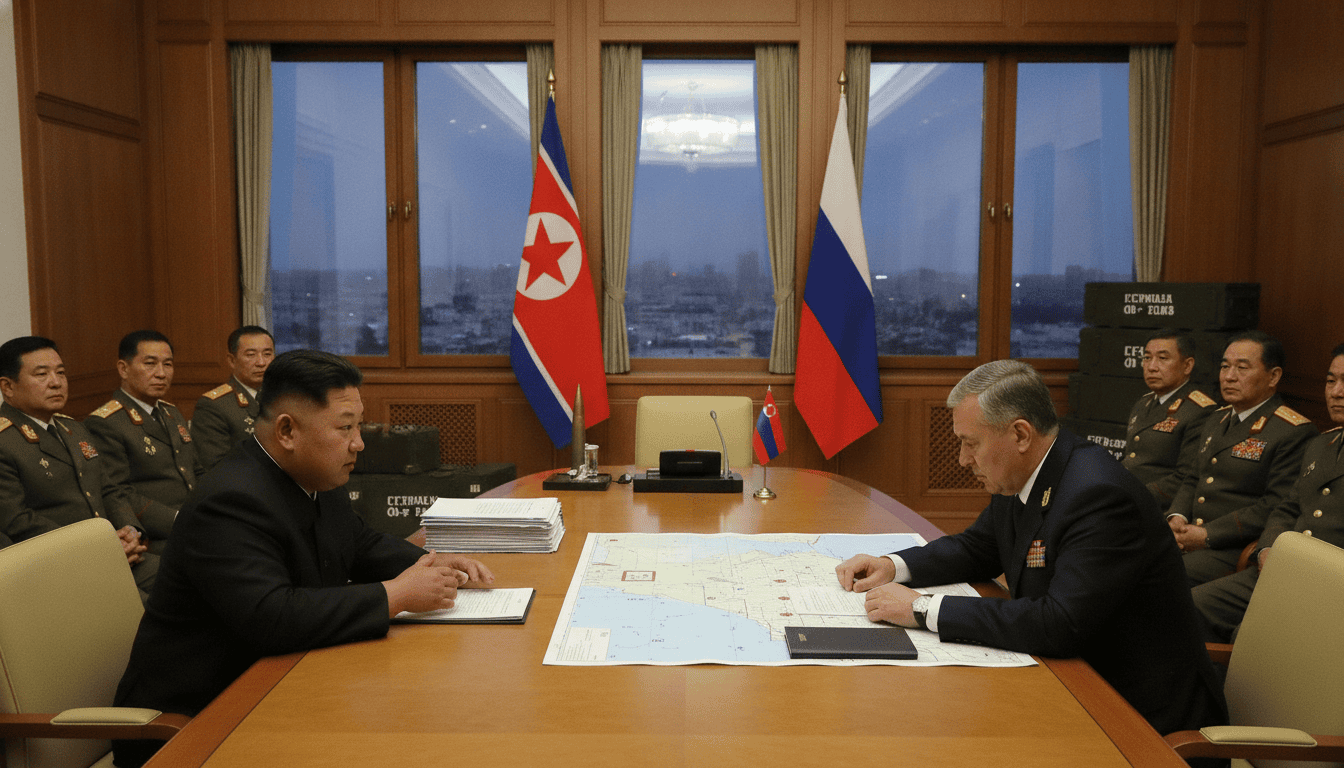
North Korea backs Russia in Ukraine war after Choe’s talks in Moscow
North Korea backs Russia in Ukraine war, Pyongyang said after Foreign Minister Choe Son-hui met senior Russian officials in Moscow, pledging continued political and material support for Moscow’s campaign.
The pledge, reported by North Korea’s state news agency KCNA, followed meetings with Foreign Minister Sergei Lavrov and a reported encounter with President Vladimir Putin.
The developments mark a public deepening of ties between two isolated states already accused by outside governments of clandestine military cooperation.
Choe Son-hui meets Lavrov and Putin in Moscow
North Korea’s foreign minister traveled to Moscow for high-level talks that state media framed as reinforcing bilateral solidarity.
KCNA reported that Choe Son-hui held discussions with Russian Foreign Minister Sergei Lavrov and also met President Vladimir Putin, during which Moscow expressed gratitude for Pyongyang’s support.
Russian state outlets described the meetings as confirming a reciprocal backing on issues of sovereignty and security.
Joint declaration affirms mutual backing
A joint statement issued after the meetings said North Korea would support “all domestic and foreign-policy measures” by Russia aimed at addressing what both sides called the causes of the Ukraine conflict, according to KCNA.
Russia, in turn, declared its “full support” for North Korea’s efforts to defend its sovereignty against perceived hostile threats.
The language frames the relationship in terms of political solidarity rather than specific operational cooperation, though officials and analysts read it as an endorsement of deeper coordination.
Allegations of munitions deliveries and troop deployments
South Korean intelligence and international observers have long accused Pyongyang of supplying Moscow with ammunition and artillery shells since the start of the Ukraine war, and the recent diplomatic show of support appears to validate those assessments.
Seoul’s intelligence services have estimated that North Korea sent volunteers or personnel to fight alongside Russian forces, with figures cited in some reports suggesting up to 15,000 deployed and at least 2,000 killed in action.
These numbers have not been independently verified in open-source reporting, but they have shaped regional alarm about the scale and risks of the partnership.
Casualties and battlefield implications
If the deployments and weapons transfers alleged by South Korean authorities are accurate, they carry immediate consequences for combat operations and humanitarian tolls on the ground in Ukraine.
Munitions shipments could help sustain Russian frontline capabilities in the short term, while foreign combatants alter battlefield dynamics and complicate accountability for casualties.
Analysts warn that the entry of personnel from another state introduces further opacity into an already layered conflict and raises legal and diplomatic questions for countries tracking mercenary flows and arms embargoes.
Regional and Western responses
Countries in East Asia and Western capitals have expressed concern over expanding ties between Russia and North Korea, seeing the relationship as a challenge to regional security and non-proliferation norms.
Seoul has repeatedly signaled it views Pyongyang’s cooperation with Moscow as destabilizing, while NATO and allied governments have pointed to the risk that sanctioned transfers could circumvent international controls.
Diplomatic pressure and targeted sanctions remain the primary tools used by Western states to respond, but concrete options narrow if transfers and deployments are occurring covertly and are publicly endorsed by both governments.
Strategic motives behind the partnership
Observers point to mutual strategic incentives for Moscow and Pyongyang: Russia seeks steady supplies and manpower amid a protracted war, while North Korea benefits from political backing and potential security guarantees against outside pressure.
For North Korea’s leadership, aligning with Russia advances narratives of resistance to Western influence and reinforces internal legitimacy at a time of persistent international isolation.
For Moscow, visible endorsements from a non-Western partner bolster a portrayal of international support even as Western states tighten punitive measures.
The meetings in Moscow and the accompanying joint rhetoric deepen an already fraught relationship that has significant implications for the Ukraine war and for regional stability in East Asia.
As capitals monitor shipments, troop movements and diplomatic declarations, the prospect of prolonged cooperation between two sanctioned states will remain a focus for intelligence agencies and foreign ministries.
Further verification of troop deployments and material transfers will be central to shaping international policy responses and assessing the evolving military balance in Ukraine.
