
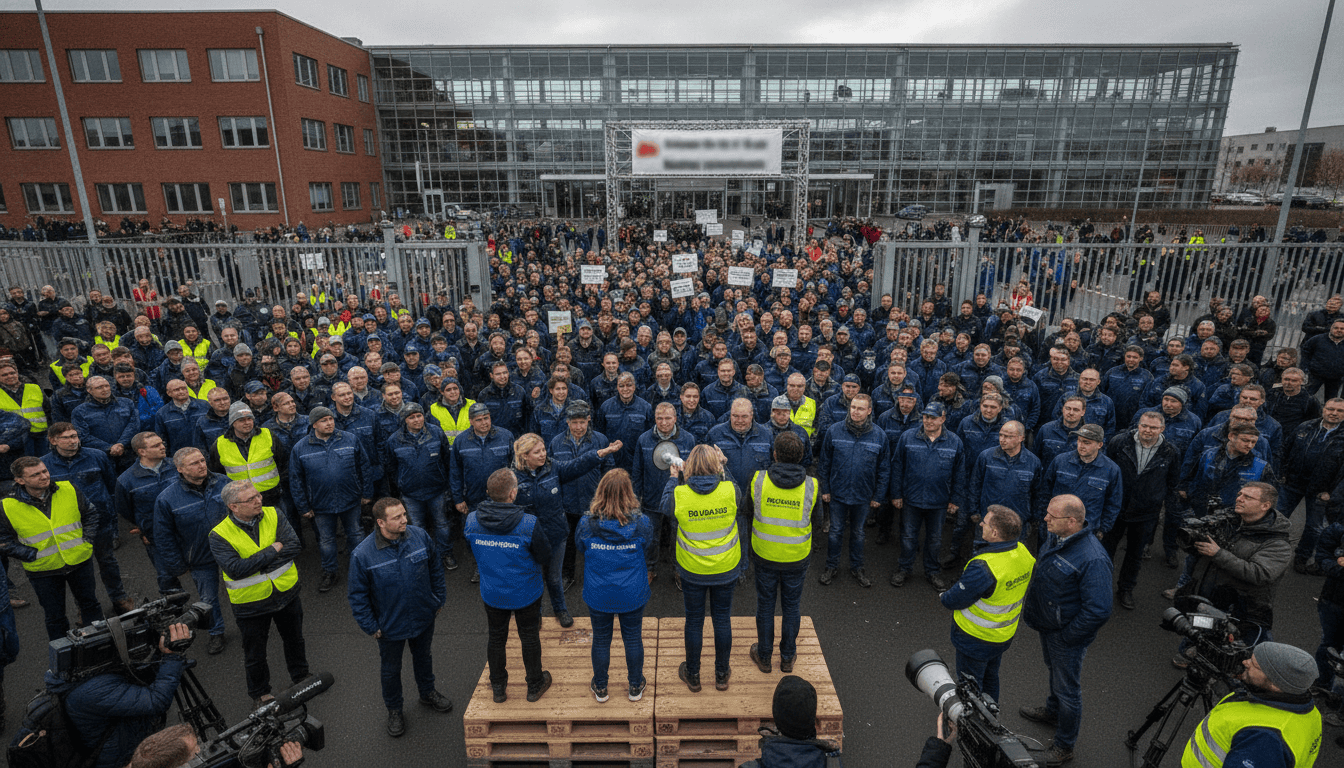
Audi Neckarsulm plant protest puts 15,000 jobs and call for affordable EV into spotlight
More than 2,000 employees protested at the Audi Neckarsulm plant this week as politicians and unions warn of possible closure and 15,000 jobs at risk. Now.
The Audi Neckarsulm plant became the focal point of mounting industry anxiety in the week of July 20, 2026, when more than 2,000 employees demonstrated at Gate 6 to demand commitments to preserve jobs and to press management for an affordable electric volume model. Workers and local officials said a potential shutdown would directly affect about 15,000 positions at Audi and put an equivalent number of supplier and service-sector jobs in the region at risk. The protests highlighted broader tensions over state aid rules, bureaucracy and the pace of the industry’s shift to electric vehicles.
Large turnout at the factory gate
More than 2,000 workers gathered outside the Neckarsulm site in organized demonstrations that included local union representatives and municipal leaders. Participants urged Volkswagen Group management to announce concrete plans to produce a mass-market electric vehicle at the historic factory. The visible turnout underscored deep regional concern about employment stability and the future industrial profile of Heilbronn and surrounding districts.
Political leaders travel to show solidarity
Heilbronn’s mayor and state lawmakers traveled to the site to publicly back the workforce and call for concrete measures to protect the location. Local politicians framed their presence as both a show of support and a demand for tangible commitments from corporate leadership. They said solidarity must translate into policies and investments that secure long-term employment.
State and industry officials point to bureaucratic and regulatory levers
Regional officials highlighted several policy tools under state control that could improve the plant’s competitiveness, citing permit streamlining and reductions in local administrative burdens. Franz Loogen, head of a state e-mobility agency, argued that faster approvals for infrastructure such as transformers and charging facilities would help industrial adaptation. State ministers framed administrative simplification as one immediate lever to reduce costs and accelerate transformation.
EU state-aid rules seen as skewing investment decisions
Industry and union leaders criticized current EU state-aid frameworks for implicitly encouraging factory relocations to subsidized sites abroad, saying this disadvantages established German clusters. Works council representatives warned that when manufacturers build new plants in subsidizing countries, domestic locations face an uphill battle to attract the same level of investment. Calls increased for national and EU-level advocacy to adapt aid rules so they do not incentivize the migration of production away from existing industrial hubs.
Calls for flexibility in the transition to electric powertrains
Both current and former state administrations have promoted a phased approach to moving from internal-combustion engines to electric drivetrains, a policy many say has proven pragmatically necessary. Industry representatives pointed to past missteps in battery investment timelines and said a balanced transition—combining product competitiveness and workforce retention—is critical. Unions signaled willingness to consider material concessions if they are paired with legally binding investment pledges and job guarantees from employers.
State government lists measures to strengthen competitiveness
Baden-Württemberg officials outlined a package of actions they say can be deployed to support manufacturing sites, including improving knowledge transfer from universities to industry, enhancing vocational training, expanding digital infrastructure and avoiding additional state-level regulation that tightens already stringent federal or EU rules. The state’s economic ministry also flagged a new efficiency law intended to eliminate redundant reporting requirements at the regional level, aiming to lower costs for businesses. Ministers emphasized these measures are intended to complement, not replace, national and European policy changes.
The industry’s structural problems, officials and analysts say, are not solely the product of current policy but also of past corporate and sectoral misjudgments. Executives and trade representatives point to a global demand shortfall—annual vehicle sales that fell short of earlier forecasts—and to delayed commitment to battery technology as drivers of current excess capacity. Neckarsulm’s product mix, concentrated on combustion-engine models, has exposed the plant to heightened risk, despite its proximity to a major regional research ecosystem centered on artificial intelligence and innovation.
Pressure now rests on Volkswagen Group management, state authorities and European institutions to produce a coordinated response that combines immediate administrative relief, clear investment promises and longer-term changes to funding rules. Workers and local leaders say only a concrete plan to repurpose the facility for an affordable electric volume model, backed by firm commitments on investment and employment, will defuse the crisis. The protests at the plant have turned a local labor dispute into a wider debate about how industrial policy, regulatory frameworks and corporate strategy should align to preserve manufacturing jobs in Germany.
