
Tour de France 2026: Pogacar Leads as Vingegaard Withdraws and Mountains Loom
Tour de France 2026 overview: Tadej Pogacar has opened a dominant lead after three stage victories, while Jonas Vingegaard’s crash and withdrawal on July 19 reshaped the general classification. The race began in Barcelona on July 4 and will finish on July 26 on the Champs-Élysées, with 184 riders from 23 teams contesting 21 stages across 3,321 km.
Pogacar extends control with multiple stage wins
Tadej Pogacar has been the benchmark through the early and middle stages of the Tour de France 2026, collecting three stage victories and building a cushion of more than three and a half minutes over his nearest rivals. The UAE Team Emirates-XRG leader has translated strong form from earlier season successes into consistent time gains on the road. His position gives him a clear favorite’s standing as the race moves into the high mountains and decisive time trial efforts.
Jonas Vingegaard’s Tour ends after crash on Stage 15
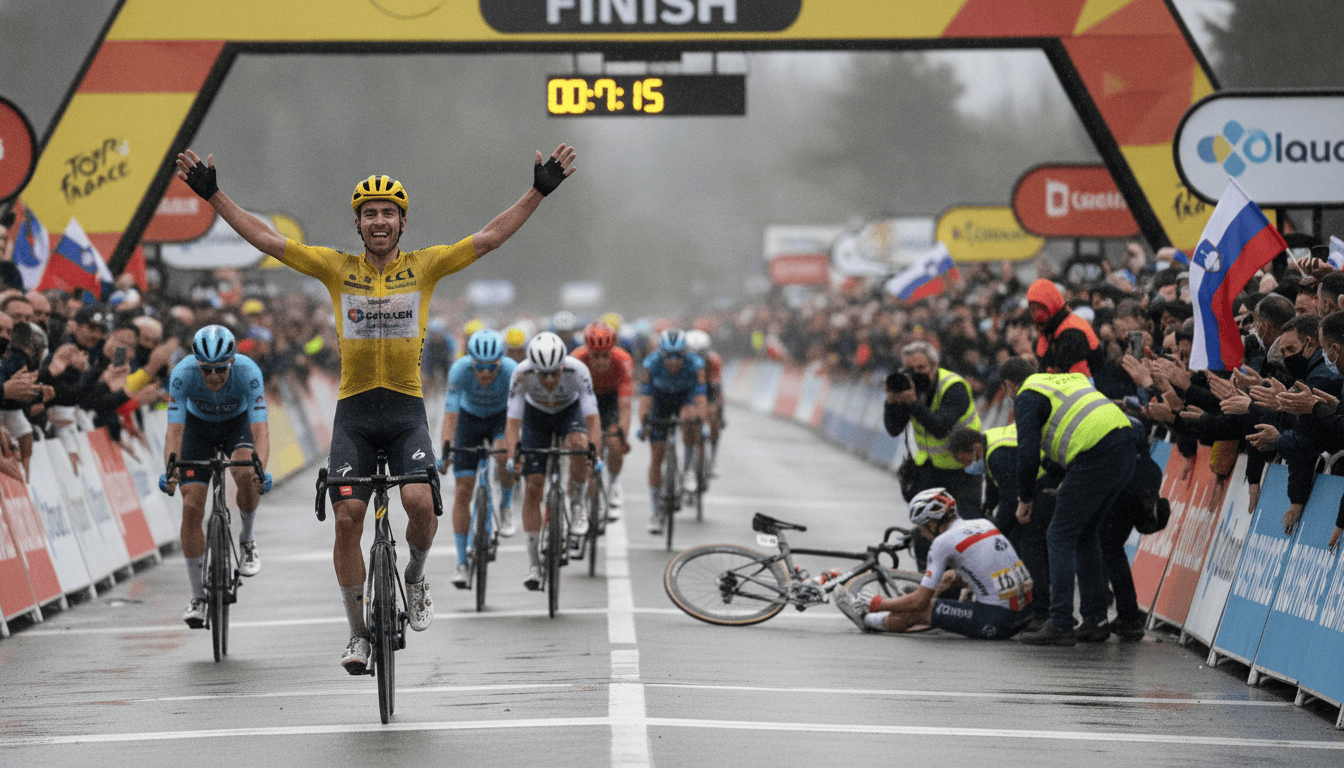
A dramatic turn came on Stage 15, held on July 19, when Jonas Vingegaard crashed and was forced to abandon the race, removing Pogacar’s closest challenger from contention. The stage was won by Remco Evenepoel of Red Bull – Bora-hansgrohe, who capitalized on the chaotic finale to claim victory. Vingegaard’s withdrawal alters team plans and reshuffles podium prospects, increasing pressure on remaining contenders to close gaps in the mountains.
King stage on July 25 features Col du Galibier and brutal climbing
The penultimate weekend will deliver the Tour’s toughest test: the so-called king stage on July 25 covers roughly 171 kilometers and more than 5,400 meters of ascent, including the Col du Galibier at 2,624 meters. Riders will face two major high-category climbs earlier in the day — the Col de la Croix de Fer and Col du Télégraphe — before the long Galibier approach and a final push toward Alpe d’Huez. The climb statistics, including a 17.7-kilometer stretch at an average gradient near 6.9 percent on the Galibier, promise decisive time gaps for general classification hopefuls.
Two Alpe d’Huez summit finishes will shape the finale
The race routes a double visit to the legendary Alpe d’Huez, with Stage 19 bringing a short but intense 127.9-kilometer ascent from Gap and Stage 20 returning via a longer 170.9-kilometer route through Col de Sarenne. Stage 19’s compressed distance still yields roughly 3,500 meters of climbing, while Stage 20 introduces a rarely used uphill line via Col de Sarenne that has mostly been seen as a descent in past editions. Those back-to-back mountain finales place the final podium positions in the balance just days before the traditional Paris procession.
Barcelona start revives team time trial and tests Montjuïc ramps
The Tour de France 2026 opened on July 4 in Barcelona with a rare opening team time trial, a format not used to begin the race since 1971. The 19.6-kilometer run through the Catalan streets includes the Montjuïc climb and finishing ramps toward the Olympic stadium, combining flat speed and a punchy uphill finale that already cost seconds for some contenders. That early test put a premium on collective team strength and set the tone for a race where seconds have proven consequential.
German interest centers on Vosges stage and national riders
German fans will find a focal point in Stage 14 on July 18, which starts in Mulhouse, traverses three first-category Vosges climbs and finishes at Le Markstein Fellering just 20 kilometers from the German border. Florian Lipowitz, riding as a classification contender, is expected to draw a vocal home crowd on that day. Several German riders are part of the start list — from veterans like John Degenkolb to domestiques and debutants — and their roles range from sprint support to breakaway ambitions across the remaining stages.
Teams and contenders are adapting to the changing landscape after mid-race incidents, and collective tactics will be paramount as the race enters its decisive phase. With two time trials, several high-mountain finishes and the double Alpe d’Huez test, the last week of the Tour de France 2026 is set up to deliver dramatic shifts in the overall standings.
Rest day arrangements on July 20 precede a crucial 26.1-kilometer individual time trial between Évian-les-Bains and Thonon-les-Bains on July 21, and the race then moves straight into Alpine warfare that will determine who reaches Paris with the yellow jersey.
