
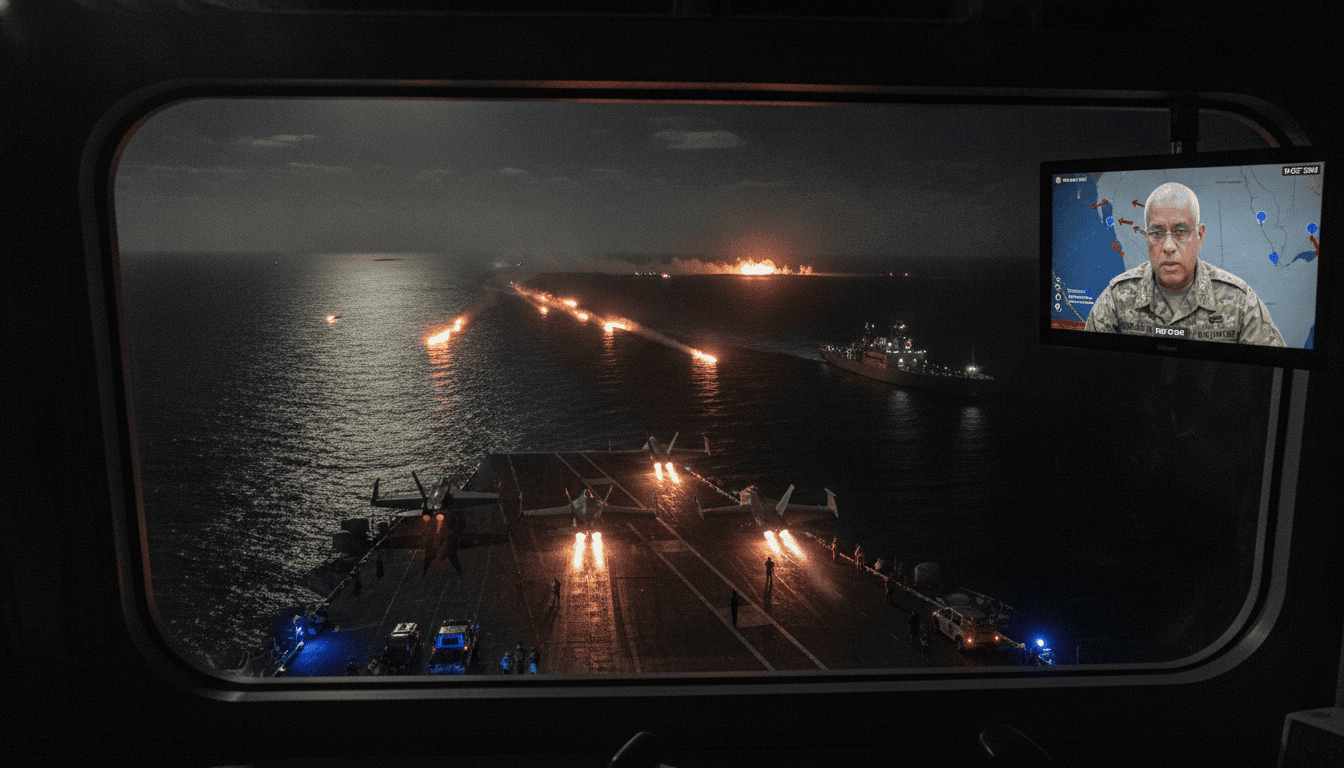
US strikes on Iran trigger Iranian missile and drone assaults across the Gulf
Tehran launched coordinated missile and drone strikes across the Gulf after US strikes on Iran intensified, prompting regional air defences and diplomatic alarm.
Broad campaign extends to Bahrain, Qatar, Kuwait and beyond
Tehran’s military said missiles and unmanned aerial vehicles struck targets across a swath of the region in the early hours, with Bahrain, Iraq, Kuwait, Oman, Qatar, Jordan and Syria reporting defensive measures. Governments in several capitals activated air-defence systems and issued civilian alerts as explosions and sirens were reported. Local officials described debris and damage in some areas, while health authorities in affected states provided treatment to the injured.
Damage inside Iran attributed to US campaign
Iranian and local media reported that the US air campaign targeted civilian infrastructure in southern Iran, hitting telecommunications networks, rail lines and the Bandar-e Khamir bridge in Hormozgan province. Local reports said at least seven people were killed during strikes on those facilities overnight. Tehran has publicly framed its regional strikes as retaliation for what it calls ongoing US attacks on Iranian territory and assets.
IRGC details on hits to US facilities and surveillance systems
The Islamic Revolutionary Guard Corps (IRGC) claimed to have struck a range of US assets in the region, including helicopters and reconnaissance aircraft at Bahrain’s Sakhir airbase and surveillance radars in the Strait of Hormuz and northern Oman. Tasnim, the semi-official news agency, carried IRGC statements asserting destruction of air control and maritime surveillance systems. The IRGC also said it targeted a US base in Kuwait and an operations centre at the al-Tanf base in Syria, descriptions that reflect Tehran’s stated focus on US military infrastructure.
Qatar and other Gulf states report alerts and injuries
In Doha, residents heard loud explosions and received mobile security alerts as Qatari authorities raised the national threat level before later declaring the threat cleared. Qatar’s Ministry of Interior confirmed a child was injured by falling shrapnel and received medical care following the assaults. Other Gulf states reported downed incoming missiles or drones, and engineering crews worked to clear debris from populated areas without reporting large numbers of casualties.
Kurdish and Iraqi officials describe drone interceptions
Iraqi Kurdish counterterrorism units said coalition forces in Erbil shot down multiple explosive-laden drones over the city, with no casualties reported, according to local news agency dispatches. The Jordanian armed forces announced the interception of missiles that traversed its airspace, and Kuwaiti authorities were reported to have been targeted by strikes that local officials said affected a radar and weapons depots. These incidents underline the widening geographic footprint of the strikes and the risk of miscalculation as multiple actors engage air-defence systems.
Diplomatic calls for return to negotiations intensify
Amid the military escalation, diplomats and foreign ministers pressed for an immediate ceasefire and a return to talks to avoid further regional spillover. China’s foreign minister and Pakistan’s foreign minister called for renewed dialogue and urged both Washington and Tehran to uphold a tentative agreement reached during talks in Switzerland on June 22, which had aimed to create a 60-day negotiation window. Chinese officials described the prior deal as “hard-won” and warned against losing fragile progress at a critical moment.
Tehran has reported casualties and damage from the US strikes, saying dozens were killed and hundreds wounded, figures that local authorities and news agencies relayed as the exchanges intensified. International concern has grown over the vulnerability of key shipping lanes and the potential for the confrontation to widen, with energy markets and global trade watchers monitoring developments closely.
The incidents underscore how rapidly bilateral military actions can draw neighbouring states into defensive or reactive postures, increasing the probability of further confrontations unless diplomatic channels regain traction.
