
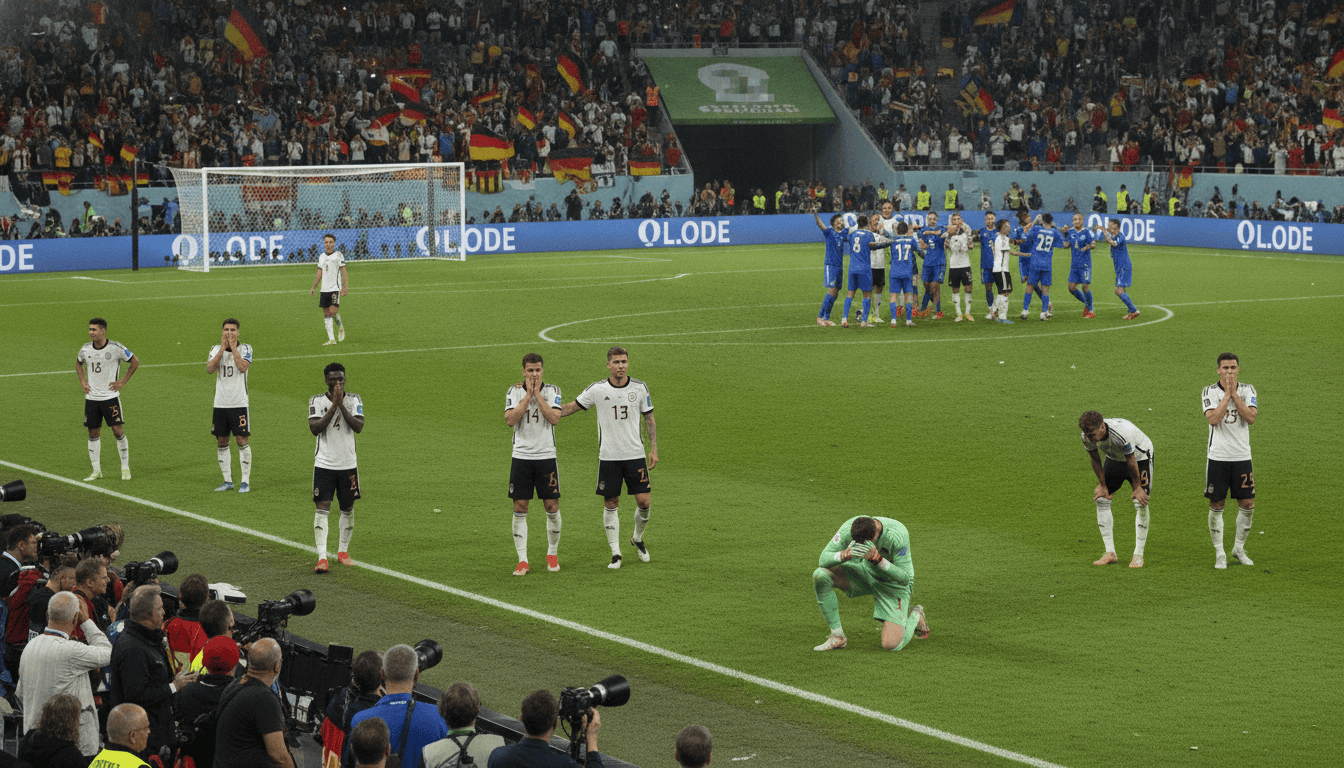
German Self-Confidence Under Scrutiny After World Cup Penalty Exit
Germany’s penalty shootout loss to Paraguay at the World Cup has sparked renewed questions about German self-confidence and whether cultural patterns affect individual responsibility in team settings. The defeat, decided from the penalty spot, highlighted both sporting errors and a broader public debate about risk-taking and leadership within collective German projects. As critics and commentators sift through the match and its aftermath, the conversation has shifted from tactics to national character.
Penalty Shootout Ends Germany’s World Cup Campaign
Germany were eliminated after a tense match that went to penalties, where missed attempts and saves sealed their fate against Paraguay. The outcome was immediate and decisive, ending the team’s hopes at this tournament in a moment that will be replayed across media and social platforms. The manner of the defeat—by spot kicks—focused attention on individual actions within a collective exercise.
Immediate Reactions from Fans and Team Officials
Fans in stadiums and at public viewings expressed shock and disappointment, while social media oscillated between anger and reflection. Team officials offered restrained statements emphasizing learning and recovery rather than blame, but some voices called for clearer responsibility from players in high-pressure moments. The contrast between public expectation and official messaging fed the wider debate over German self-confidence.
Patterns in German Football Performance
Analysts pointed to recent trends in German football where decisive, individual initiative has sometimes been muted in favor of structured team play. Coaches and pundits noted instances where players deferred to collective plans rather than taking personal risks that might change the course of a match. Those observations dovetail with the current discussion about whether the national approach to collective tasks dampens the willingness to assume visible individual responsibility.
Sociocultural Debate About Responsibility and Risk
Beyond sport, commentators and academics have linked the match outcome to broader questions about German attitudes toward authority, conformity, and risk. Some argue that cultural norms emphasizing consensus and precision can discourage bold, discretionary action when it is most needed. Others caution against overgeneralizing from a single sporting event and warn that national characterizations risk overlooking diversity of behavior across regions and generations.
Coaching Decisions and Penalty Strategy Under Scrutiny
Coaching choices—who took penalties, order of kickers, and psychological preparation—became focal points for critics assessing the exit. Experts evaluated whether different selection or preparation might have produced a different outcome, noting that penalty shootouts test both technique and mindset. The discussion around tactical responsibility reinforced the article’s central theme: the interplay between individual agency and collective design.
Media Coverage and Political Echoes
Media coverage quickly amplified the symbolic reading of the defeat, with commentators drawing parallels between sports and civic life in Germany. Political figures and cultural commentators seized on the moment to question leadership styles and public confidence, prompting headlines about national self-regard. Such reactions show how major sporting events can become catalysts for conversations far beyond the stadium.
What This Means for Future Tournaments
For the team, the immediate priority will be rebuilding confidence and addressing the technical and psychological aspects of penalty taking. Sports psychologists, technical staff, and player leaders will likely reassess routines and decision-making processes under pressure. For observers and policymakers, the episode offers a prompt to consider how institutions cultivate individual initiative within collective frameworks.
The debate over German self-confidence that followed the Paraguay match will persist in media and academic circles, but any conclusions must be tempered by evidence beyond a single high-profile defeat. Sporting outcomes are shaped by momentary choices, preparation, and chance, even as they reflect deeper social conversations about leadership and responsibility.
