
Albanian Riviera protests intensify over luxury resort plans
Albanian Riviera protests over Affinity Partners resort plans intensify as activists warn of harm to Vjosa-Narta wetlands, flamingo colonies and local ecosystems
Nightly demonstrations erupt over Riviera development
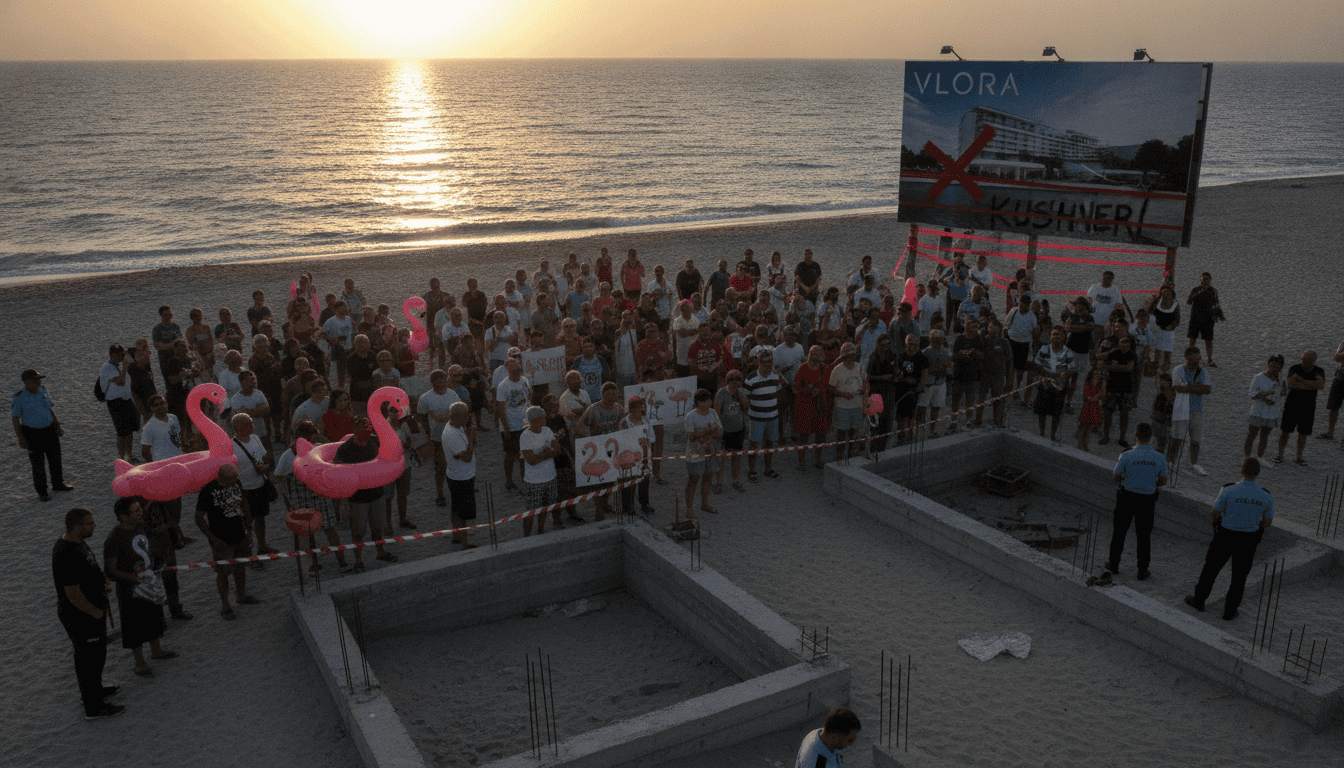
Thousands of mostly young Albanians have taken to the streets of Tirana in nightly protests against luxury resort projects on the southern coast. The movement, named after the pink flamingos that winter and breed in the Vjosa-Narta lagoon, has rapidly become a focal point for grievances about transparency, corruption and environmental protection. Protesters say the planned developments threaten a protected landscape where up to 3,000 flamingos and numerous other bird species gather.
Resort proposals tied to Affinity Partners and high-value investment
The disputed projects are backed by Affinity Partners, a U.S.-based investment vehicle that is reportedly prepared to deploy up to €4 billion in tourism development. Plans under discussion include five‑star hotels, private villas, apartment complexes, a marina and pools on privately held land near Zvërnec and on the state-owned island of Sazan. Early works such as road alignments and drainage trenches were fenced off late in May, and confrontations between private security staff and local demonstrators were recorded on mobile phones and circulated widely.
Environmental stakes at Vjosa-Narta and Sazan
Conservationists say the Riviera proposals would imperil a mosaic of wetlands, pine woodlands and salt marshes that support pelicans, terns, herons and the flamingos that have given the protests their name. The Vjosa river — declared a national park in 2023 along its Albanian course — feeds the Narta lagoon and forms a unique delta where freshwater and marine systems meet. Activists warn that land reclamation, drainage and major construction could alter hydrology, reduce feeding grounds and heighten pollution risks in an area already challenged by litter and sewage in summer months.
Parliamentary changes and EU scrutiny
Tirana’s parliament amended national protected-area rules in early 2024 to allow projects deemed of “strategic importance” to proceed under certain conditions, a move critics describe as a weakening of safeguards. The provisions require, among other things, the creation of at least 1,000 permanent jobs and adherence to environmental requirements, but concrete project plans have not been publicly finalised. On June 17 the European Parliament urged a moratorium on new approvals and construction in protected zones until Albania’s revised laws are assessed for compliance with EU nature-protection standards, placing the dispute squarely within the broader accession dialogue.
Political implications for Prime Minister Edi Rama
The protests pose a significant political test for Prime Minister Edi Rama, who has led Albania since 2013 and who secured strong electoral backing in the 2025 parliamentary vote. Rama frames the investments as an opportunity to modernise the Riviera and accelerate economic growth driven by tourism, which now accounts for roughly a quarter of the country’s economy. Yet the movement’s organisers say their aim goes beyond a single project; many demand a systemic change and accuse the governing Socialist Party of opaque decision‑making and cronyism.
Corruption probes and the limits of opposition politics
Albanian special prosecutors (SPAK) have investigated several figures close to Rama, including former deputy prime ministers and Tirana’s mayoral figure Erion Veliaj, who has been held in pretrial detention for over a year. Those legal proceedings have further eroded trust among protesters, who say established political channels offer no credible alternative. The conservative Democratic Party, led by former president Sali Berisha, has failed to capture the movement’s support, leaving the protests to be driven primarily by Generation Z and civic groups rather than traditional party politics.
Tourism boom collides with infrastructure and resource pressures
Albania’s tourism surge is dramatic: visitor numbers have tripled over the past decade and could exceed 13 million in the current year for a country of about 2.4 million residents. The resulting strain is evident at airports, on coastal roads and in coastal towns such as Saranda, Ksamil and Shëngjin, where hasty construction of accommodation has altered townscapes and clogged local services. Water allocation is an increasing flashpoint, with seaside developments competing with inland communities and protected habitats for scarce freshwater resources.
Uncertain legal battles and stalled construction
Construction fences and initial earthworks have been removed or paused in recent weeks as property claims and permits are contested in Albanian courts. The status of Sazan — a former military base in state ownership — remains a subject of competing proposals and legal review. Both investors and national authorities face a complex matrix of land-rights disputes, planning procedures and potential EU conditions that could delay or reshape any final investment decisions.
The coming months will determine whether the Albanian Riviera protests force a recalibration of tourism policy, slow or stop the projects near Zvërnec and Sazan, or become a longer-term political movement. For now, the lagoon’s flamingos remain a potent symbol of a conflict where environmental protection, economic ambition and questions about political accountability collide.
