
Germany’s Mietwucher app drives 10,000+ tenant reports as cities widen enforcement
Mietwucher app prompts 10,000+ tenant reports in Germany, revealing widespread rent overcharges; cities expand enforcement; fines and repayments ordered.
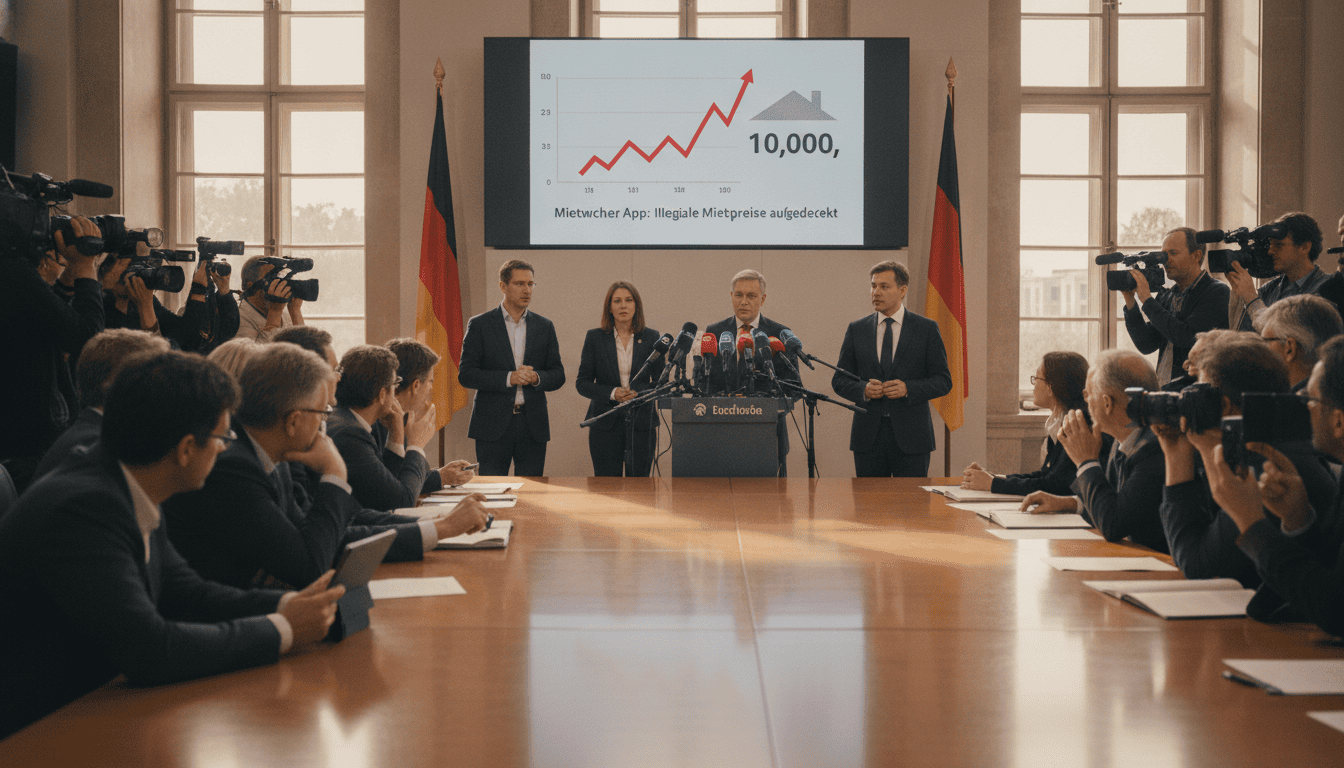
Since its launch at the end of 2024 the Mietwucher app developed by the Left party has produced more than 10,000 direct reports from households alleging excessive rents, according to the Left parliamentary group. The tool has been used roughly 303,500 times across 36 cities, and municipal checks found many reported rents exceeded legal benchmarks. The emergence of the app has prompted a patchwork of enforcement actions and heightened debate about municipal capacity to pursue unlawful rent levels.
App usage and scale of reports
The Left faction in the Bundestag reported that 10,255 households formally notified authorities via the Mietwucher app, while the platform registered about 303,500 interactions in total. Of the cases reviewed by municipal offices, the party said approximately 198,000 rents were identified as overcharged when measured against local comparison values. The app is now available in 36 cities, demonstrating rapid uptake among tenants and civil-society groups tracking housing costs.
Average overcharges and tenant consequences
The Left’s analysis indicates that reported cases showed an average excess of 66 percent above allowable rents, a level that would translate to an average monthly reduction of about €250 for the affected households. Campaigners and officials emphasised that many tenants do not report suspected overcharging because they fear eviction or retaliation by landlords. Municipal authorities and tenant advocates say this underreporting leaves significant pockets of illegal pricing unchallenged.
Legal thresholds and recent penalties
Under Germany’s economic criminal law, a landlord may be liable for an administrative offence if rents exceed the local comparative rent by more than 20 percent, particularly when a tenant’s lack of alternatives is exploited. Where rents exceed permissible limits by over 50 percent, prosecutors can treat the matter as a criminal offence. In a highlighted case from October 2025, a housing office in Friedrichshain-Kreuzberg imposed a €26,000 fine and ordered €22,000 in rent repayments against a landlord following a complaint originating in the app.
City-level enforcement differences
Berlin has been the most active single city in using the Mietwucher app, with 111,777 users and 4,658 formal reports forwarded to authorities, according to the Left. Frankfurt am Main has been held up as a model of strict enforcement: its housing office said it has handled more than 1,000 procedures since 2020 and secured roughly €330,330 in repayments. Other municipalities including Leipzig, Tübingen, Hannover and Hamburg have set up dedicated units or portals to process reports of illegal rents, reflecting varied local approaches to the same legal framework.
Administrative capacity and practical challenges
Local administrations face a rising caseload as app-generated reports increase, and officials warn of limits in staffing and technical resources for thorough investigations. Verifying alleged overcharging requires comparing advertised or contracted rents with established local reference values and documenting tenant vulnerability, which can be time-consuming. Authorities also contend with legal complexity when landlords contest assessments, creating further demand for administrative and judicial resources.
Political pressure and calls for wider action
Left party lawmakers and tenant organisations are pressing for broader municipal commitment to pursue rent overcharges and to lower illegal rents promptly. Caren Lay, a Left parliamentary member, said illegal rents must be reduced and that the app’s reports help city administrations to act. Opposition parties and landlord associations have raised concerns about due process and potential misuse of data, prompting calls for clear procedural safeguards as enforcement intensifies.
Public policy implications are emerging as more cities respond to the datasets generated by the Mietwucher app, with potential for further legislative or administrative measures to simplify complaint handling and protect tenants from reprisals. Municipalities will need to balance the enforcement push with measures to expand capacity, ensure fair adjudication and provide legal support to vulnerable renters.
The Mietwucher app has accelerated reporting and placed the issue of excessive rents on municipal agendas, but its long-term effect will depend on how quickly cities scale investigations, whether courts sustain administrative findings, and if lawmakers adopt measures to close legal gaps that allow unlawful pricing to persist.
