
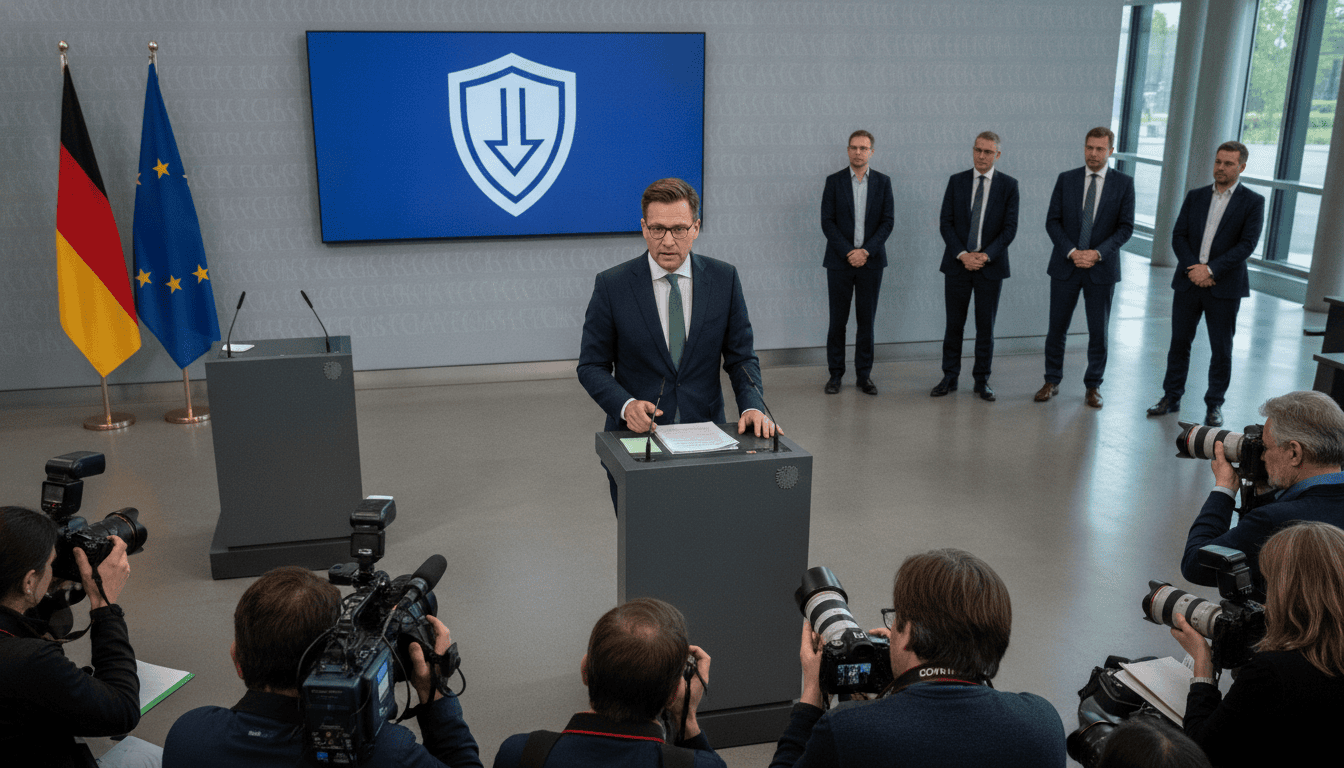
Green MP Files Emergency Bid to Halt Bundestag Vote on Sparpaket for the Krankenkassen
Green MP Janosch Dahmen has asked Germany’s Federal Constitutional Court to block a Bundestag vote on the Sparpaket for the Krankenkassen, arguing parliament lacks sufficient time for proper scrutiny.
Emergency complaint and legal precedent
Janosch Dahmen filed an urgent application with the Bundesverfassungsgericht seeking to stop the planned Bundestag vote on the Sparpaket for the Krankenkassen, saying deputies have been denied the time needed to examine a complex law. He warned that a bill with “billions in consequences” for roughly 75 million insured people cannot be responsibly evaluated under current time pressure.
Dahmen explicitly modelled his move on a 2023 intervention by CDU MP Thomas Heilmann, which successfully halted the heating law before the summer recess on similar grounds of inadequate parliamentary review. Legal advisers say the court will weigh procedural fairness and whether the legislature’s timeframe breached parliamentary rights.
Late-night amendment sparks criticism
The complaint follows a 300-page amendment circulated late Sunday by the governing parties, the Union and SPD, which critics say effectively rewrites large parts of the original draft. Opposition MPs and some coalition backbenchers complained that the volume and timing of the changes made careful analysis impossible ahead of a planned vote.
Greens argued the amendment transforms the package into “a largely re-drafted law” and demanded additional time and expert input. Party leaders sought to have the vote removed from the Bundestag agenda for the week, saying the rushed process risked mistakes on sensitive health-policy measures.
Parliamentary manoeuvres and expert demands
Greens and the Left had called for a further public hearing in the Health Committee to assess the new provisions and to allow specialist witnesses to advise MPs, but they failed to secure that procedural step. They then lobbied coalition partners to postpone the plenary vote scheduled for Friday, without success.
Felix Banaszak, co-leader of the Greens, told regional newspapers he saw no reason to approve the bill under the current conditions and urged the government to delay the decision until after a thorough parliamentary review. The dispute highlights tensions within the legislature over fast-track lawmaking ahead of the summer recess.
Major policy changes in the amendment
The amendment contains a series of substantive changes affecting coverage, pharmaceuticals and hospital rules. One notable alteration preserves free co-insurance for spouses while children remain under age 12, expanding an initially proposed limit of six years.
Proposed changes to clinical practice include a new requirement that cannabis-based preparations be prescribed only after a six-month trial with an approved finished pharmaceutical product. The draft also removes nursing-staff lower limits as a mandatory criterion for hospital service-group classification and introduces adjustments affecting patent-protected vaccines and other medicines.
Budget effects and insurer shortfall
The government says the package aims to stabilise statutory health insurance finances and avoid contribution increases next year, but Greens remain sceptical the measures will be sufficient. According to the amendment’s calculations, the net fiscal effect over four years is close to neutral: the health funds would lose about €6 billion while receiving roughly €6.25 billion in transfers.
Nevertheless, officials and opposition voices note a looming shortfall for the funds: insurers are reported to be facing an estimated €18 billion gap for the coming year unless further measures are enacted. That fiscal pressure is central to the government’s argument for swift legislative action, while critics say quick fixes risk unintended consequences for patients and providers.
Possible outcomes and timetable
With the emergency application lodged, the Constitutional Court will decide whether to issue an interim injunction that could delay the Bundestag vote. Courts typically assess whether there is a credible violation of parliamentary rights and whether immediate judicial intervention is warranted to prevent irreparable procedural harm.
If the court declines an interim order, the Bundestag could proceed with the vote as scheduled. If the court intervenes, legislators would likely need to reopen committee work and possibly reconvene after the summer recess to complete deliberations. Several Green MPs suggested the reform could still be adopted in the first parliamentary session after the summer break in September.
The complaint has thrust procedural fairness into the centre of the health-policy debate and raised broader questions about how complex, high-impact legislation should be handled in a tightly timed calendar. Observers say the court’s response will be watched closely as a test of whether speedy political compromise can be squared with thorough parliamentary scrutiny.
