
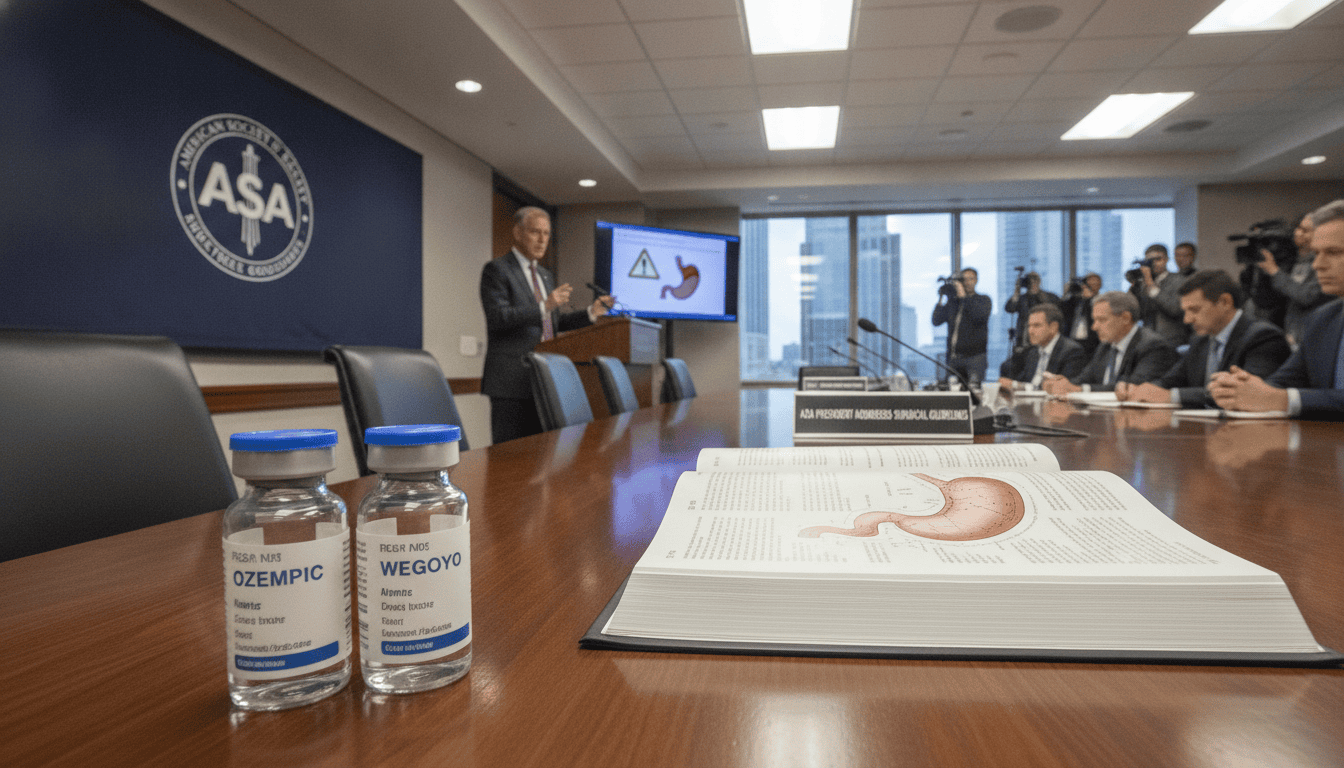
ASA urges patients to pause GLP-1 agonists like Ozempic and Wegovy before elective surgery
New ASA guidance recommends pausing GLP-1 agonists such as Ozempic and Wegovy before elective surgery to reduce aspiration risk and coordinate diabetes care.
The American Society of Anesthesiologists (ASA) has issued guidance advising patients to stop GLP-1 agonists, including widely prescribed drugs such as Ozempic and Wegovy, ahead of elective surgical procedures. The recommendation follows reports from anesthesiologists who observed retained stomach contents in patients who had followed standard overnight fasting but remained at risk of regurgitation. The ASA emphasized that the guidance is precautionary and reflects limited but compelling clinical observations rather than a full formal guideline.
ASA urges pausing GLP-1s ahead of elective procedures
The ASA’s Task Force on Preoperative Fasting developed the new recommendations after a review of available literature and accumulating clinician reports. Michael Champeau, the society’s president, said the organization began receiving frequent accounts of patients with food in the stomach despite following fasting instructions, prompting a careful reassessment of preoperative medication management. The task force chose to issue guidance rather than formal standards because long-term, large-scale studies of GLP-1 agonists and gastric emptying are still sparse.
GLP-1 receptor agonists, a class that includes semaglutide (marketed as Ozempic and Wegovy) and related agents, are prescribed for type 2 diabetes and weight management. The drugs slow gastric emptying as part of their mechanism, which can leave food or liquid in the stomach longer than expected after fasting. That physiologic effect is central to the ASA’s caution: a stomach that is not empty raises the risk of material being regurgitated and aspirated during anesthesia.
Gastric emptying delay raises aspiration risk
Delayed gastric emptying increases the chance that a patient will have residual stomach contents at the time of anesthesia induction. If material moves upward from the stomach into the throat, it can be inhaled into the lungs and cause aspiration pneumonia or other pulmonary injury. Anesthesiologists have long required fasting to reduce this risk, and the ASA says GLP-1–related delays may render a single overnight fast insufficient for some patients.
A breathing tube in place during general anesthesia typically protects the airway and reduces the risk that aspirated material will enter the lungs. However, many procedures are performed without routine endotracheal intubation, and for those patients any unexpected regurgitation can create a serious intraoperative emergency. The ASA notes that suction and other measures can mitigate but not eliminate risk when stomach contents are present.
Anesthesiologists’ reports prompted the guidance
The guidance grew out of case reports and firsthand accounts from anesthesiologists across the United States. Clinicians reported instances in which patients adhering to fasting rules nonetheless presented with food in the stomach, and in some cases experienced regurgitation immediately before surgery. Champeau said those accounts were frequent enough to warrant an organized response by the society to protect patients and clinicians.
Because the underlying scientific literature remains limited, the ASA framed its statement as interim guidance and called for more research. The society highlighted gaps in current understanding, including how long the stomach may remain affected after different dosing regimens and whether specific patient factors amplify risk.
Guidance on timing for daily and weekly dosing
The ASA recommends that patients on daily-dosed GLP-1 agonists consider skipping the medication on the day of surgery. For patients receiving a weekly formulation, the guidance advises considering stopping the drug one week before the planned procedure. These recommendations aim to reduce the likelihood of retained gastric contents at induction while balancing the need for ongoing metabolic control.
Patients are urged to discuss medication timing with both their prescribing clinician and their surgical team well in advance of any elective procedure. Surgeons and anesthesiologists need to know about GLP-1 use ahead of time so they can plan airway management and fasting instructions appropriately, particularly at smaller facilities where awareness of the ASA guidance may be lower.
Endocrinology advice on diabetes management when GLP-1s are paused
Endocrinologists say alternative strategies exist for patients who cannot take GLP-1 agonists in the days before surgery. Karl Nadolsky, an obesity medicine specialist, noted that agents used to manage diabetes can be adjusted temporarily and that long-acting GLP-1 and GLP/GIP medications may have lingering glycemic effects even after dosing pauses. Still, the ASA advises consulting an endocrinologist if GLP-1 therapy will be interrupted for longer than the usual dosing interval to prevent hyperglycemia.
Coordinated care between the prescribing clinician, endocrinologist and surgical team reduces the risk of blood sugar excursions and ensures the patient’s metabolic needs are managed safely. Preoperative planning should include contingency plans for glucose monitoring and alternative short-term diabetes medications when necessary.
Emergency operations handled as full stomachs
The ASA guidance does not change practice for emergency surgery, where delaying a necessary operation to wait for drugs to clear is not an option. In such cases clinicians treat patients as though their stomachs are full and employ rapid sequence induction—a technique that minimizes the time between loss of consciousness and securing the airway with a breathing tube. This protocol is designed to reduce aspiration risk when the fasting state is unknown or presumed inadequate.
Champeau stressed that emergency protocols are well established and remain the standard response when a patient requires immediate surgery after taking a GLP-1 agonist days earlier. The guidance is focused primarily on elective cases where clinicians can plan and patients can pause medications under supervision.
The ASA said its guidance may evolve as more evidence becomes available, and it encouraged clinicians to report events and participate in studies that examine the duration and clinical impact of GLP-1–induced gastric delay. Patients planning elective surgery should proactively inform their surgical team if they use GLP-1 agonists and coordinate with their prescribing clinician and an endocrinologist to determine safe timing and blood glucose management.
