
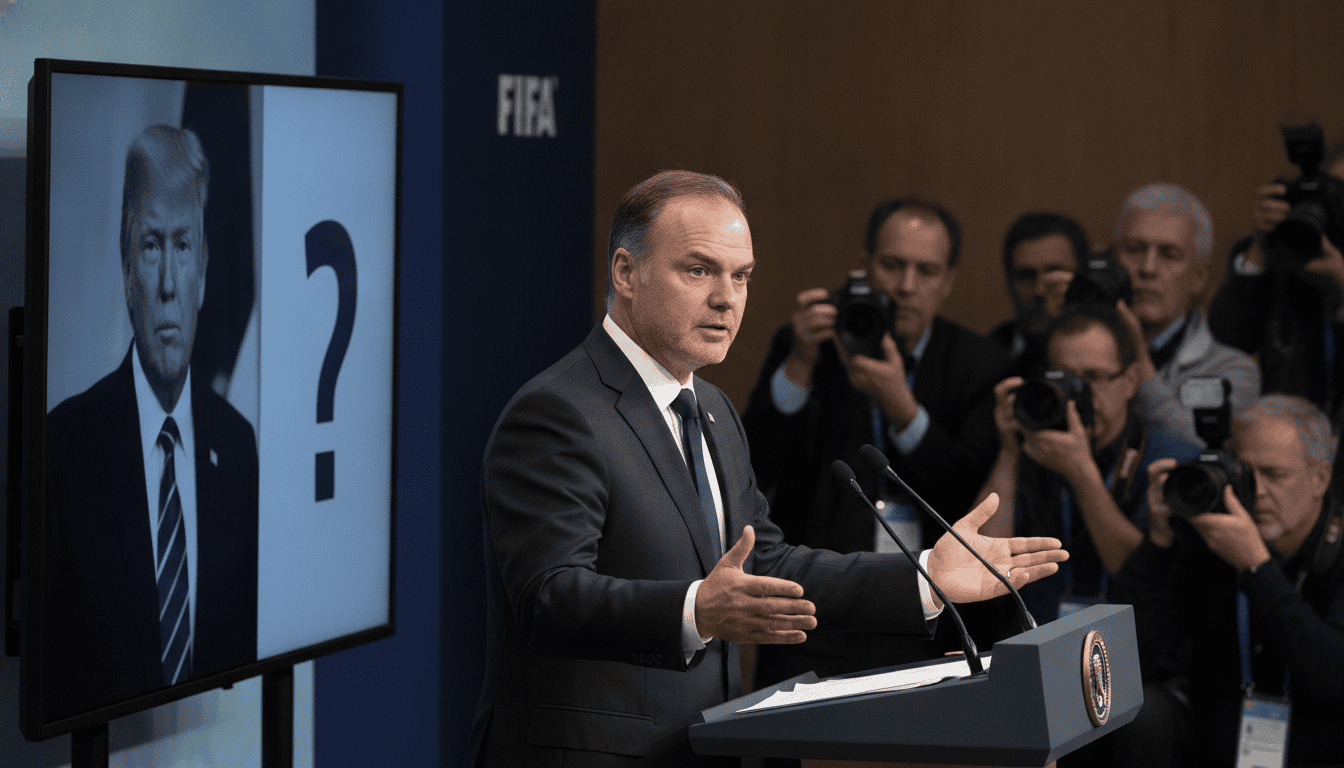
FIFA disciplinary decision under scrutiny after Trump call, DFB demands answers
FIFA disciplinary decision draws criticism after US President’s call to Gianni Infantino and a sparse 13-point statement from the committee, prompting calls for swift, transparent review.
The FIFA disciplinary decision that suspended a sanction on conditional grounds has provoked urgent demands for clarification from national associations and federations. Germany’s football association president signaled that the matter threatens the integrity of the sport, while public revelations that the US President phoned FIFA’s president intensified scrutiny. FIFA’s disciplinary committee published a 13-point statement explaining the suspension only in broad terms, leaving key evidence and reasoning undisclosed.
Calls for clarity from German Football Association leadership
The president of the German Football Association publicly urged a rapid and conclusive explanation of the FIFA disciplinary decision to protect competition integrity. He said that any impression of political intervention in sporting rulings must be removed quickly, reflecting unease among European stakeholders.
A DFB spokesperson later confirmed the association had noted FIFA’s response and would consult with UEFA and other European bodies before deciding next steps. The DFB emphasized that procedural transparency is essential to restore public confidence and avoid perceptions of selective justice.
Details of the phone call and official reactions
US officials acknowledged that the President contacted FIFA’s president to request a review of the sanction, a development that has raised questions about external influence. FIFA’s president acknowledged receiving the call but stressed to the caller that the disciplinary body operates independently.
Both men provided written statements summarizing their positions, but those accounts have not answered critical questions about whether the phone call affected decision-making. That uncertainty has become central to debates over how outside actors may shape disciplinary outcomes in international football.
FIFA disciplinary committee’s 13-point statement falls short for critics
The FIFA disciplinary committee issued a 13-point explanation for why enforcement of the sanction was suspended, citing “special circumstances” and available evidence. However, the committee did not disclose what those special circumstances were or describe the evidence in sufficient detail.
Critics argue that a ruling of this significance requires a more transparent rationale to prevent perceptions of arbitrariness. Without a fuller account, other associations and fans may see inconsistent treatment of similar incidents, eroding trust in disciplinary processes.
Potential appeals from France and England heighten stakes
Reports indicate that the French Football Federation has sought annulment of a yellow card issued to an offensive player, while England’s association is said to be considering a request to suspend a red-card ban on conditional grounds. Those moves illustrate the practical consequences of the contentious FIFA disciplinary decision.
Observers warn that denying appeals in these and other cases while allowing conditional suspensions elsewhere would look inconsistent, regardless of the underlying merits. Federations contemplating appeals say their actions are aimed at ensuring equal application of rules across all teams and matches.
Implications for FIFA leadership and governance
The controversy has fueled renewed calls within parts of European football for decisive governance action, including demands that go beyond clarifications to question leadership suitability. Some voices argue that the president’s handling of the episode has opened FIFA to political pressure in ways that could damage its credibility long-term.
UEFA and national associations face a choice: pursue institutional remedies to reinforce independence, or accept limited explanations and risk ongoing reputational harm. Whatever route they select is likely to shape perceptions of FIFA governance through the remainder of the World Cup and beyond.
Gianni Infantino’s role has drawn particular attention because the situation ties a high-profile disciplinary outcome to a presidential contact. That linkage has intensified debate over whether internal safeguards are adequate to shield sporting decisions from external influence.
Calls for transparent procedures and public evidence
Legal experts and sports governance specialists have urged that the disciplinary committee publish a fuller justification or make evidentiary materials available to the parties involved. They argue that transparency would help demonstrate that decisions rest on consistent standards, not ad hoc factors.
Federations requesting appeals also say that a transparent process would reduce the likelihood of future escalations and legal challenges. Clear publication of reasoning, even if limited to redacted evidence, could restore some confidence and show that the committee’s independence is meaningful.
The contested FIFA disciplinary decision has become a test of how international football balances disciplinary autonomy with accountability to stakeholders. National associations, players and fans are watching closely for a response that addresses both the substance of the ruling and the appearance of outside influence.
If FIFA and its disciplinary organs do not provide detailed explanations, the federation risks protracted disputes that could spill into courts and tarnish tournament narratives. Conversely, a demonstrably transparent review would likely defuse immediate tensions and set a precedent for clearer governance in future cases.
Ultimately, the resolution will depend on whether FIFA can show, through documented reasoning and process integrity, that disciplinary rulings are made impartially and free from external pressure. The coming days of consultation among UEFA, national associations, and FIFA will determine whether the sport can regain a measure of public trust.
