
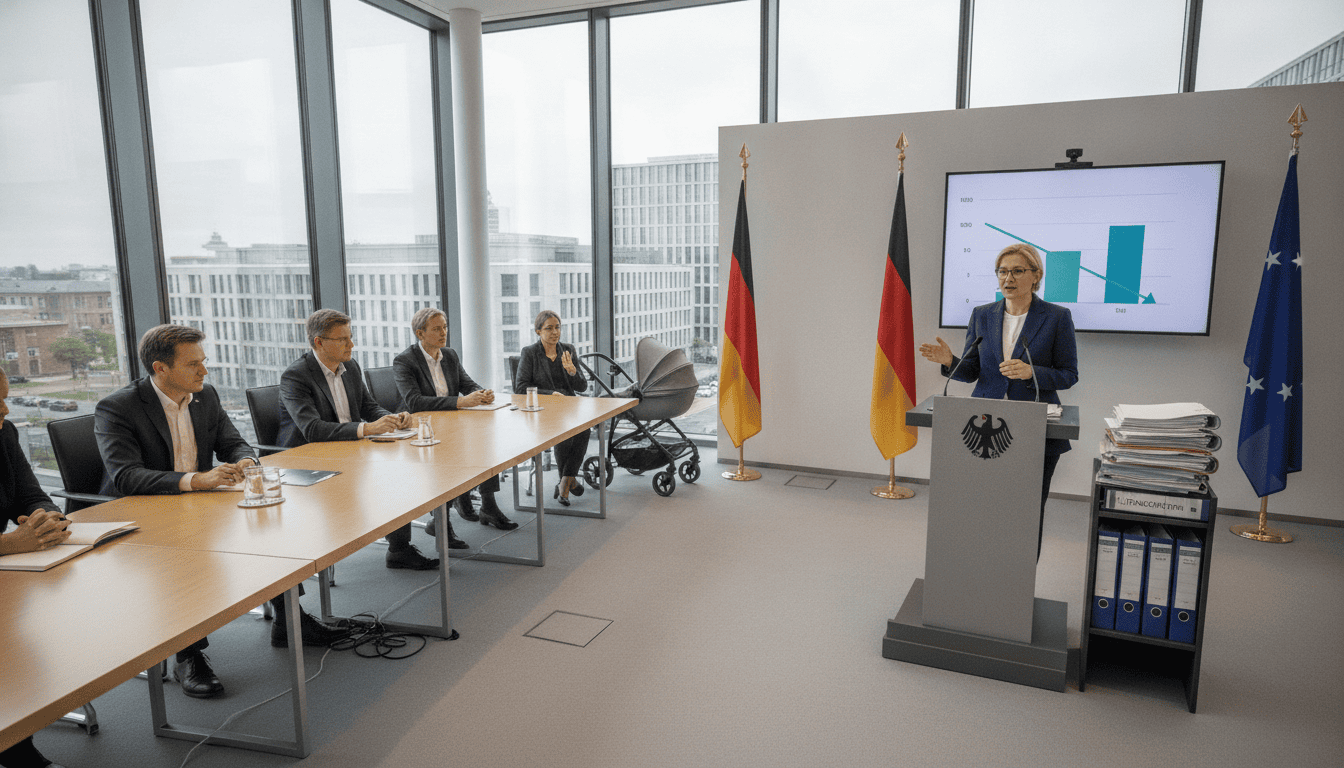
Parental allowance reform reduces benefit months and ties full payments to three months’ leave for each parent
Germany’s parental allowance reform would cut benefit months from 14 to 12 and require both parents to take at least three months of leave to access the full payment.
The federal government has unveiled a parental allowance reform proposed by Family Minister Karin Prien (CDU) that would shorten the maximum duration of Elterngeld payments from 14 months to 12 months while adding a new condition: to receive the full benefit each parent must take at least three months of leave. The proposal is presented as both a fiscal saving and a policy tool to encourage fathers to share early childcare responsibilities, allowing mothers to return to work sooner.
Details of the proposed benefit changes
Under the plan, the total months of parental allowance available to a couple would be reduced to a maximum of 12 months rather than the current 14 months.
A central element is the introduction of a binding minimum: parents must each claim at least three months of leave to qualify for the full duration of payments, creating a direct incentive for paternal participation.
Fiscal rationale and expected savings
Officials argue the reform will lower public spending by shortening the benefit period and cutting back on what ministers describe as structural subsidies for single-earner households.
Proponents say the measure recalibrates resources toward incentivizing work and shared caregiving while trimming costs in the federal budget; precise savings figures will depend on uptake and implementation details.
Intended effects on parental roles and labor market participation
Policymakers advancing the reform emphasize its potential to shift caregiving patterns by nudging fathers to take longer stretches of leave in the child’s first year.
Economists note that shorter career interruptions for mothers can reduce long-term earnings losses and career penalties, an outcome the reform explicitly targets by encouraging early re‑entry into the labor market.
Potential critics and political responses
Some critics warn the change could limit flexibility for families who prefer different care arrangements or who cannot split leave evenly due to work constraints or earnings differentials.
Advocacy groups for parental choice and single-earner families have raised concerns that the new rule may effectively penalize households where one parent remains the primary earner, while supporters counter that no one will be forced to claim leave but that the fiscal incentive structure will change.
Relationship to childcare access and next steps
The reform is positioned as part of a broader agenda that links parental leave policy with expanding childcare access; support payments are framed as bridging aid until guaranteed daycare entitlements apply.
Legislative approval will require parliamentary debate and may involve consultations with state governments about childcare capacity and the practical rollout of the revised eligibility rules.
The proposed parental allowance reform marks a significant shift in Germany’s family policy by tightening the award period and explicitly tying full benefits to shared early childcare, a move that supporters say will strengthen maternal employment outcomes and encourage paternal involvement while critics warn of reduced flexibility for some family structures.
