
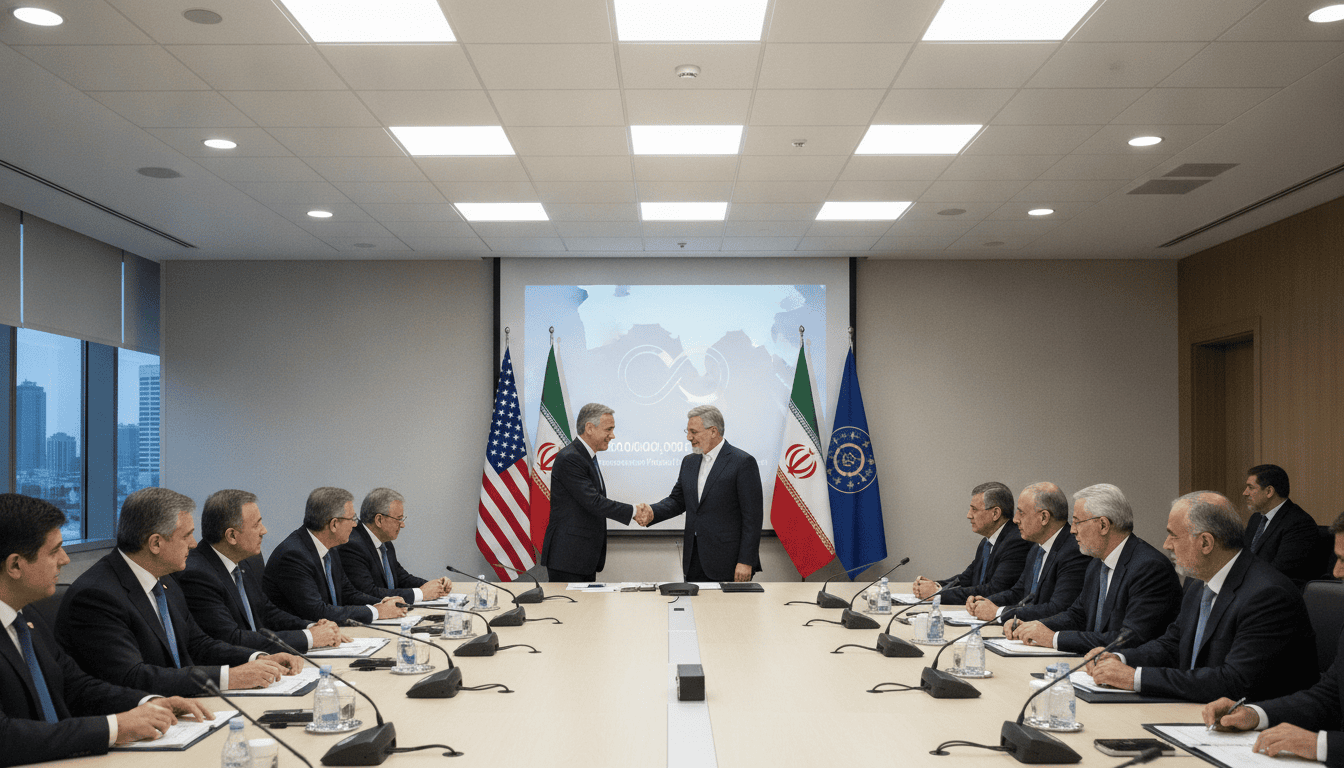
US-Iran MoU Poised to Reshape Iran-GCC Economic Relations and Gulf Investment
US-Iran MoU could reshape Iran-GCC economic relations, promising sanctions relief and a $300bn reconstruction fund while security and banking hurdles may slow Gulf investment.
Deal Framework and Sanctions Relief
The memorandum of understanding signed on 17 June sets out an ambitious framework to remove both primary and secondary US sanctions on Iran and to open financial channels with regional partners. Central to the agreement is a proposed $300 billion fund, backed by Washington and Gulf states, intended to support reconstruction, development and wider economic reintegration.
Implementation of the MoU will require extensive licensing, waivers and coordination between US, regional and international financial institutions to restore cross-border payments and correspondent banking relationships. Officials and analysts caution that reversing years of sanctions and rebuilding trust in banking channels will be technically complex and politically sensitive.
Gulf Capitals Frame Diplomacy as Commercial Opportunity
Several Gulf states have publicly cast the MoU in commercial terms, with leaders and ministers highlighting potential investment and trade openings with Iran. Qatar explicitly voiced expectations of “huge investment opportunities,” and other capitals signalled readiness to explore energy, infrastructure and logistics projects if sanctions are lifted.
Diplomatic engagement at forums such as the recent G7 sidelines reinforced the view that rapprochement could yield economic dividends for neighbourly Gulf monarchies. Yet statements of interest have been deliberately cautious, reflecting the need for legal certainty and assurances that any new access will endure.
Banking Barriers and Private-Sector Caution
Banking experts warn that even with formal sanctions relief, major international banks and payment networks will move slowly to re-enter Iran due to past abrupt policy shifts. The experience of the US withdrawal from the Joint Comprehensive Plan of Action and subsequent reimposition of sanctions left global firms wary of sudden exposure.
Re-establishing correspondent accounts, clearing lines and dollar-denominated services will be painstaking and will require time-consuming due diligence and compliance reforms. As a result, large-scale Gulf investment is likely to be phased and preceded by smaller, trade-oriented flows that rely on non-dollar channels and regional intermediaries.
Security Aftermath of Missile and Drone Attacks
Recent months of Iranian missile and drone strikes directed at Gulf states have hardened security sensitivities across the region, complicating the commercial calculus. Several Gulf governments say they will condition substantive economic engagement on demonstrable steps by Tehran to reduce military tensions and avoid future attacks.
Those security concerns have not prevented diplomatic outreach: GCC states welcomed the June MoU and sent delegations to key Iranian events, and Oman has held talks on safe passage through the Strait of Hormuz. Nonetheless, for investors and policymakers alike, assurances on non-aggression and mechanisms to prevent escalation will be decisive.
Likely Early Winners: Trade and Consumer Flows
Analysts anticipate that the first visible effects of the MoU will be an upswing in trade in consumer goods, electronics, pharmaceuticals and construction materials between Iran and neighbouring markets. Existing supply chains and informal commercial networks have already sustained trade volumes, and these sectors require less capital intensity and fewer long-term banking arrangements.
Automotive parts, medical supplies and building materials are viewed as immediate candidates for expansion, supported by logistics links through Gulf ports and overland routes. Such trade growth can provide a proving ground that rebuilds practical commercial confidence before larger investment projects are attempted.
Iraq and Kurdistan as Transit and Trade Hubs
Iraq and the Kurdistan Region are expected to play a central role in any accelerated Iran-GCC economic integration due to established transport corridors and multiple border crossings. Private-sector relationships across these routes have historically facilitated high volumes of cross-border commerce and could be scaled up comparatively quickly.
Investment in road, rail and customs facilitation in Iraqi border regions would amplify the benefits of any sanctions relief by lowering transaction costs and enabling faster movement of goods. Gulf businesses familiar with the Iraq-Iran corridor may therefore lead early market re-entry efforts before global banks fully restore services.
Conditions for Durable Gulf Investment
Gulf states will likely demand a package of political and economic assurances before committing capital at scale, including guarantees on regional de-escalation, transparent legal frameworks for investment and credible dispute-resolution mechanisms. Many Gulf investors will also insist on phased approaches that tie funding to verifiable milestones in security and financial sector reform.
The depth and durability of Iran-GCC economic relations will hinge on whether Tehran can provide concrete confidence-building measures that address the human and economic costs of recent hostilities. Only with such steps will the combination of a $300bn fund and diplomatic momentum convert into sustained private-sector flows.
If sanctions relief materialises fully and banking corridors are restored, trade and investment ties between Iran and Gulf states could expand steadily over several years rather than overnight. The MoU opens a path to reintegration, but the timeline will be defined by a sequence of financial fixes, security guarantees and incremental commercial successes.
