
250th anniversary of the United States disrupted by storm warning and heat-driven cancellations
National Mall events were halted after a severe storm warning; thousands evacuated and parades in Washington and Philadelphia were canceled amid extreme heat.
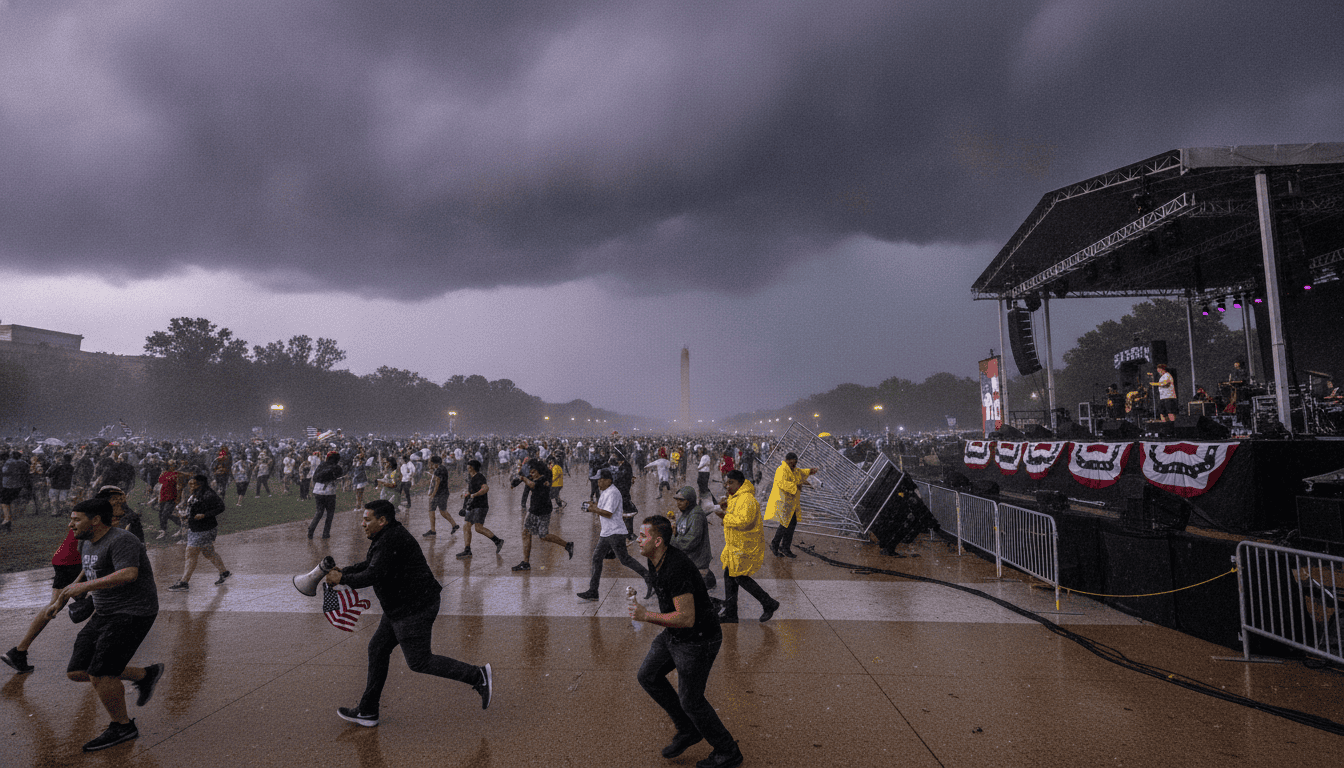
The 250th anniversary of the United States was disrupted on July 4, 2026, when a severe thunderstorm warning prompted organizers to suspend central celebrations on the National Mall in Washington, D.C. Thousands of people left the event site and were directed to seek shelter in museums, federal buildings and other public venues after strong wind gusts and an approaching storm threatened the outdoor program. The weather interruption came on a day already marked by intense heat, canceled parades and heightened political tension.
Storm warning halts National Mall program
Organizers publicly urged attendees to clear the National Mall as dark clouds moved in and wind speeds picked up, creating unsafe conditions for the planned outdoor events. The evacuation followed a scheduled air show and several concerts, and came before a planned presidential address that had been advertised as a headline moment of the festivities. Event staff coordinated movement toward nearby enclosed facilities, and emergency messaging was disseminated via social media and public address systems.
Shelter locations included major museums and government buildings that ring the Mall, where visitors sought refuge from the weather and waited for official clearance to return. Officials emphasized public safety and avoided allowing people to remain in open areas during the storm threat. Local authorities later monitored the area to assess damage and to determine whether remaining events could proceed on schedule.
Evacuations and crowds spill into adjacent neighborhoods
After the evacuation call, many attendees streamed into surrounding streets, filling sidewalks, cafes and plazas near the White House and downtown corridors. People wearing red, white and blue gathered in small groups; some camped with folding chairs on sidewalks while others took seats inside crowded eateries to wait out conditions. The abrupt movement strained local businesses and transit hubs as crowds sought shelter and information.
Event organizers said they prioritized orderly exits and directed visitors to official safe zones, but the scale of the crowd made the flow uneven at times. Despite the disruption, no mass injuries were reported in initial accounts, and city services remained mobilized to assist displaced participants and spectators.
Heat forces parade cancellations in Washington and Philadelphia
The day’s extreme heat complicated logistics: temperatures reached as high as 39°C (about 102°F) on parts of the Mall, contributing to the cancellation of at least one planned parade segment. Organizers cited public health concerns related to heat exposure for performers and participants as the reason for calling off the procession. In Philadelphia, where representatives of the 13 colonies approved the Declaration of Independence on July 4, 1776, local officials announced the cancellation of the city’s 250th-anniversary parade for similar safety reasons.
Authorities emphasized that heat and storm risk together created unacceptable conditions for prolonged outdoor events, especially for vulnerable groups such as children and older adults. Medical teams were positioned at key locations to treat heat-related ailments, and public advisories urged hydration and shade for those who remained outdoors.
Presidential address and fireworks plans face delay
U.S. President Donald Trump had been scheduled to deliver remarks at the National Mall as part of the official program, and his campaign-style messaging had been a focal point in advance coverage. After the evacuation, the president posted on his social platform that he intended to deliver the speech “no matter when,” and organizers later indicated the address would be rescheduled for 11:00 p.m. local time. The program also included an ambitious fireworks display described by promoters as the largest planned for the anniversary, featuring roughly 850,000 shells.
Officials said decisions on the timing of the speech and the fireworks would hinge on weather assessments and public-safety considerations. Federal and local agencies coordinated on secure perimeters for any late-night events, while organizers continued to monitor forecasts and wind conditions before confirming whether the pyrotechnic show could proceed.
Masked extremist march draws attention near the Capitol
The celebrations also exposed fault lines in public safety and political rhetoric when a group of masked men marched near the U.S. Capitol carrying insignia associated with Patriot Front, an extremist organization. Some participants displayed Confederate flags and chanted slogans including “Reclaim America,” actions that drew condemnation from civil-society groups and elected officials. Law enforcement monitored the demonstration, and authorities later reviewed footage and reports to determine whether laws had been broken.
Civil-rights organizations warned that such displays, especially on a day meant for national commemoration, risked escalating tensions and intimidating residents and visitors. Local and federal agencies said they would investigate any incidents of violence or unlawful conduct tied to the demonstrations.
Religious and civic leaders call for unity amid divisions
Against the backdrop of storm warnings and political spectacle, religious and civic figures used the anniversary to appeal for reconciliation and inclusion. A U.S.-born Catholic cleric addressed the crowd with a message emphasizing that defending human life includes welcoming and protecting immigrants, noting their historical contributions to the nation. Other community leaders urged restraint in public discourse and emphasized the anniversary as an opportunity to reflect on civic commitments across partisan lines.
Nonpartisan groups also offered cooling stations, water distribution and informational services for those affected by the heat and evacuation, framing humanitarian response as a practical expression of national solidarity on a day of commemoration.
The 250th anniversary events in Washington and Philadelphia underscored the logistical challenges of staging large national celebrations in extreme weather and a fractious political climate, and they left open questions about how remaining programming would proceed. Officials said they would review the day’s operations and issue updates as conditions permitted.
