
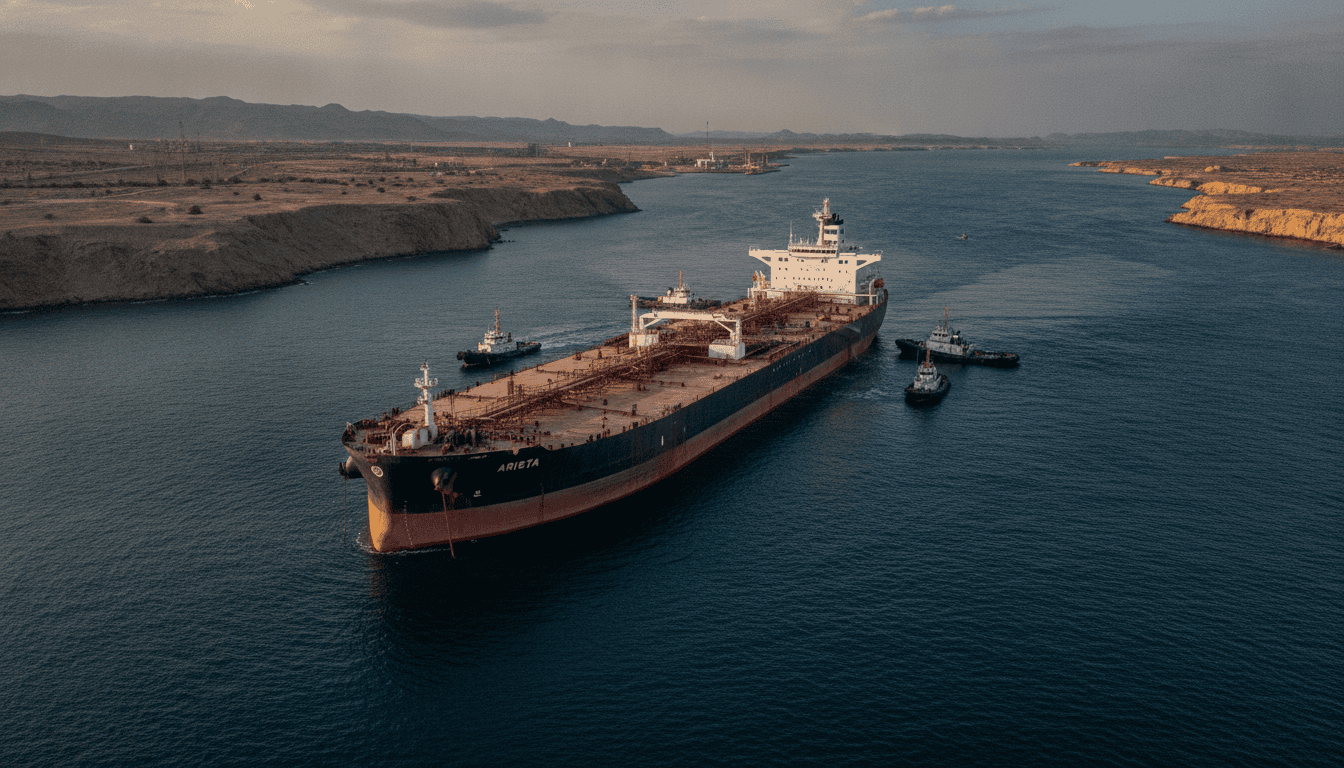
Arista grounding disputed as tracker says ship has been stuck since March
Iranian state media’s claim that a foreign cargo ship ran aground on a “US-suggested route” in the Strait of Hormuz is contradicted by TankerTrackers.com, which identifies the vessel as the Arista and says it has been stationary in the same spot since March, raising fresh questions about reporting and maritime navigation in the strategically vital waterway.
TankerTrackers.com Identifies Vessel as Arista
TankerTrackers.com published data naming the vessel at the center of the dispute as Arista, a Comoros-flagged cargo ship. The monitor said its satellite and AIS records show Arista has been immobile at the reported coordinates since March.
The tracker’s timeline directly challenges initial accounts and provides a continuous movement record that appears to contradict claims the ship only recently ran aground while following a “US-suggested route.” Analysts say persistent location data is a key check on single-source reports in the region.
State Media Report Cited ‘US-Suggested Route’ Claim
Iranian state media reported that the vessel had run aground while using a route it described as being suggested by the United States. That report framed the incident in the context of greater regional tensions over navigation and external influence in the Gulf.
TankerTrackers.com’s statement, however, suggests the grounding narrative may have been presented without the full movement history of the ship. The discrepancy highlights how rapidly evolving maritime incidents can produce competing accounts from official and independent sources.
Arista Is Comoros-Flagged, Management Linked to Shamkhani
Public tracking and registry information confirm that Arista sails under a Comoros flag, a common practice in international shipping. TankerTrackers.com added that, while the flag is Comoros, operational management is connected to an Iranian network tied to Mohammad Hossein Shamkhani.
TankerTrackers.com identified Mohammad Hossein Shamkhani as the manager of operations associated with the vessel and noted his family link to senior Iranian security official Ali Shamkhani. Observers say such management structures can complicate questions of oversight and accountability in incidents involving internationally registered ships.
Discrepancy Raises Questions About Incident Timing and Cause
If Arista has indeed been stationary since March, the timing and cause of any reported grounding become harder to reconcile. A vessel immobile for months could indicate mechanical failure, deliberate anchoring, or administrative detention rather than a recent navigational mishap.
Maritime investigators typically combine AIS logs, satellite imagery, and port records to determine whether a ship has actually run aground, been anchored, or been otherwise impeded. In this case analysts say the available tracking data should be examined alongside any local inspections or official port statements.
Implications for Strait of Hormuz Navigation and Security
The Strait of Hormuz remains one of the world’s most sensitive chokepoints, and any incident there draws immediate scrutiny for commercial and security impacts. Conflicting accounts about the Arista grounding risk heightening tensions among regional actors and international maritime stakeholders.
Shippers and insurance underwriters monitor such incidents closely because uncertainty can affect routing decisions, insurance premiums, and the willingness of carriers to transit the waterway. Clear, corroborated information is needed to prevent overreaction and maintain commercial flow through the strait.
Calls for Independent Verification and Transparency
Maritime monitors and industry groups are urging independent verification of the Arista’s status through imagery, port authorities, and continued AIS analysis. Transparency from relevant maritime authorities would help resolve the conflicting narratives and clarify whether the vessel remains at risk or is undergoing prolonged inactivity for other reasons.
Experts recommend that claims made by state media and by independent trackers be cross-checked publicly so that commercial operators and international observers can respond to a verified sequence of events rather than to competing reports.
The differing accounts over the Arista grounding underscore the importance of satellite tracking and open maritime-data sharing in verifying incidents in congested and geopolitically sensitive waterways.
