
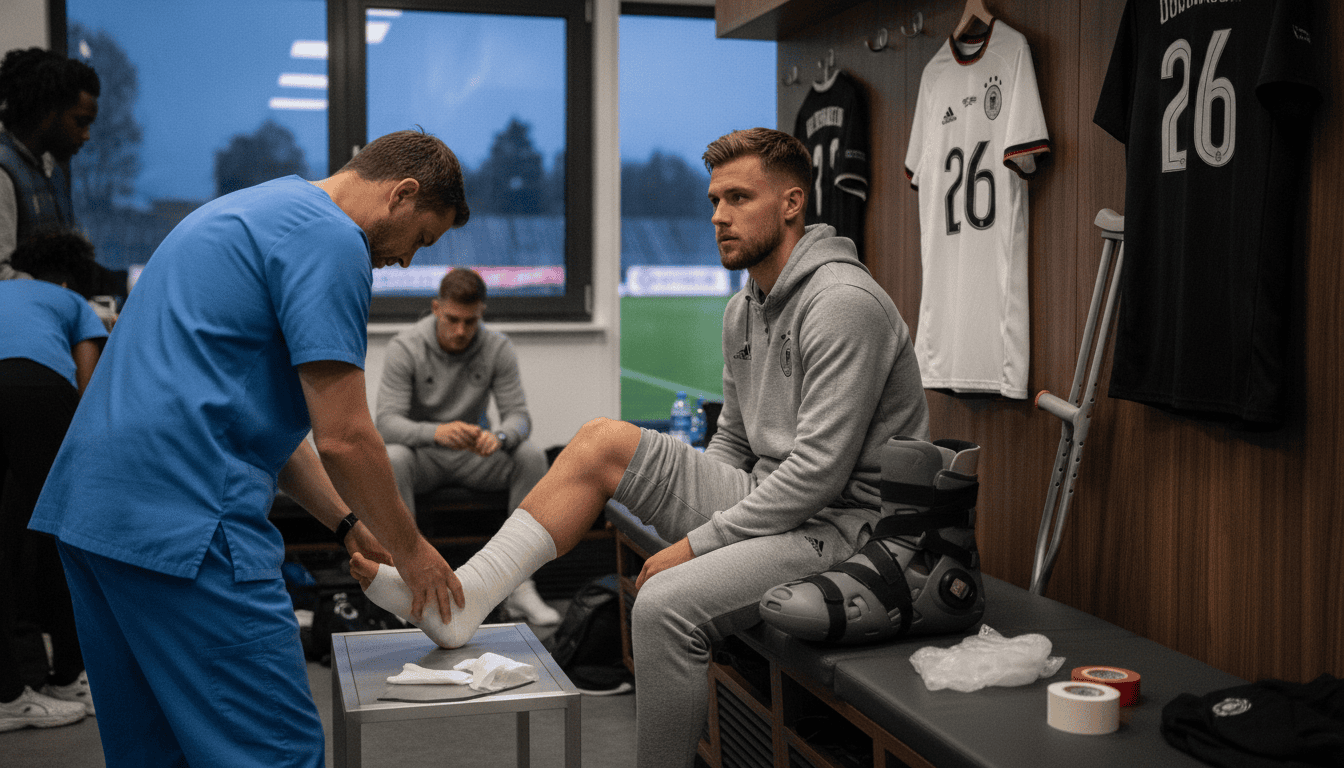
Nico Schlotterbeck Opens Up on Ankle Injury After Germany’s Tournament Exit
Nico Schlotterbeck on his ankle injury after Germany’s elimination: Instagram post on July 1, 2026, pledges to recover and return stronger for fans worldwide.
Nico Schlotterbeck has publicly addressed his ankle injury and Germany’s unexpected exit from the tournament in an emotional Instagram message posted on July 1, 2026. Schlotterbeck described deep disappointment at being unable to help his team because of the problem and promised to work toward a full return. The player’s message, which quickly drew widespread attention on social media, underlined both personal sacrifice and immediate uncertainty about his recovery timeline.
Schlotterbeck posts candid message to supporters
Two days after the team’s elimination, Schlotterbeck wrote that the shock and pain from the exit still felt as intense as in the first moment after the defeat. He said the last one and a half years of work toward fitness and stability felt as if they had collapsed in recent days, and that his ankle simply would not hold during the tournament. The post thanked supporters, apologized for the team’s performance, and promised to do everything necessary to come back stronger.
Description of the ankle injury and personal history
In his message Schlotterbeck singled out his ankle as the site of the problem, saying it “did not keep up” despite months of rehabilitation and sacrifices. He stressed that people who know him privately are aware of the efforts he has made since the original injury roughly 18 months ago, suggesting a history of recurrence or prolonged recovery. The tone conveyed frustration at both the timing and the physical setback, while stressing a commitment to further treatment.
Immediate consequences for Germany’s tournament campaign
Schlotterbeck wrote that his inability to contribute on the pitch was his greatest regret, implying the injury affected team selection and preparation during key matches. The post framed the player’s absence and limited contribution as a factor in the squad’s disappointing finish, though he stopped short of assigning blame to any individual. His candid admission underscores how injuries can shift tactical options and morale during short, high-stakes tournaments.
Public reaction from fans and teammates
The Instagram message drew rapid responses online, with thousands of likes and hundreds of comments within hours, signaling broad empathy from supporters. Several teammates and former colleagues publicly expressed sympathy and encouragement, praising his work ethic and wishing him a swift recovery. Fans used the post to thank him for his efforts and to urge patience as he undergoes treatment, reflecting the close bond between the player and the national supporter base.
Club implications and likely next steps
While Schlotterbeck’s post was personal, it sets expectations for his club to provide medical updates and a rehabilitation plan in the coming days. Clubs commonly conduct scans and assessments after tournament injuries to determine whether surgery, immobilization, or conservative therapy is required. Given his pledge to return, Schlotterbeck and his medical team are likely to outline a staged program focused on reducing inflammation, restoring range of motion, and rebuilding strength and stability.
Rehabilitation outlook and timeline considerations
Recovery from a significant ankle setback can vary widely depending on the exact diagnosis, previous history, and any complications revealed by scans. Schlotterbeck’s reference to intense prior rehabilitation suggests a tailored, potentially longer-term approach will be necessary to reduce the risk of recurrence. He vowed publicly to pursue whatever steps are required to reach a higher level of fitness than before, and his commitment will be a key variable in determining how quickly he can rejoin competitive play.
Schlotterbeck’s message combined personal disappointment with a public pledge of resilience, and it has set the tone for the coming weeks as fans and medical staff await clearer information on his condition and recovery plan. The player’s stated intent to return stronger frames the situation as one of long-term rehabilitation rather than immediate retirement or withdrawal from professional football.
