
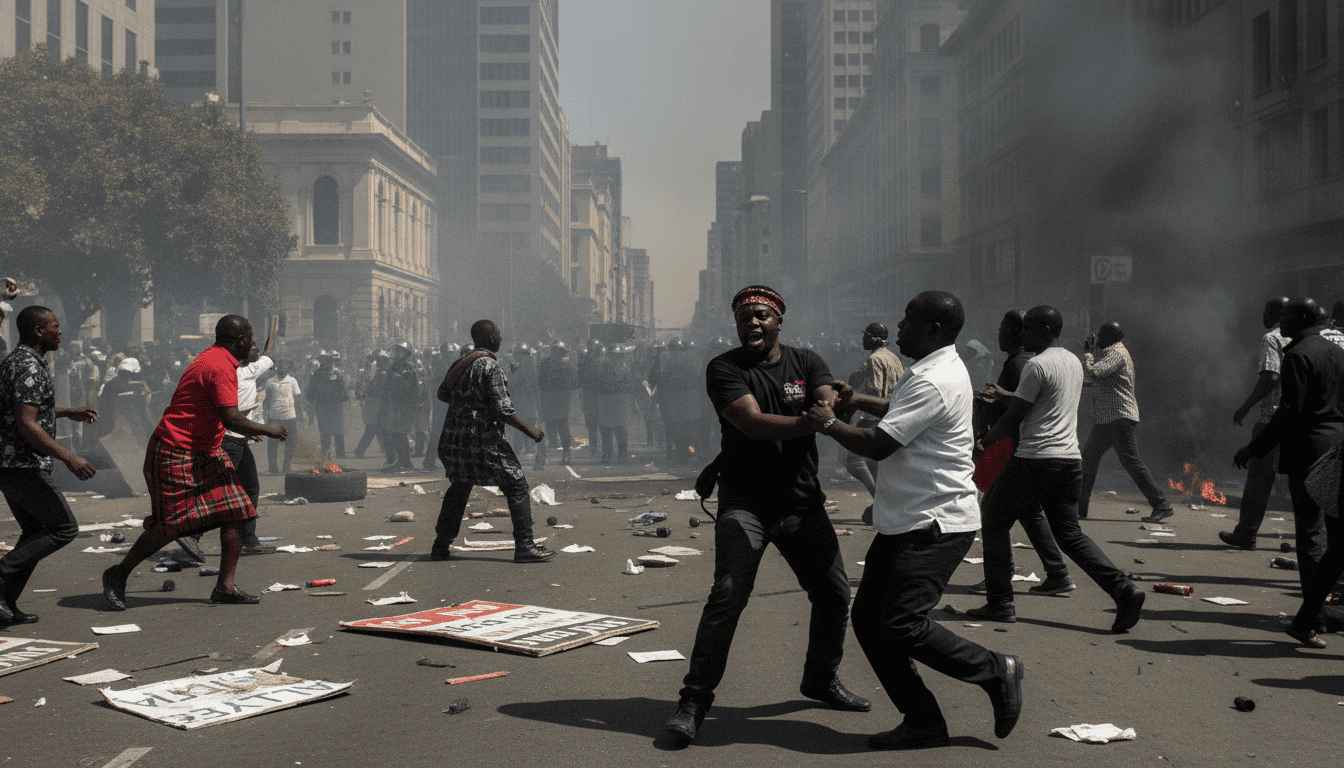
South African anti-immigrant marches spark violence, looting and mass departures
Tens of thousands demonstrated in multiple South African cities on June 30 as South African anti-immigrant marches pressured undocumented and foreign nationals to leave, sparking violent attacks and arrests.
Thousands of people took to streets in several major cities across South Africa on June 30 in coordinated anti-immigrant marches, police and local media said. The South African anti-immigrant marches, organized by the grassroots movement March and March, pressed for the departure of undocumented migrants and coincided with outbreaks of violence against foreign nationals. Law enforcement deployed heightened security, but clashes and targeted attacks on migrants were reported on the margins of the demonstrations.
Large demonstrations across multiple urban centres
Demonstrators gathered in cities including Johannesburg and Durban, where organizers set a public deadline of June 30 for undocumented migrants to leave the country. Local authorities described the rallies as sizable and increasingly confrontational in tone, drawing both supporters and opposition groups. Security forces were placed on alert and established cordons in high-risk neighbourhoods to manage crowds and protect property.
Violent attacks and looting in Johannesburg suburbs
Police reported that, despite security measures, some demonstrators stormed and looted shops and homes run by foreign nationals in Johannesburg’s outlying suburbs. Officers said they were responding to incidents of burglary and property damage, and that victims included migrants from other African countries. In the province of KwaZulu-Natal, police arrested ten people in connection with looting and break-ins, while investigations into additional attacks continued.
March and March’s demands and mobilisation tactics
The citizen-led group March and March framed June 30 as a cutoff for undocumented migrants and has escalated rhetoric in recent weeks, according to media accounts. Movement leader Jacinta Ngobese-Zuma told supporters in Durban that demonstrations would continue weekly in coming months, signaling sustained mobilisation. The campaign demands stricter enforcement of immigration laws, mass deportations and tighter border controls, and the movement alleges—without independent verification—that undocumented migrants contribute to crime and unemployment.
Authorities report large-scale departures and voluntary returns
South African officials said more than 25,000 foreign nationals have left the country in recent weeks, either through deportation or voluntary return, citing a combination of enforcement action and fear of violence. Government figures indicate that reported departures include both undocumented migrants and some legally resident foreign nationals who chose to return home amid safety concerns. Aid groups and advocates warn that such movements can mask coerced departures and exacerbate humanitarian vulnerabilities among migrants.
Presidential condemnation and promises of tougher controls
President Cyril Ramaphosa publicly condemned the violence, urging that scapegoating vulnerable groups is not a solution to complex economic problems. Ramaphosa described attacks on migrants as unacceptable and said his administration would strengthen the enforcement of immigration rules. The president’s comments aimed to strike a balance between denouncing violence and acknowledging public frustration over crime and unemployment, even as critics say more concrete protections for migrants are needed.
Political context ahead of November local elections
The unrest comes as South Africa approaches municipal elections scheduled for November 6, a contest in which the ruling African National Congress faces potential losses. Political analysts say anti-immigrant sentiment is being channelled by groups seeking to influence public opinion ahead of the polls, raising concerns about opportunistic exploitation of social and economic grievances. Local leaders and civil society groups have warned that the issue could deepen social divisions and strain already fragile community relations.
Humanitarian organisations have expressed alarm at reports of attacks and pressured authorities to ensure the safety of migrants and host communities. Observers note that South Africa, as the continent’s most industrialised economy, has long been a destination for migrants from across Africa, and that durable responses will require coordinated immigration policy, social services and local protection measures. With March and March signalling further demonstrations, officials face the immediate task of restoring order while addressing the underlying causes of anti-immigrant sentiment.
The situation remains fluid, with security operations and legal proceedings ongoing as authorities investigate the looting and violent incidents reported since June 30. Ongoing demonstrations and a pledged schedule of weekly protests by movement leaders mean the country could see further confrontations in the weeks ahead, testing law enforcement capacity and political stability before the November elections.
