
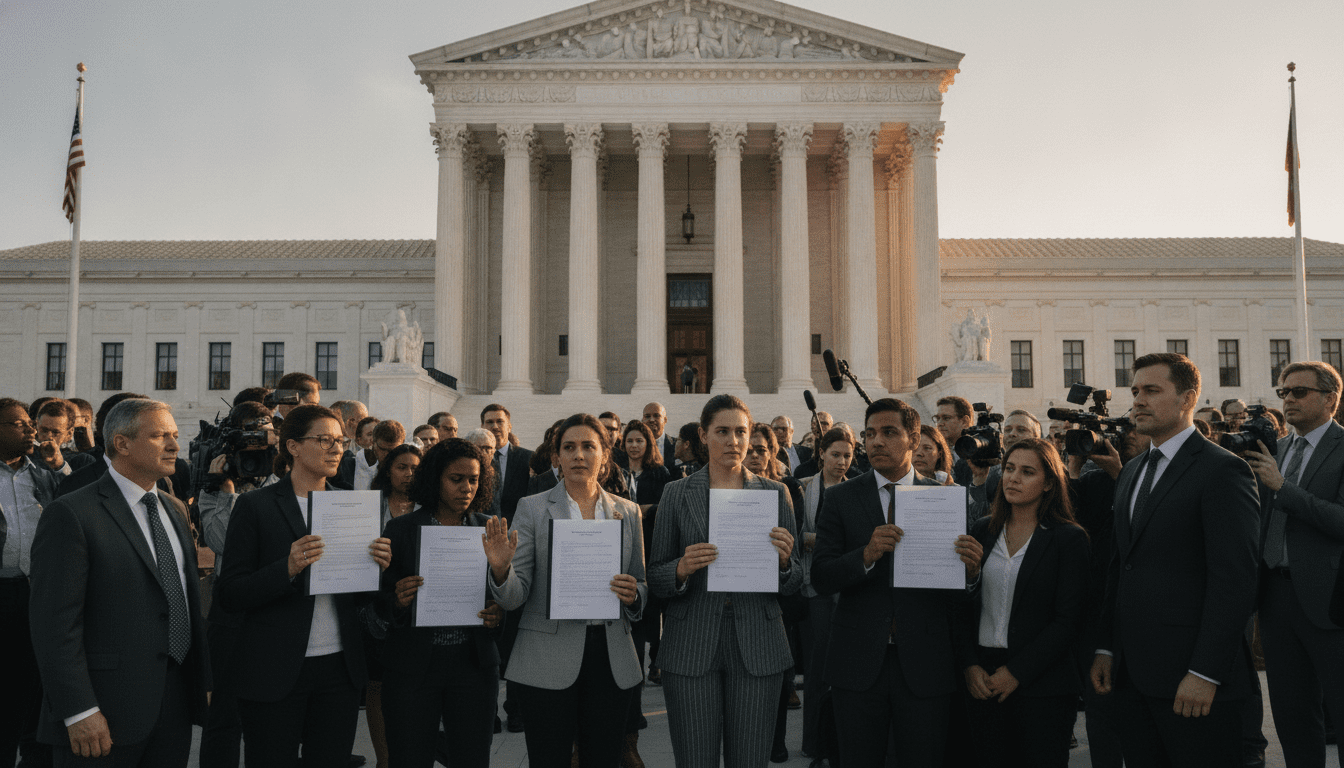
Supreme Court Rejects Trump Order to End Birthright Citizenship in 6-3 Ruling
The Supreme Court on June 30, 2026, blocked President Donald Trump’s attempt to eliminate birthright citizenship, ruling that the Constitution protects the right of most children born on U.S. soil to become citizens. The decision on birthright citizenship preserves longstanding legal precedent and rebukes the executive order the president issued after taking office in January 2025.
High Court Affirms Historical and Constitutional Roots
The majority opinion traced the practice of birthright citizenship to English common law and to the post–Civil War adoption of the Fourteenth Amendment. Chief Justice John Roberts wrote that the Court’s interpretation is grounded in precedent, including the Supreme Court’s 1898 decision in United States v. Wong Kim Ark, which has long been understood to secure citizenship for those born in the United States to noncitizen parents.
By upholding the lower court’s judgment, the Court reinforced that the Fourteenth Amendment’s guarantee of citizenship to “all persons born or naturalized in the United States” cannot be negated by an executive directive. The ruling makes clear that constitutional protections rather than transient policy preferences determine who is entitled to citizenship at birth.
Chief Justice Roberts Questions Administration’s Evidence
In his opinion for the majority, Roberts criticized the Trump administration’s legal theory as insufficiently supported by historical or textual proof. He said the record offered only limited evidence for a reinterpretation of the Fourteenth Amendment that would strip birthright citizenship from children born on U.S. soil.
Roberts observed that the Framers’ language and subsequent judicial decisions consistently carried a broad promise of citizenship to those born in the country, and the Court concluded that executive action cannot rewrite that promise. The majority therefore found the administration’s approach incompatible with established constitutional standards.
Origins and Scope of the Executive Order
President Trump signed an executive order on January 20, 2025, seeking to deny automatic citizenship to children born in the United States whose parents were on temporary legal status or lacking lawful status. The order was promptly challenged in federal court, and lower courts enjoined its enforcement on constitutional grounds before the case reached the Supreme Court.
The administration argued the order was necessary to change immigration incentives and curb unlawful migration, but opponents said the move contradicted both the text of the Fourteenth Amendment and a century of judicial interpretation. The Supreme Court’s decision now removes the executive pathway the administration had attempted to use to alter longstanding birthright rules.
Legislative Options and Constitutional Limits
After the ruling, President Trump reiterated on his social media platform that Congress could theoretically pass legislation to modify citizenship policy, a position that legal scholars say would face significant constitutional and practical hurdles. While Congress can enact laws governing immigration, any statute that conflicts with the Fourteenth Amendment or the Court’s interpretation of it could be struck down by the judiciary.
Experts note that the only clear route to change the constitutional guarantee itself would be a constitutional amendment, a process that requires broad bipartisan support and ratification by the states. Given the political landscape, most analysts judge such an amendment unlikely in the near term.
Immediate Policy and Administrative Effects
The ruling requires federal agencies to continue applying current statutory and constitutional rules that confer citizenship on most children born in the United States. Agencies that had begun reviewing procedures in response to the executive order will now be bound by the Court’s interpretation and lower-court injunctions that preceded it.
Practically, the decision reduces uncertainty for hospitals, state and local officials issuing birth records, and families seeking documentation for newborns. Lawyers who represent immigrant families said the ruling will spare many parents and children from bureaucratic and legal contests over nationality and benefits tied to citizenship.
Political Reactions and Next Steps
Immigrant-rights groups and many Democratic leaders praised the decision as a defense of constitutional protections and a rebuke of executive overreach. They framed the ruling as an affirmation of equal protection principles and long-standing American legal commitments.
Supporters of President Trump criticized the Court’s ruling, arguing it closed off a policy avenue they view as necessary to reform immigration. With the high court’s decision final on the legal question presented, the issue is likely to remain a central theme in political debate rather than litigation moving forward.
The Supreme Court’s ruling on birthright citizenship resolves this particular legal challenge but leaves the broader political dispute over immigration policy active on Capitol Hill and in statehouses. Observers say the opinion will be cited in future debates about the limits of executive power and the durability of constitutional protections tied to citizenship.
