
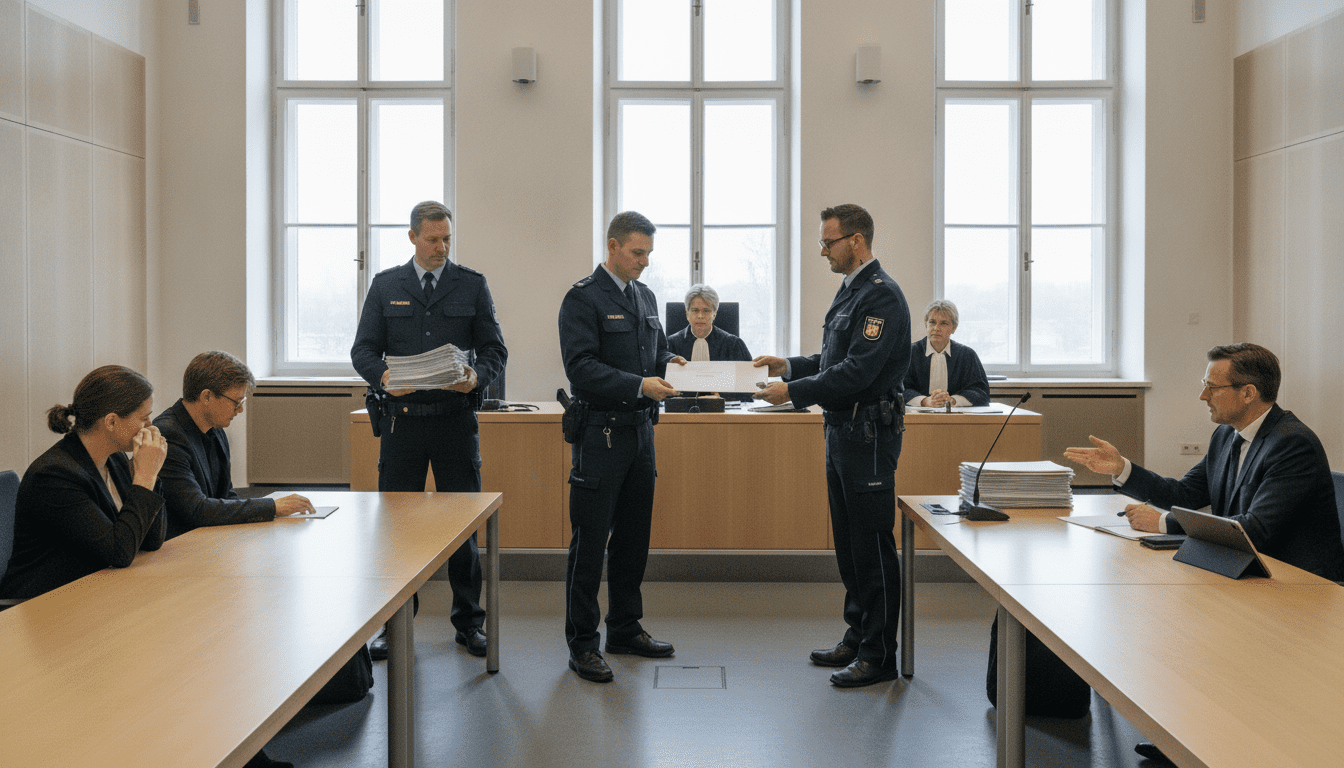
G20 summit in Hamburg: Trial opens as two police officers apologize to victim
Nine years after the G20 summit in Hamburg, three police officers have gone on trial at the Amtsgericht Hamburg accused of jointly inflicting a violent beating on a man at the city’s Bismarck monument; two officers apologized and offered compensation in court. The proceedings mark what the public prosecutor’s office described as the first trial of its kind arising from the 2017 summit, after a broader review of earlier, dropped investigations. The victim, present at the opening hearing, accepted the apologies and said the acknowledgment mattered more than the money.
Trial Opens in Hamburg Over 2017 G20 Summit Beating
The case opened at the Amtsgericht Hamburg with the Staatsanwaltschaft charging three officers with gemeinschaftliche gefährliche Körperverletzung im Amt — jointly dangerous bodily harm in office — for actions taken during the G20 summit protests of July 2017. Prosecutors say the indictment follows a review by the Generalstaatsanwaltschaft that determined some earlier decisions to discontinue similar proceedings warranted reopening. The defendant officers face possible criminal consequences if the court finds their use of force exceeded what was legally permissible during the unrest.
Allegations Center on Bismarck Monument Incident
According to the indictment, the accused police officers struck the man with batons and punched him at the Bismarck monument, leaving him with bruises and hematomas that were documented in medical reports. The prosecution frames the alleged conduct as a coordinated attack rather than isolated or impulsive force, a characterization that elevates the seriousness of the charges. Defence statements at the first hearing acknowledged aspects of the events but maintained that a full factual and legal assessment must be carried out by the court.
Apologies and On-the-Spot Compensation in Courtroom
Two of the three defendants told the court that, in retrospect, their conduct was not justified, and both offered formal apologies to the victim while proposing 500 euros each in compensation for pain and suffering. One of the officers handed 500 euros to the victim in the courtroom during the hearing, and the victim told the court that the apology meant more to him than the cash. The gestures were presented by defence counsel as expressions of regret but did not constitute admissions of criminal liability; prosecutors still intend to pursue the charges to establish official accountability.
Prosecutor Reopened Case After Review of Earlier Dismissals
The prosecution said the indictment followed the Generalstaatsanwaltschaft’s review of several investigations that had been previously closed, with that review concluding there were sufficient grounds to press charges in this matter. Authorities characterized the current trial as the first in Hamburg to proceed against officers for alleged violent misconduct from the G20 deployment, while noting that other enquiries were discontinued. The decision to bring criminal charges signals a prosecutorial willingness to re-examine actions taken by law enforcement during one of the most contentious domestic security operations in recent German history.
Legacy of the G20 Summit: Damage, Injuries and Costs
The July 2017 G20 summit in Hamburg erupted into violent clashes in the Schanzenviertel and Altona districts, episodes that saw cars damaged, shops destroyed and a bank branch driven into a fire, creating a scene of urban confrontation. Hamburg’s interior authority later estimated property damage at more than 12 million euros, and officials reported that 797 police officers were injured during the operation, figures that underscored the scale of the unrest. The city’s senate put security costs for the summit at approximately 64.7 million euros, a budgetary and political consequence that has continued to shape debates about policing, protest and public order.
The trial at the Amtsgericht Hamburg will continue to examine witness accounts, medical evidence and the chain of command that governed officers’ decisions during the G20 disturbances, with the outcome likely to influence how future allegations of police violence during mass protests are handled. Observers say the case is being watched both for its immediate accountability function and for its potential to set a precedent on the legal boundaries of police conduct during large-scale public-order deployments.
