
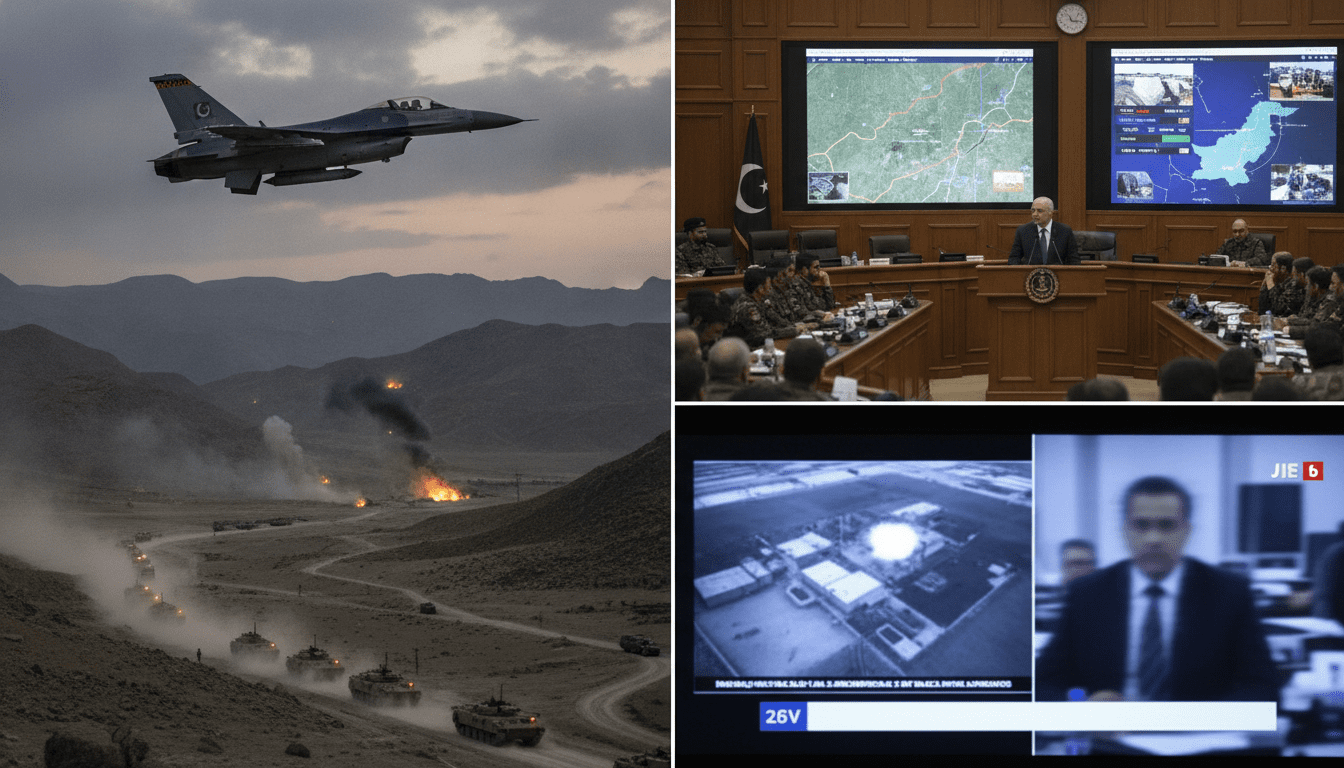
Pakistan Airstrikes in Afghanistan Kill 29, Islamabad Says, as Border Tensions Escalate
Pakistan airstrikes in Afghanistan killed 29 fighters, Islamabad says; strikes in Paktia, Paktika and Kunar deepen border tensions, raising diplomatic strains.
Since Sunday and Monday, June 28–29, 2026, Pakistan says its forces carried out a ground operation inside western Pakistan and airstrikes across the border in Afghanistan, killing 29 fighters in a bid to disrupt militant bases. The announcement by Islamabad names Paktia, Paktika and Kunar as strike locations and frames the action as a response to earlier attacks originating from Afghan territory. The developments mark a fresh spike in cross-border violence that has strained relations since the Taliban returned to power in Kabul in August 2021. Pakistan officials have linked the militants to broader networks they allege are receiving outside support, allegations New Delhi rejects.
Details of the June 28–29 operations
Pakistan’s information ministry said the ground action took place on Pakistani soil while the air campaign targeted “terror camps and hideouts” in eastern Afghan provinces. Islamabad reported that large quantities of weapons and ammunition were destroyed during the strikes and that the dead were members of militant groups. Officials provided the casualty figure of 29; independent verification inside the remote border regions was not immediately possible. The government described the strikes as retaliatory measures to stop attacks that Pakistan says have been carried out from across the border.
Regions affected: Paktia, Paktika and Kunar
Afghan provinces named by Pakistani authorities—Paktia, Paktika and Kunar—are mountainous border zones long used by armed groups and tribal networks that straddle both sides of the Durand Line. Security analysts note that these provinces have been sites of intermittent violence for decades, with terrain complicating monitoring and access. Local administration under the Taliban increasingly controls these areas, but governance is uneven and control can vary by district and clan. The strikes on June 28–29 occurred in precisely those pockets where militants have traditionally found concealment among cross-border kinship ties.
Islamabad’s accusations of outside support
In announcing the action, Pakistan’s information minister, Muhammad Tarar, accused the militants of receiving backing from external actors and specifically alleged Indian support for some of the groups involved—a charge New Delhi has denied. Islamabad framed the operation as part of a broader campaign against transnational militant networks that it says use Afghan territory as a sanctuary to stage attacks in Pakistan. New Delhi’s official rejection of the accusations underscores how regional rivalries are being woven into security incidents along the frontier. Diplomatic reactions in the coming days will be watched for signs of escalation or restraint.
Taliban reaction and failed mediation efforts
The Taliban government has repeatedly denied sheltering Pakistani militants, and spokesmen reiterated that stance in the wake of the reported strikes. Early this year, attempts at mediation led by Qatar, Turkey, Saudi Arabia and China sought to de-escalate fighting that first flared in February 2026, but those efforts failed to produce a lasting cessation. Taliban officials have signaled a willingness to investigate cross-border incidents while insisting they lack the capacity or will to police all remote areas. The collapse of spring 2026 negotiations left a diplomatic vacuum that both Islamabad and Kabul now say the other must fill to restore calm.
Historical and local dynamics complicate the border
Security analysts emphasize that the Pakistan-Afghanistan border has long been porous in practice, even where it exists on paper as the Durand Line. Tribal affiliations, intermarriage and local feuds frequently cross the border, blurring the line between internal disputes and cross-border militancy. During the earlier western deployments by NATO and U.S. forces, commanders noted how clan structures and local rivalries often determined security more than formal state authority. Those dynamics complicate any outside attempt to impose order by force or through short-term operations, and they help explain why incursions and strikes often yield only temporary effects.
Pakistan airstrikes in Afghanistan have therefore reopened deep questions about effective border management, intelligence sharing and regional diplomacy. The June 28–29 operations are likely to prompt renewed international attention to the frontier, and they raise the prospect of further tit-for-tat measures unless political channels are restored. Observers say durable de-escalation will require clearer mechanisms for verification, joint investigations into attacks, and a return to mediated talks that address both militant sanctuaries and the local grievances that feed them.
The coming days will test whether Islamabad and Kabul can convert their competing security claims into a cooperative process rather than prolonged confrontation, and whether third-party mediators will be able to rebuild momentum after spring 2026 setbacks.
