
Municipal Association Urges Basic Law Change to Unlock Climate Adaptation Funding
Municipal association urges Basic Law change to unlock climate adaptation funding after June 2026 heatwaves to better protect hospitals and urban centers.
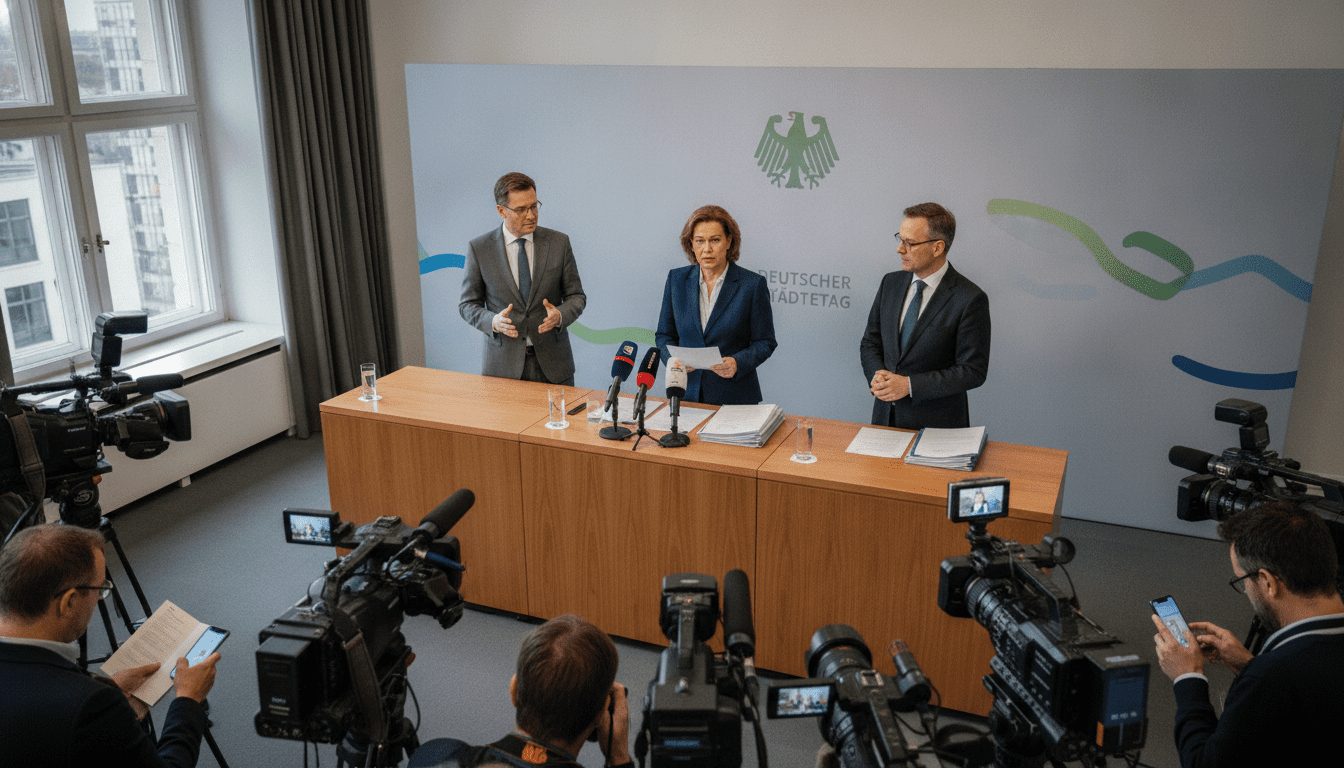
The German Association of Cities and Municipalities has called for a change to the Basic Law to enable greater climate adaptation funding from the federal and state governments after record heat in late June 2026. André Berghegger, the association’s chief executive, said the scale of recent heatwaves and extreme weather has made clearer the need for coordinated financing for heat protection and other adaptation measures. He urged creation of a new shared federal task to allow the Bund and Länder to contribute directly to costly local projects. The appeal frames climate adaptation funding as an essential, nationwide responsibility that exceeds the capacities of cash-strapped municipalities.
Municipal Association Seeks Basic Law Amendment
The association wants an amendment to the Basic Law that would formally create a cooperative federal task labelled “climate protection and climate adaptation” under Article 91a. André Berghegger told the RedaktionsNetzwerk Deutschland that adapting to heat, intense rainfall and storms is becoming more urgent every year. By placing adaptation within the constitutional framework for shared tasks, the association argues the federal government and states could jointly finance measures such as urban cooling, flood mitigation and public safety upgrades. The proposal is presented as a structural fix to ensure predictable long-term funding beyond one-off programs.
Proposal Would Create a New Shared Federal Task
Under the suggested amendment, Berlin and the Länder would be able to establish a joint funding instrument to cover part of the costs for municipally delivered projects. Proponents say the mechanism would mirror existing cooperative arrangements for large-scale infrastructure and social services. The association envisions targeted grants to retrofit streets, green public spaces and buildings to withstand higher temperatures and extreme precipitation. Officials argue this would accelerate climate-adaptive urban redevelopment that smaller local budgets cannot achieve alone.
Cities Report Acute Shortages for Adaptation Measures
Local governments say they have launched numerous adaptation efforts but face steep expenses and limited fiscal room. Municipalities across Germany are already investing in cooling infrastructure, tree planting, drainage upgrades and public awareness campaigns, yet Berghegger warned that many necessary measures remain unaffordable. He highlighted that ongoing financial distress at the municipal level makes it difficult to cover investments required to protect vulnerable populations and preserve central urban areas. Without substantial external support, cities say they will be unable to carry out comprehensive, climate-resilient planning.
Federal Government Emphasizes State and Local Responsibility
The federal government has acknowledged the challenge of adapting to heatwaves but has signalled that states and municipalities also bear responsibility for implementing measures. Environment Minister Carsten Schneider (SPD) told Deutschlandfunk that a 100-billion-euro investment package has been made available for local investment, and that Länder remain free to allocate those funds toward heat protection if they choose. Federal spokespeople have repeatedly pointed to existing programs and urged states to prioritize adaptation within the funding they received from Berlin. The government’s position frames the matter as a division of roles between the Bund, Länder and municipalities.
Targeted Funding for Healthcare and Heat Protection
Federal ministries said the Bund has also provided earmarked sums for specific sectors: the Federal Health Ministry pointed to a 29-billion-euro program for hospital modernization that includes measures relevant to heat protection. The Environment Ministry noted the 2024 Climate Adaptation Act, which imposes obligations on the Länder to ensure comprehensive regional adaptation concepts are in place. Both ministries stressed that while the federal government finances individual programs, broader, sustained funding for municipal adaptation remains subject to state-level allocation decisions. Advocates argue that a constitutional shared task would reduce reliance on ad hoc spending and ensure nationwide standards for protecting hospitals, care facilities and public services.
Political and Fiscal Debate Expected in Berlin and the Länder
A Basic Law amendment would trigger a wide political and fiscal debate over responsibility, budgetary impact and federal-state relations. Constitutional change requires broad majorities in the Bundestag and Bundesrat, meaning negotiations would need to reconcile differing priorities across party lines and Länder governments. Proponents say the amendment would create legal clarity and stable financing streams; critics may warn of fiscal strain or jurisdictional overlap. The debate will likely intensify as municipalities point to recent weather extremes and detailed cost estimates for necessary adaptation investments.
German cities and municipalities are framing climate adaptation funding as a strategic priority tied to public safety and economic resilience. The association’s proposal aims to move financing from short-term programs to a constitutional framework that would enable sustained, shared investment in heat protection, flood defenses and climate-resilient urban redesign.
