
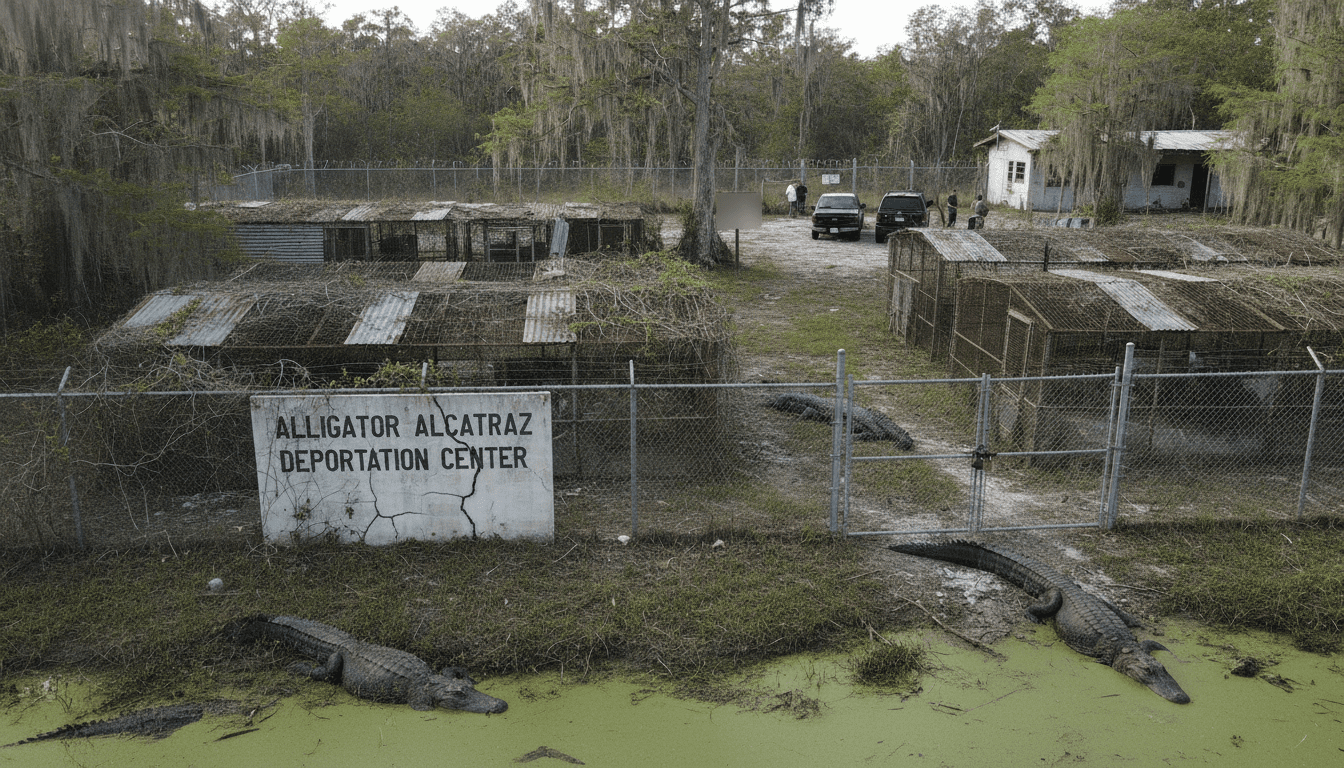
Alligator Alcatraz Closes: Florida Deportation Camp Emptied, Governor Says
Florida’s deportation camp ‘Alligator Alcatraz’ has closed, Gov. DeSantis says, with the site emptied amid soaring costs, court fights and rights concerns.
Florida Governor Announces Closure
Florida Governor Ron DeSantis announced the closure of the deportation facility known as Alligator Alcatraz, saying there are no longer any detainees at the Everglades site. He described the installation as an emergency, temporary response and framed the move as the end of a short-lived experiment. Officials offered the decision as administrative, pointing to the original temporary status of the center.
Facility Now Empty, Officials Say
State authorities reported that the camp has been vacated and that detainees have been transferred to other locations or processed for removal under existing immigration procedures. The facility had been established on a sparsely used airfield adjacent to the Everglades and included tents and modular housing erected quickly after its opening. Local and federal logistics teams coordinated the departures, according to statements from state officials.
Escalating Costs and Operational Strain
Media reports earlier this month highlighted the facility’s high operating expenses, and officials acknowledged that maintaining operations in a remote swamp environment strained budgets and supply lines. Staffing, transport, and infrastructure costs were cited privately by sources as contributors to the decision to cease operations. The remote site also required substantial security and environmental mitigation spending that officials now say made sustained operation untenable.
Legal Challenges and Court Scrutiny
Multiple court actions and filings had focused on conditions at the camp, with judges in several jurisdictions reviewing claims about detention practices and facility standards. Plaintiffs raised concerns about hygiene, medical care and the suitability of temporary structures for long-term confinement, while government lawyers defended the installation as lawful and necessary. The judiciary’s attention added layers of legal risk and uncertainty for the agency overseeing the site.
Human Rights Groups and Critics Respond
Human rights organizations and immigration advocates reacted swiftly to news of the closure, calling for independent inquiries into how detainees were treated and what prompted the rapid site expansion. Critics emphasized the symbolic and practical problems of locating a deportation camp in environmentally sensitive wetlands and questioned decisions that seemed designed to deter escape by leveraging local wildlife risks. Advocates also demanded records on transfers and conditions to ensure accountability.
From The Rock to the Everglades: Origins and Symbolism
The name Alligator Alcatraz was adopted to evoke the hardline image of the federal prison once known as Alcatraz, a comparison that was embraced by supporters and denounced by opponents. The camp was inaugurated in the summer of 2025 during a high-profile announcement by then-president Donald Trump, who framed it as part of a tougher approach to immigration enforcement. The site’s placement in the swamplands and its rapid construction made it a lightning rod for debate over policy, symbolism and humane treatment.
Plans for Site and Investigations Ahead
State officials have not yet disclosed a long-term plan for the vacated site, saying environmental reviews and asset assessments will determine next steps for the land and remaining infrastructure. Lawmakers and oversight bodies are expected to press for briefings and documentation on costs, contracts and decision-making that led to the camp’s establishment and shutdown. Independent monitors and advocacy groups have signaled they will seek records and witness accounts to evaluate whether further investigations are warranted.
The closure of Alligator Alcatraz marks a significant turn in the recent escalation of immigration enforcement measures; while the facility will no longer house detainees, the political and legal reverberations are likely to continue as officials, courts and civil society scrutinize how and why the camp was built and how its operations affected those processed there.
