
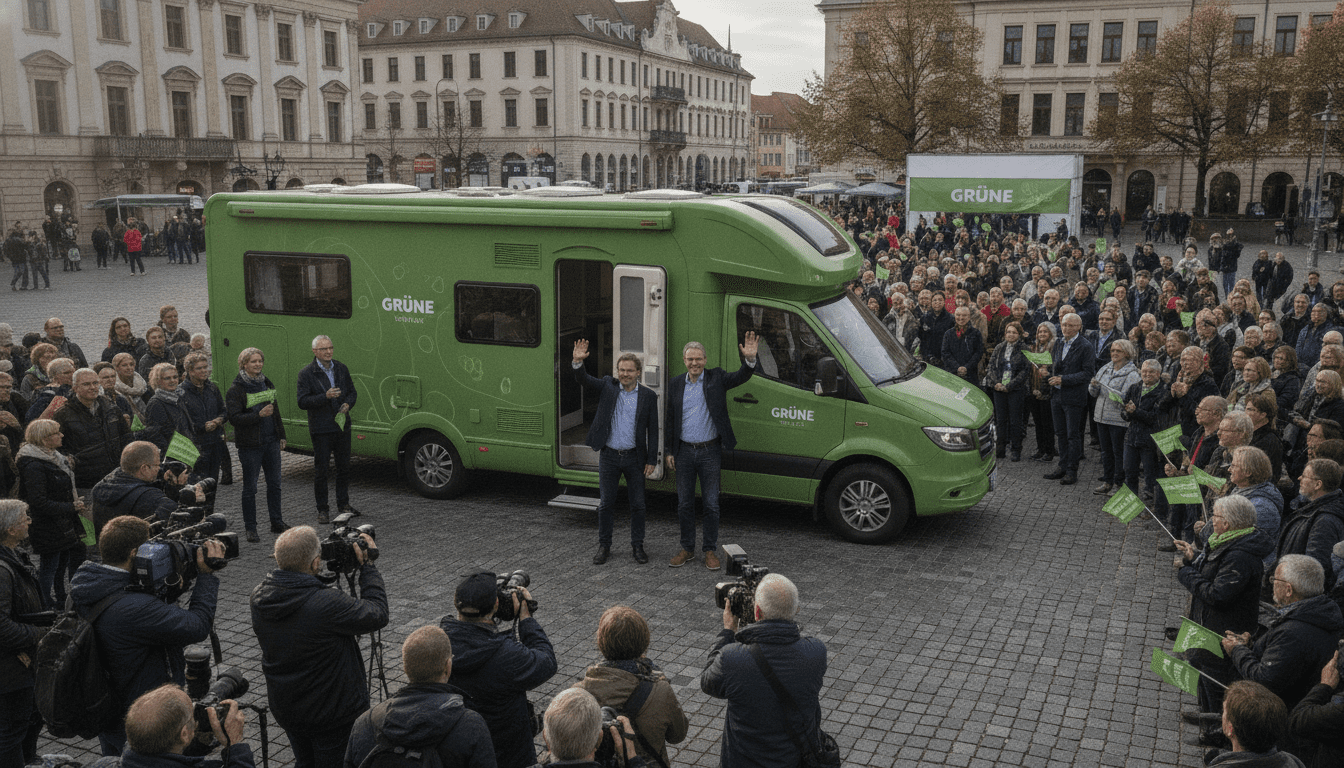
Greens in eastern Germany face uphill fight as leader brings camper-van campaign to Sassnitz
Greens in eastern Germany confront poor polls as leader Felix Banaszak tours by camper van, pushing energy and rural school policies ahead of September votes.
The Green Party’s leader parked a distinctive camper van outside the Glasbahnhof in Sassnitz this weekend as part of a multi-day tour through northeastern towns, an effort to reconnect with voters in areas where the party remains weak. Felix Banaszak used the van to hold informal meetings — sharing beer in Stendal and grilling with holiday campers — and sought conversations with voters including those who have supported the AfD. The tour underlines a wider campaign push to make the Greens more visible in the countryside ahead of state elections in Sachsen-Anhalt and Mecklenburg-Vorpommern.
Banaszak brings grassroots outreach into plain sight
Banaszak turned an otherwise ordinary leisure vehicle into a campaign tool that deliberately avoided traditional Green Party branding, opting instead for a low-key appearance to invite conversation. Over several days he visited small towns and lakeside campsites, describing the aim as getting “near to people” rather than preaching from afar. Organizers framed the stops as listening sessions rather than rallies, and supporters said the informal approach produced exchanges that would not have happened at typical party events.
Poll numbers underline urgency in the east
Recent surveys presented at the party gathering showed the Greens struggling in the two states headed for elections, with figures hovering around four percent in both Sachsen-Anhalt and Mecklenburg-Vorpommern. The imbalance dates back decades: fewer than ten percent of the party’s roughly 183,000 members are based in the new federal states, leaving local structures thin and campaigns brittle. Party strategists warn that further losses would weaken resources and organizational capacity in the east for years to come.
Energy pricing proposal aimed at winning regional votes
As part of its bid to regain traction, the party has proposed regionally differentiated electricity price zones that would lower costs where renewable generation is concentrated. Officials argued this could deliver tangible benefits in wind- and solar-rich eastern regions, but acknowledged the plan risks higher prices in industrial western and southern areas. The proposal proved contentious within the party and among coalition partners, reflecting the difficulty of balancing national equity with targeted regional relief.
Sassnitz declaration shifts focus to childcare and rural schools
At an Ostkongress session on Saturday the Greens unveiled what they called the Sassnitz declaration, which centers on expanding childcare access and protecting small rural primary schools. The platform sets a target that no family in structurally weak regions should be more than 15 minutes from the nearest childcare facility, and commits to keeping threatened village schools open as social anchors. Financing would come partly from an extension of the Startchancen program for disadvantaged schools and from a dedicated infrastructure fund, according to internal proposals circulated at the meeting.
Local activists report intimidation in AfD strongholds
Campaigners in several eastern districts say they continue to face hostile conditions on the ground, including vandalized posters, Böller attacks on stalls and occasional physical confrontations. Johannes Paul Stabenow of the Greifswald district described a readiness to respond with practical measures such as maintaining a reserve of replacement posters and stepped-up volunteer shifts. Despite those challenges, activists reported a resilient mood; many said they feel motivated rather than demoralized and intend to hold firm through the intense weeks of campaigning.
Leadership increases support and cross-regional cooperation
Senior Green figures framed last year’s setbacks as a catalyst for a more organized eastern strategy, with increased visits by national leaders and targeted resource transfers to local associations. Bundestag deputy Katrin Göring-Eckardt described the 2024 defeats as a wake-up call that prompted renewed attention to the east, while Mecklenburg-Vorpommern candidate Claudia Müller praised closer scrutiny from Berlin. Western districts have adopted patronage relationships with eastern counterparts, and activists from both sides have pledged to campaign cross-regionally to shore up ground operations.
The party acknowledges the scale of the task ahead and is careful not to overstate prospects, even as it presses urgent policy shifts and intensified outreach. Banaszak cautioned that hope does not guarantee success, saying the campaign is a race whose outcome remains unsettled and will be decided in the coming weeks.
